The Net-Zero Banking Alliance was supposed to be the financial sector's answer to the climate crisis. Major banks signed on, issued statements, and received favorable coverage for pledging to align their lending with a 1.5°C future. Then, in October 2025, the alliance ceased operations. And the banks, freed from even the appearance of accountability, got back to work.
Last year, the world's largest financial institutions committed $906 billion in financing to fossil fuel companies — an 8 percent increase over the previous year, according to Banking on Climate Chaos, released Monday by the Rainforest Action Network, Sierra Club, Oil Change International, and partner organizations. The money went to projects including the Mountain Valley Pipeline, a planned liquefied natural gas expansion in the Philippines, and fracking operations in the Permian Basin. Each of these projects was financed by institutions that had, within recent memory, described themselves as committed to net-zero emissions by 2050.
The argument for voluntary climate pledges always rested on a single premise: that financial institutions, facing reputational risk and long-term portfolio exposure to stranded assets, would find it in their interest to self-regulate. The NZBA was the institutional expression of that premise. What the Banking on Climate Chaos report documents, year after year, is not a failure of implementation — it is evidence that the premise was wrong from the start.
This is not a story about banks that tried and fell short. It is a story about an industry that used the language of climate commitment to occupy the space where binding regulation might otherwise have been built — and then, once the political window for that regulation had closed, began walking the commitments back. The report notes that throughout 2025 and into 2026, banks "further weakened their commitments to uphold 1.5°C temperature rise limits, widened loopholes, and undercut sector policies for coal, oil, and gas energy or power supply primarily by removing or diluting exclusion criteria and commitments." Most policy changes in the past year, the authors write, "were downgrades of existing policies rather than improvements."
Diogo Silva, campaign lead for BankTrack and a co-author of the report, stated the conclusion plainly: "Banks keep telling us they're committed to climate. Then they abandon their own policies the moment political pressure mounts. Voluntary pledges have had their chance. We need binding rules — not promises."
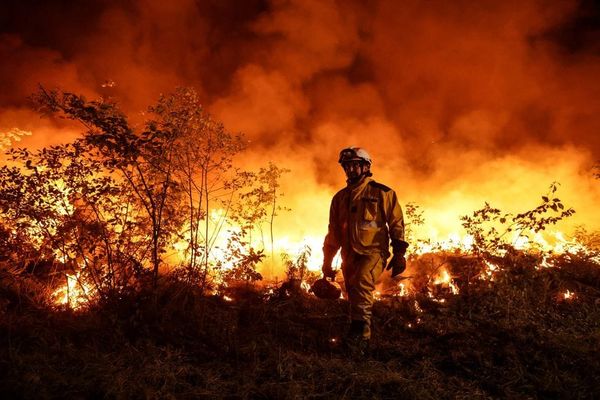
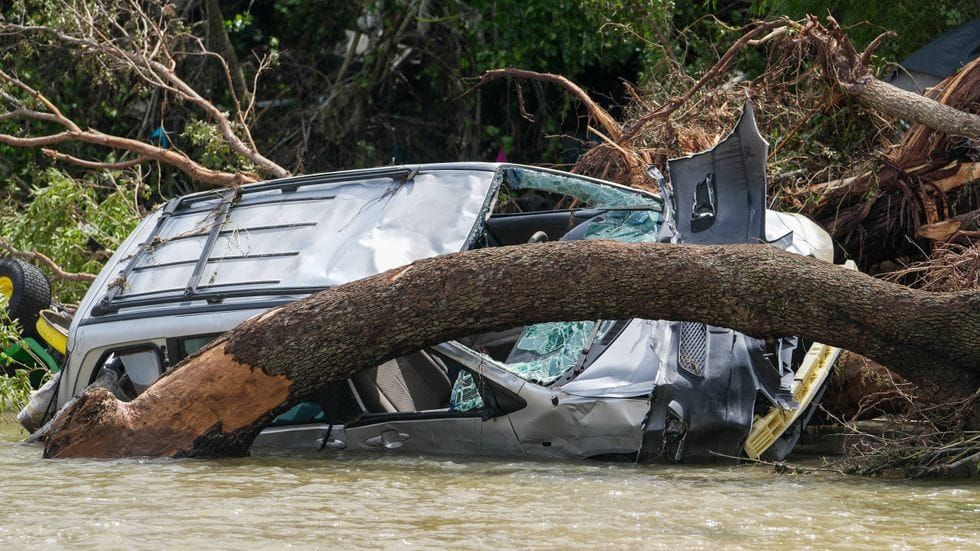
The timing matters. The NZBA's collapse came against a backdrop of catastrophic climate events that should, by any rational accounting, have made the case for urgency. The 2025 Los Angeles wildfires. Deadly flash floods in Texas. A European heatwave that, according to the report, killed more than 24,000 people. Cyclones and floods that killed thousands more. These were not projections. They were present-tense events with body counts. The financial sector responded by increasing its investment in the industry responsible for them.
Follow the money and the logic becomes clear. Banks do not finance fossil fuels despite climate commitments — they finance fossil fuels because the short-term returns remain profitable and the long-term costs are externalized onto governments, communities, and the atmosphere. The people who die in heatwaves in southern Europe, or lose homes in Texas floods, or face displacement from cyclones in South Asia do not appear on any bank's balance sheet. Their losses are not the bank's losses. This is not a market failure in the technical sense — it is the market functioning exactly as designed, pricing in private profit while socializing catastrophic risk.
The Philippines LNG expansion is instructive here. As climate action groups pushed governments and financial institutions to end support for new fossil fuel infrastructure, major banks were financing a planned liquefied natural gas "boom" in an archipelago nation that ranks among the most climate-vulnerable countries on earth. The Philippines loses an estimated 0.8 percent of GDP annually to climate-related disasters, according to the World Bank — a figure that will rise as warming intensifies. The communities bearing that cost are not the ones whose pension funds and investment portfolios benefit from the LNG returns. The geographic distance between who profits and who pays is not incidental. It is structural.

This global dimension is consistently missing from how the voluntary-pledges debate gets framed in Western financial media, which tends to treat net-zero commitments as a question of corporate governance and ESG metrics. The actual stakes are the lives of people in frontline communities — in the Global South, in low-lying coastal regions, in the agricultural zones where rainfall patterns are destabilizing — who had no seat at the table when the NZBA was formed and no recourse when it dissolved. The loss and damage fund established at COP28 was meant to begin addressing that asymmetry. It remains chronically underfunded.
The report's findings also land in a specific regulatory context. The SEC recently rescinded its climate disclosure rule — leaving investors without standardized information about which companies are accurately reporting their climate exposure. Without disclosure requirements, the gap between what banks say about their climate strategies and what they actually finance becomes harder to track and harder to litigate. The voluntary pledge system did not just fail on its own terms — it occupied the regulatory space that mandatory disclosure and binding emissions targets might otherwise have filled, and it did so during a decade in which the window for meaningful action narrowed significantly.
There is a pattern here that extends beyond banking. Corporate voluntary commitments on environmental issues have a documented track record of providing cover for continued harmful practices while forestalling regulation. The mechanism is consistent: a company or industry announces ambitious targets, receives credit for the announcement, and then either fails to meet the targets or quietly walks them back when the political cost of compliance rises. The NZBA is a large-scale institutional version of the same dynamic. The banks that signed on received reputational benefit for their pledges. When those pledges became inconvenient, they dissolved the institution and continued financing fossil fuels at record levels.
The Banking on Climate Chaos report's core demand — binding rules, not promises — is not a radical position. It is the conclusion that follows from a decade of evidence. Every major climate agreement since Paris has relied on voluntary national pledges. Every major financial sector climate initiative has relied on voluntary corporate pledges. The data on whether voluntary pledges, in the absence of enforcement mechanisms, produce outcomes commensurate with the scale of the crisis is now extensive. It does not favor the voluntary approach.
What binding rules would look like — whether through central bank macroprudential regulation, mandatory portfolio emissions caps, or direct legislative prohibition on financing new fossil fuel extraction — is a policy debate that regulators and legislators have largely declined to have. The NZBA's collapse, and the $906 billion that followed it, is the cost of that avoidance. Those costs are not distributed evenly. The communities facing the sharpest consequences of fossil-fueled heating — many of them in countries that contributed least to cumulative emissions — are also the communities with the least power to influence the banks making these financing decisions. That asymmetry is not an accident of history. It is the architecture of the problem.
The record financing number in this year's report will likely be exceeded in the next one. That is not pessimism — it is the predictable outcome of a system where the incentives remain unchanged, the regulatory constraints remain absent, and the costs remain externalized onto people and places that have no power to alter the calculus. The question is not whether voluntary pledges worked. The evidence on that is settled. The question is what fills the space they occupied — and who has the power to force that answer.