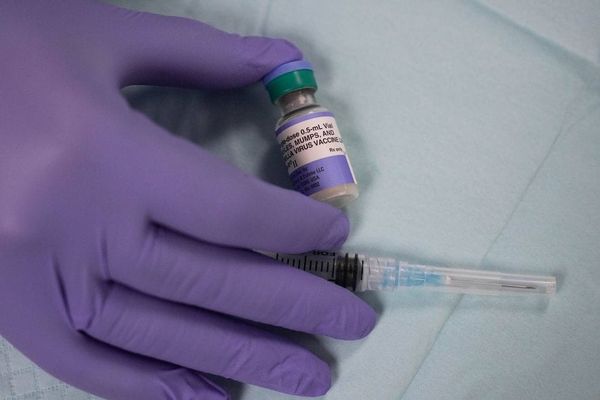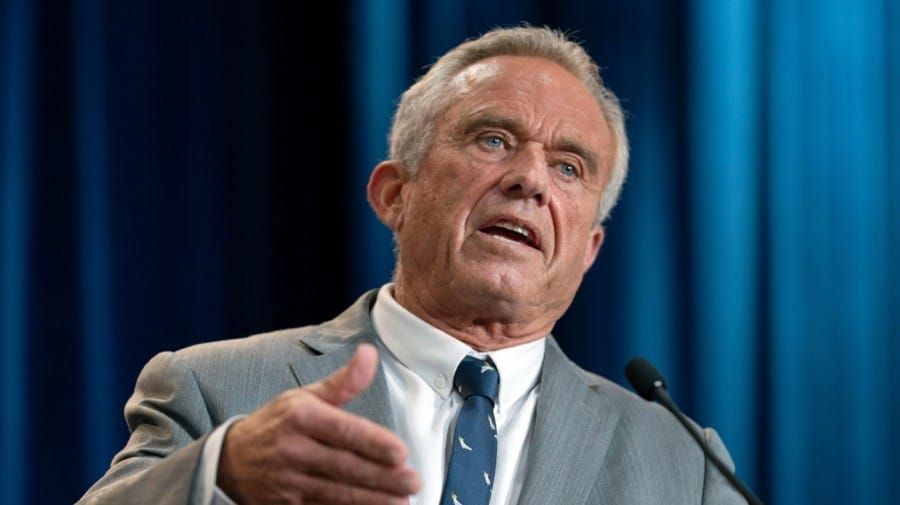
The federal official responsible for the health of 340 million Americans is demanding that a scientific journal justify why it removed a study — a study the journal retracted because it was methodologically indefensible. That is not how scientific accountability is supposed to work. It is, however, exactly how policy capture does.
Health and Human Services Secretary Robert F. Kennedy Jr. wrote to Toxicology Reports Editor-in-Chief Lawrence H. Lash on June 11, asking the journal to account for the removal of a 2021 paper titled "Vaccines and sudden infant death," according to The Hill. The letter frames the retraction as suspicious — a suggestion that institutional forces suppressed inconvenient science. What the letter does not address is the documented reason the paper was pulled: it failed basic standards of scientific methodology. The sequence matters. The study was retracted first. Kennedy cited it to justify policy changes second. He is now demanding an explanation for why the evidence he used to reshape federal public health guidance no longer exists in a peer-reviewed journal.
This is not a story about one bad study. It is a story about what happens when the person responsible for evaluating scientific evidence has spent decades treating scientific institutions as adversaries rather than as the mechanism by which bad information gets corrected.
A retraction is science's self-correction mechanism. Journals retract papers when post-publication review finds errors in methodology, data integrity, or analysis so significant that the paper's conclusions cannot be trusted. Retraction is not suppression — it is the system working as designed. A retracted paper is not evidence. It is a documented failure of evidence.
Scientific journals retract papers for reasons that are, by design, not political. The process exists because science publishes thousands of studies and some of them turn out to be wrong. Methodological errors, data integrity problems, statistical failures — these are the grounds on which papers get pulled. The retraction of the 2021 Toxicology Reports paper fits this category. Kennedy's letter reframes that correction as a cover-up, and in doing so, it deploys the authority of the federal government to pressure a scientific journal. That pressure has a name: it is the use of state power to contest the peer review process.
The accountability lens here is not subtle. Kennedy holds the most powerful public health office in the United States. His decisions about vaccination schedules, childhood immunization recommendations, and federal health communications affect every parent in the country and, through U.S. global health influence, many parents beyond it. The studies he cites to justify those decisions are not private opinions — they are the evidentiary basis for policy that will determine whether children are protected from preventable disease. When the evidentiary basis is retracted, the policy built on it does not become more defensible. It becomes less.
There is a pattern here that extends beyond this letter. Measles and whooping cough outbreaks have surged in states that adopted RFK Jr.'s vaccine policies, a connection that a Republican senator named publicly earlier this year. Kennedy has also fired the two chairs who kept insurance coverage rules free from political interference, removing independent expertise from the process that determines what health interventions Americans can access. The retracted-study letter fits the same logic: when the evidence doesn't support the policy, contest the evidence.
The power and money dimension is worth tracing. Kennedy did not arrive at HHS as a neutral evaluator of vaccine science. He built a career and an organization — Children's Health Defense — on the claim that vaccine safety research is systematically corrupted by pharmaceutical industry influence. That argument has a financial architecture of its own: it generated donations, speaking fees, and a political constituency that ultimately delivered him a cabinet position. The argument that scientific institutions suppress inconvenient vaccine research is not just a belief Kennedy holds. It is the product he has sold for two decades. He now runs the agency that funds and oversees the research he has spent that time contesting.
This creates a specific and concrete danger that is not hypothetical. The Advisory Committee on Immunization Practices, the body that sets federal vaccine recommendations, operates by evaluating peer-reviewed evidence. If the Secretary of HHS is publicly treating retracted papers as legitimate suppressed evidence and demanding journals justify their editorial decisions, the signal to that committee — and to the researchers whose careers depend on federal funding — is legible. Science is not immune to political pressure. It is staffed by people with grants to protect and positions to maintain. A cabinet secretary who writes letters to journal editors demanding they justify retractions is not engaging with science. He is attempting to govern it.
The White House has a documented pattern of suppressing inconvenient research when it contradicts preferred policy positions. The administration buried a multi-year alcohol study after the industry that profits from drinking spent years lobbying against it. The mechanism is different — that was suppression before publication, this is pressure after retraction — but the direction is identical: federal power deployed to shape what science is permitted to say.
Kennedy's letter asks the journal to explain itself. The more relevant question runs the other direction: on what evidentiary basis did HHS make the childhood immunization policy changes the retracted study was cited to support? If the study is gone, what remains? The answer, so far as the public record shows, is the assertion of the Secretary himself — a man whose stated view is that the institutions responsible for evaluating vaccine safety cannot be trusted. That is not a substitute for evidence. It is the replacement of evidence with authority, which is precisely the dynamic that scientific peer review was designed to prevent.
Parents making decisions about their children's vaccines do not have access to the internal deliberations of HHS. They have access to public communications from the federal agency they are supposed to be able to trust. When that agency's leader cites a retracted paper, demands a journal reverse its editorial judgment, and treats the correction of bad science as evidence of a conspiracy, the public health infrastructure that took generations to build is not being reformed. It is being dismantled from the inside, methodically, by the person whose job is to protect it.
The journal has not yet responded to Kennedy's letter, according to The Hill's reporting. Whatever it says, the letter itself is already the story. A sitting cabinet secretary has formally demanded that a scientific publication account for removing a paper that did not meet scientific standards. That demand is now part of the federal record. Future researchers, future journal editors, and future members of advisory committees will have read it. The chilling effect does not require a response. The letter is the message.