The Supreme Court's Citizens United decision was handed down in January 2010. At the time, its defenders insisted the ruling was about free speech — that corporations and wealthy individuals had a First Amendment right to spend unlimited money in elections. Fifteen years later, the Americans for Tax Fairness Action Fund has released the arithmetic: 172 billionaire families have spent more than $1.7 billion on the 2026 midterms, a record for any midterm cycle, and billionaire political spending has increased 53-fold since Citizens United was decided. This is not a warning about what could happen to democracy. It is a description of what already has.
The figure demands a specific kind of attention. Not outrage — outrage has become its own form of inaction — but accounting. Fifty-three times the pre-Citizens United baseline. A record-shattering sum for a cycle that hasn't yet reached its final months. And less than 20 percent of that money flowing through committees subject to any contribution limits at all. The architecture of the system is working precisely as its architects intended: unlimited, largely unaccountable, and structurally tilted toward those who already hold the most.
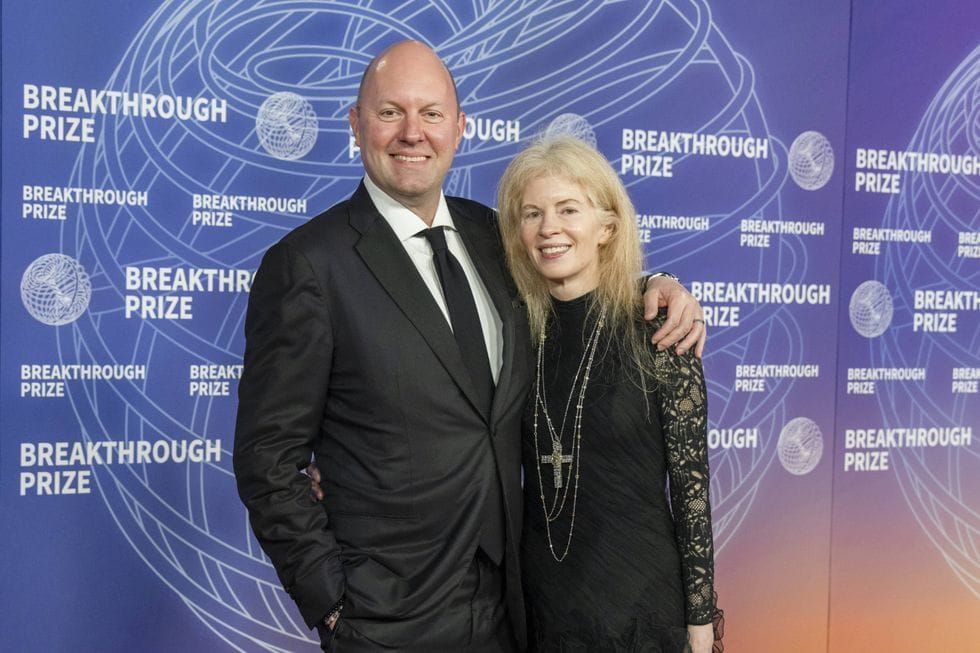
The top spenders in this cycle are the families of Marc Andreessen and Ben Horowitz, co-founders of the venture capital firm Andreessen Horowitz. Together, the two families have committed a combined $149 million to the 2026 elections — money that flows to both parties, which is itself the tell. Their largest single vehicle is Leading the Future, a super PAC whose explicit purpose is to oppose strict artificial intelligence regulation. This is not ideological spending. It is an industry protecting its operating conditions. The firms that stand to profit most from unregulated AI development are funding the political process that will determine whether AI gets regulated. That feedback loop is the story beneath the story, and it has received almost no coverage proportionate to its importance. Tinsel News has previously reported on how AI PAC money is reshaping Democratic primaries and the tens of millions Silicon Valley spent to block California regulation — but the Andreessen-Horowitz figure puts both in sharper relief.
George Soros, Jeff Yass, and Elon Musk round out the leading spenders, according to the ATF Action Fund analysis. The ideological range of that list is frequently cited as evidence that billionaire political spending is not inherently partisan — that it is, somehow, democratizing. This framing collapses under scrutiny. The relevant fact is not that billionaires disagree with one another. The relevant fact is that they are the ones having the argument. When Soros and Musk fund opposing candidates, what has been democratized is the tournament between billionaires, not the political process itself. The rest of the electorate is watching a game it cannot afford to enter at the same stakes.
Before Citizens United (2010), federal law prohibited corporations and outside groups from spending unlimited sums on elections. The Supreme Court's ruling, and the subsequent SpeechNow.org v. FEC decision, cleared the path for super PACs — committees that can raise and spend unlimited money so long as they do not formally coordinate with a candidate's campaign. The ATF Action Fund analysis found that the "vast bulk" of 2026 billionaire spending has flowed through these vehicles. Less than 20% went to committees subject to contribution limits.
The partisan distribution of this spending is stark. According to the ATF Action Fund analysis, 113 of the 172 billionaire families are giving predominantly to Republicans, while 45 are giving predominantly to Democrats. MAGA Inc., the super PAC aligned with Donald Trump, has received more than $222 million from billionaires on the list since January 2025. One in every two dollars flowing to MAGA Inc. this cycle comes directly from a billionaire family. "With each passing election since the Citizens United decision, billionaires have systematically bought up our democracy," said Jodie Rubenstein, ATF Action Fund's executive director. "These billionaires are backing a crooked tax system that shifts wealth upward through massive tax giveaways to the wealthy and big business."
That connection — between political spending and tax policy — is where the analysis most directly names the mechanism. Billionaires are not spending $1.7 billion on midterm elections out of civic enthusiasm. They are making an investment with an expected return. The return is policy: tax structures that preserve and expand concentrated wealth, regulatory frameworks that protect existing market positions, and labor laws that keep the cost of that wealth's production low. A ruling class that can spend $1.7 billion on a single electoral cycle and expect to recover that expenditure through favorable policy is not participating in a democracy. It is managing one.
The bipartisan dimension of that management deserves more scrutiny than it typically receives. The Andreessen-Horowitz families' willingness to fund both parties is not a sign of ideological moderation — it is a sign of strategic sophistication. When you can afford to hedge across the partisan divide, you are not betting on an outcome. You are purchasing access regardless of outcome. The winning party, whichever it is, will have taken your money. That is how regulatory capture works in practice: not through crude bribery but through the slow normalization of dependency. Politicians who rely on billionaire super PAC support to win their seats do not need to be told what to do. They already know what not to do.
The $1.7 billion figure also needs to be read against what it is displacing. Congressional races are zero-sum attention contests. When billionaire super PAC money floods a district, it sets the terms of debate — the ads, the narratives, the candidate profiles that get amplified. Grassroots organizing, small-dollar fundraising, and door-knocking campaigns are not absent from these races. But they are operating on a different financial planet. The ATF Action Fund found that the top 15 billionaire spenders alone account for $962 million in combined outlays this cycle. That is nearly a billion dollars from 15 families, in a country of 335 million people. The math is not a metaphor for inequality. It is inequality, expressed as electoral infrastructure.
There is a version of this story that ends with a call for campaign finance reform, for the overturning of Citizens United, for a constitutional amendment that restores contribution limits. Those are legitimate policy goals. But they miss something about the current moment. The institutions that would need to enact that reform — Congress, the courts — are themselves the product of the system being described. The senators who would need to pass a constitutional amendment limiting billionaire spending are the senators who benefited from billionaire super PAC support. The Supreme Court that would need to revisit Citizens United is the Court whose current composition was itself shaped by decades of Federalist Society funding and dark-money judicial campaigns. As Tinsel News has documented, the architecture of anonymous political money was built precisely to make itself self-perpetuating.
What the ATF Action Fund's analysis captures — and what the horse-race coverage of the 2026 midterms has largely failed to — is that the relevant contest is not between Democrats and Republicans. It is between 172 billionaire families and everyone else. Those families are not monolithic. They disagree about AI regulation, about immigration, about the speed of the Republican realignment. But they share a structural interest in a political system that remains permeable to their money. That shared interest is more durable than any of their tactical disagreements.
The 2026 midterms will produce winners and losers. Some of those winners will be progressive. Some will be reactionary. The $1.7 billion will not have been wasted regardless of who wins, because the investment was never purely in candidates. It was in the normalization of the system itself — in the proposition that this is simply how American democracy works now, that the 53-fold increase since Citizens United is a feature rather than a failure. The families who have written those checks are counting on that normalization holding. In November, the voters who cannot afford to participate at the same scale will decide what to ratify, if they have registered what they are actually being asked to accept.