Vaccine-preventable diseases do not come back on their own. They come back when vaccination rates fall below the threshold required to stop transmission — a number that decades of epidemiology has established with precision. When measles resurges, it is not a mystery. It is a policy outcome.
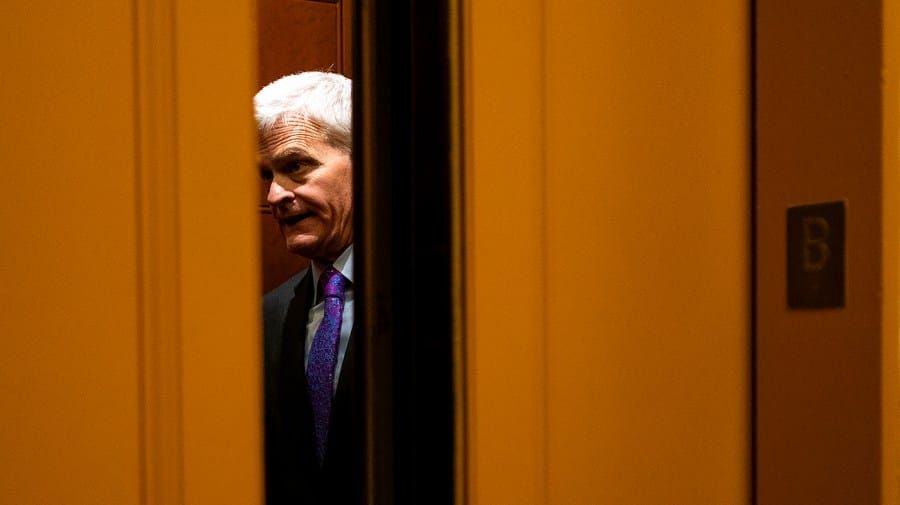
That is the context for what Sen. Bill Cassidy (R-La.) did on Thursday, when he posted on X sharing a The Hill report on hospitals seeing a resurgence in vaccine-preventable illnesses — and directly attributed the trend to Health and Human Services Secretary Robert F. Kennedy Jr. Cassidy, a physician by training and the ranking Republican on the Senate Health Committee, did not hedge. He named the official responsible. He named the outcome. He connected them.
That is notable not because it is a revelation, but because it almost never happens. Cabinet secretaries in a president's own party are rarely called out by name for policy failures by members of that same party. The Republican norm is to criticize the result while protecting the official, or to stay quiet entirely. Cassidy broke that norm — and the question worth asking is what it took to get here, and whether one senator's X post changes anything at all.
Measles requires roughly 95% vaccination coverage in a community to prevent outbreaks. Whooping cough (pertussis) requires approximately 92–94%. When coverage drops below these thresholds — even in localized clusters — diseases that were functionally eliminated can circulate again. These are not projections. They are the mathematical basis of how infectious disease transmission works.
Kennedy has spent months in the HHS role doing what he spent years doing outside it: casting doubt on vaccine safety, promoting the idea that parents should make individualized decisions free from public health guidance, and elevating fringe researchers whose work has been rejected by mainstream epidemiology. The predictable consequence of that posture — reduced vaccination rates, reduced herd immunity, resurgent disease — is now being documented in hospital wards. Doctors are telling the Times they are seeing illnesses they had not seen in years.
This is the accountability lens in its clearest form. Kennedy had the power. He used it. The outcome is measurable. What is unusual is that a Republican senator is saying so out loud, on record, in public, rather than waiting for the administration to move on.
Cassidy's credibility on this is not incidental. He is not a generalist politician performing medical expertise. He is a gastroenterologist who practiced for two decades before entering politics. When he says that vaccine-preventable diseases are resurging because of the messaging coming from HHS, he is making a clinical observation, not a partisan one. That distinction matters — not because it makes the critique more valid on the merits, but because it makes it harder to dismiss as opposition politics.
The broader pattern here is one that Tinsel News has covered in the context of other Trump administration appointments: the deliberate placement of officials whose personal ideological commitments are in direct conflict with the institutional mandates they are supposed to carry out. As we noted in our reporting on Kennedy's removal of the two chairs who kept insurance coverage rules free from political interference, the HHS under this administration has been systematically restructured to serve a set of beliefs rather than a body of evidence. The vaccine resurgence is not a side effect of that restructuring. It is a direct result.
There is also a systemic pattern worth naming. The anti-vaccine movement that Kennedy has championed for decades was not politically powerful enough, on its own, to shift national public health outcomes. What gave it reach and consequence was a specific political moment: a president willing to appoint its most prominent spokesperson to run the department responsible for protecting Americans from infectious disease. The movement did not change. The appointment made the movement consequential at a scale it had never previously achieved.
The human impact lens here is not abstract. Measles is not a mild inconvenience. Before vaccination, it killed approximately 400 to 500 Americans per year and caused brain damage in another 1,000. Whooping cough — pertussis — is most dangerous in infants under two months old, who are too young to be fully vaccinated and depend entirely on the immunity of the people around them. When vaccination rates in a community fall, the people who pay first are the ones who cannot protect themselves: newborns, immunocompromised patients, children whose parents followed the guidance and vaccinated them but whose community did not maintain coverage.
Those people do not appear in Kennedy's public statements. They do not appear in the rhetoric about parental choice and medical freedom. They appear in hospital admission records — which is where the Times found them, and where Cassidy found the story he shared.
The question Cassidy's rebuke raises is whether it represents an isolated act of conscience or the beginning of a more sustained Republican reckoning with what Kennedy is doing to the department he runs. The answer, based on the pattern so far, is not encouraging. As we covered in our reporting on measles and whooping cough outbreaks in states that adopted Kennedy's vaccine policies, the data connecting his influence to declining vaccination rates has been available for months. Cassidy is not the first person to read it. He is among the first Republicans to say it publicly.
The accountability gap matters beyond this specific issue. A cabinet secretary who faces no consequences from his own party for a documented public health failure has no structural incentive to change course. One senator's post on X is not a consequence. It is a signal — and whether that signal travels anywhere depends on whether other Republicans with medical or public health credibility are willing to attach their names to the same observation.
We have watched this dynamic play out in other contexts: the GOP senators who raised alarms about a loyalty appointment to lead U.S. intelligence and then confirmed the nominee anyway. Concern without consequence is not accountability. It is a performance of accountability that leaves the structure intact.
Cassidy's rebuke is more substantive than most. It is specific, sourced, and delivered by someone with the professional standing to make it land. But the diseases are already back. The children already in those hospital wards were not protected by a senator's tweet. The question is whether the political system that enabled this outcome — by confirming Kennedy, by staying quiet as he dismantled public health norms, by treating vaccine skepticism as a legitimate governing philosophy rather than a documented danger — will face any reckoning before the next outbreak makes the current one look small.