
The federal government is now running a pilot program in which private companies use artificial intelligence to review — and deny — Medicare coverage for American seniors. On Thursday, every Senate Republican voted to keep it that way.
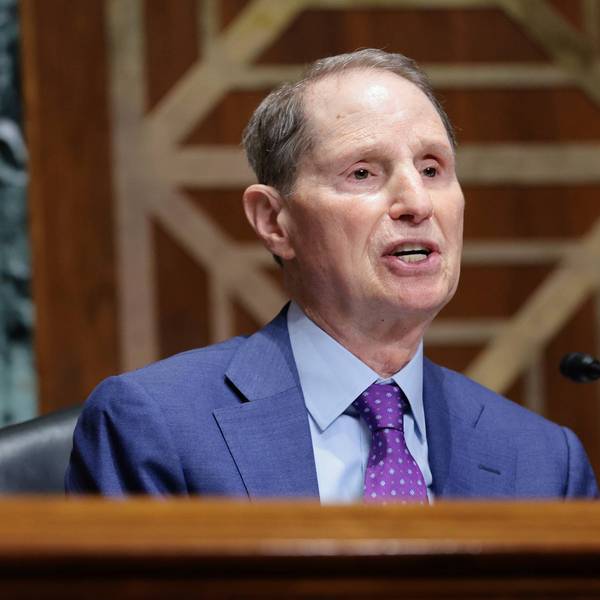
The 50-46 party-line vote, reported by Common Dreams, defeated a Congressional Review Act resolution introduced by Sen. Ron Wyden (D-Ore.) and co-signed by 20 Democratic colleagues and Sen. Bernie Sanders (I-Vt.). The resolution would have overturned the Trump administration's final rule establishing the Centers for Medicare and Medicaid Services' so-called Wasteful and Inappropriate Service Reduction Model — known, in an acronym that tells you everything about who named it, as WISeR.
The CMS claims the program "helps protect American taxpayers by using enhanced technologies, such as artificial intelligence and machine learning, along with human clinical review, to ensure timely and appropriate Medicare payment for select items and services." That is the official version. The version documented by people actually using the program looks different. According to KFF's reporting cited by Common Dreams, WISeR has already "created confusion, errors, long wait times, and stress" for Medicare patients — leaving them, as Alex Jacquez of the Groundwork Collaborative put it, "ensnared in the same red tape as those with private insurance."
That last phrase is worth pausing on. Medicare was designed precisely to spare seniors the coverage denials and authorization delays that define private insurance. The WISeR program does not eliminate that system — it imports it. And it does so through automation, which means faster denials, at scale, with less human accountability at each decision point. The efficiency argument for AI in healthcare administration has always been a cost-cutting argument wearing a patient-care costume.
The question the source coverage does not fully answer — but the vote answers plainly — is why every Republican senator supported this. The CRS resolution was not a close ideological call. It was a vote on whether an algorithm, operated by a private company under a federal contract, should have the power to delay or deny care to Medicare beneficiaries. Sen. Ed Markey (D-Mass.) stated the stakes without ambiguity after the vote: "Doctors should be deciding what care seniors need — not a computer program."
The answer to why Republicans voted as they did is structural, not rhetorical. The financial incentives built into the healthcare industry run directly toward denial. Every coverage authorization that gets delayed or rejected is a cost not paid. When that denial is generated by an algorithm rather than a human reviewer, it becomes harder to challenge, harder to appeal, and harder to attribute to any individual decision-maker. The AI does not have a name. It does not have a supervisor. It does not have a lobby registration. But the companies that build and operate these systems do — and those companies have interests that align precisely with the outcome Thursday's vote preserved.
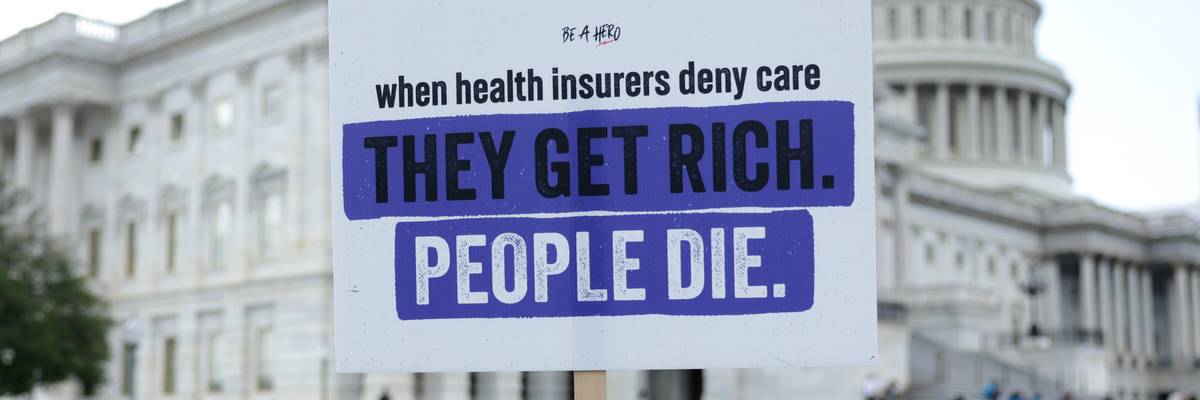
The AFL-CIO, the nation's largest labor federation, was direct: "No senior should have to wait weeks to see a doctor because a flawed AI system won't authorize it. The Trump administration's WISeR program is delaying treatment for Medicare patients and putting tech companies' interests first." That framing — tech companies' interests — is the one that the official CMS language is designed to obscure. The program is not described as a mechanism for shifting Medicare savings to private contractors. It is described as a tool for protecting taxpayers. The taxpayers in question are currently waiting for authorizations that may never come.
This is the same structural logic that has driven private equity's expansion into hospital and nursing home ownership — a pattern Tinsel News has documented in the context of 20,000 excess deaths linked to PE-owned facilities. The mechanism differs, but the incentive is identical: extract value from healthcare by reducing the care delivered. When the tool is an algorithm rather than a debt-financed buyout, the politics are easier. Nobody photographs an AI denying a hip replacement.
Sen. Josh Hawley's position deserves specific attention here. Alex Lawson, executive director of Social Security Works, named him directly: Hawley "pretends he would oppose Medicare delays and denials by algorithm or AI, but when the vote is called dutifully dances to the tune his master calls." Hawley has built a political identity around economic populism and skepticism of corporate power — including, at various points, skepticism of the tech industry. His vote to preserve an AI-driven Medicare denial program run by private contractors is not a contradiction of that identity. It is a clarification of it. The populism is for speeches. The vote is for the industry.

The broader pattern here is not unique to healthcare. Automation is increasingly being used across federal programs as a mechanism for reducing access while maintaining the appearance of a program's existence. The program is still called Medicare. The coverage is still nominally available. But a layer of algorithmic review, operated by a private company with financial incentives to deny, now sits between the patient and the care. This is what gutting a program looks like when you cannot politically afford to eliminate it. You do not repeal it. You automate the denial.
Lawson put it plainly: "Their goal is to destroy Medicare, to destroy guaranteed healthcare, to ensure that every facet of the 'healthcare system' serves only one purpose, profit." That is advocacy language, and it is worth distinguishing it from the structural argument — which does not require attributing intent. The structural argument is simpler: the WISeR program creates financial incentives for coverage denial, places those incentives inside an opaque algorithmic system operated by private companies, and removes the human accountability that makes individual denials contestable. Whether or not destruction is the goal, it is the likely outcome for the patients currently caught in it.
The CMS WISeR program allows private companies to use AI and machine learning — with claimed human clinical review — to assess Medicare coverage for "select items and services." Critics, including KFF and the Groundwork Collaborative, say the rollout has produced errors, long authorization delays, and confusion. Patients describe being subjected to the same prior-authorization obstacles that Medicare was designed to eliminate. The program's stated goal is cost savings; its documented effect is delayed and denied care.
This vote also lands in a specific context for the Democratic opposition. The CRA resolution was the last available congressional tool for overturning the WISeR rule without legislation that would require 60 Senate votes. It failed. The administration's AI Medicare program is now effectively insulated from congressional challenge unless Democrats retake the Senate and pass new legislation — a timeline measured in years, not months, while patients face the system today.
That is the consequence that outlasts the vote count. The 50-46 margin is a legislative outcome. The real number is the one that follows: how many Medicare beneficiaries will be denied or delayed care by an algorithm that no senator will have to answer for, because the accountability is distributed across a contractor, a model, a training dataset, and a procurement process that most Americans will never see. The vote happened in public. The denials will happen in private, one authorization request at a time, with no senator's name attached to any of them. That is precisely how it was designed to work — and on Thursday, every Republican senator voted to keep it that way. As Tinsel News has covered in the context of SNAP cuts, the pattern of stripping benefits while obscuring political accountability is not accidental — it is the method. And as the collapse of ACA subsidies demonstrated, when Congress chooses not to act, the people who pay are the ones who cannot afford to wait for the next election.