The ballots were gone for months before a court ordered them back. More than 650,000 of them — confiscated by the Riverside County Sheriff's Department under Chad Bianco, a Republican who had recently run for governor of California, as part of what his office described as a voter fraud inquiry. No court had authorized the seizure. No election official had requested it. A law enforcement agency had simply taken the ballots.
On Thursday, the California Supreme Court put an end to it. In a ruling that named the conduct directly, Chief Justice Patricia Guerrero wrote, as reported by The Guardian US: "Allowing law enforcement unfettered access to ballots, or the ability to handle and count them in secret, based on unregulated protocols, itself creates a substantial risk to election integrity." The court found Bianco's conduct unlawful and ordered the ballots returned.
That sentence deserves to sit for a moment. The court did not find that Bianco's department had mishandled the ballots, or that their procedures were flawed, or that they had acted in excess of their authority in some narrow technical sense. It found that the act of law enforcement seizing ballots — any law enforcement, under any protocol — is itself a threat to the election system those ballots are supposed to feed. The danger was not the execution. The danger was the premise.
Chad Bianco is the elected Republican Sheriff of Riverside County, California. He ran for governor of California as a Republican before the ballot seizure. His department confiscated more than 650,000 ballots in what he characterized as a voter fraud investigation — an action the California Supreme Court has now ruled unlawful and a threat to election integrity.
This matters because the argument Bianco was making — that law enforcement has an independent role to play in policing elections — is not unique to him. It is a position that has been circulating in conservative legal circles and Republican-aligned political networks since at least 2020, when the apparatus of election denial began searching for institutional footholds. The question was never just about one sheriff in one county. It was about whether the precedent could hold: whether a law enforcement officer could assert jurisdiction over ballots, remove them from the custody of election officials, and call it fraud prevention.
The California Supreme Court's answer is no. But the ruling is worth reading not only for what it prohibits but for what its necessity tells us. Courts do not write opinions about conduct this novel unless someone has actually attempted it. Bianco did. He seized 650,000 ballots — a figure that represents not a small sample from a disputed precinct but a mass confiscation of votes from an entire county. The scale was not incidental. It was the mechanism. You do not need to prove any individual ballot is fraudulent if you can remove the entire pool from the count.
The accountability question here runs in two directions. The first is institutional: what systems failed to prevent this from happening in the first place? California election law, as the court's ruling makes clear, does not grant sheriffs jurisdiction over ballots. Bianco acted without legal authority. The question is why that authority was not challenged before 650,000 ballots were removed from the custody of people whose job it is to count them. The second accountability question is political: Bianco ran for governor. He used his office — and now, implicitly, this episode — to build a profile as a Republican willing to act where others hesitate. The ballot seizure was not just a law enforcement decision. It was a political one.
The systemic pattern here is not subtle. What Bianco attempted fits a recognizable template: a Republican official, operating in a jurisdiction where they hold power, uses the machinery of law enforcement to intervene in an election process under the cover of fraud prevention. The intervention does not need to result in a conviction, or even an indictment. The disruption is the point. Ballots that have been seized are ballots that are not being counted. A county that is fighting a court battle to recover its own votes is a county whose election administrators are not running an election — they are running a legal defense.
This is not an abstract concern about democratic norms. It has a direct human impact on every registered voter in Riverside County whose ballot was among those confiscated. Their votes — cast, submitted, and legally tendered — were removed from the process by a sheriff who had no authority to remove them. The court's ruling restores those ballots. It does not restore the time lost, the administrative burden imposed, or the chilling effect on voters who may now wonder whether casting a ballot in Riverside County guarantees that it will be counted.
The election integrity argument Bianco invoked deserves specific scrutiny. Voter fraud in the United States is documented to be extraordinarily rare — a finding consistent across federal studies, state audits, and academic research. The claims that animate fraud investigations of the kind Bianco pursued are typically not evidence-based. They are politically generated. They emerge from a framework in which high turnout is treated as suspicious, mail-in voting is treated as inherently compromised, and the presence of ballots in Democratic-leaning areas is treated as grounds for scrutiny. The fraud inquiry is the vehicle. The ballots are the target.
What the California Supreme Court's ruling does — and this is its most durable contribution — is establish that the mechanism itself is unlawful. It is not enough for a sheriff to claim fraud. It is not enough to open an inquiry. Law enforcement does not have the authority to handle, count, or remove ballots under "unregulated protocols," regardless of the stated justification. The court has drawn a line that was apparently necessary to draw, because someone crossed it.
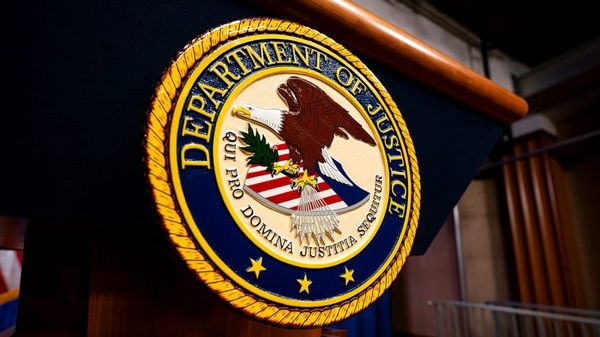
The broader context for this ruling is a sustained national effort to reshape who controls the infrastructure of elections. Polling place closures, mail ballot restrictions, the removal of election officials who certified 2020 results — these are not isolated events. They are components of a strategy that identifies the administration of elections as a pressure point. If you cannot change the votes, you can change the conditions under which votes are cast and counted. Bianco's seizure fits that strategy precisely: not by altering any individual ballot, but by asserting that law enforcement — not election officials — has the final word on whether ballots are legitimate enough to count. It is a logic that found its most explicit federal expression when the Deputy AG suggested armed agents should monitor voting sites, normalizing the presence of law enforcement at the ballot box as a feature rather than a threat.
The court said no. What it did not resolve is whether the institutions that allowed this to proceed for months — while 650,000 votes sat outside the custody of the people constitutionally responsible for them — will examine how a sheriff was able to do this at all, and what prevents the next one from trying. That accounting is harder to reach in a climate where, as Louisiana Republicans demonstrated by gutting a majority-Black congressional district, the courts have already signaled tolerance for interventions that reshape who gets counted and who does not.