Four minerals hold the global electronics industry together. Tin solders the circuit boards. Tantalum stores the electrical charge. Tungsten makes the phone vibrate in your pocket. Gold conducts the signals between components. They are called 3TG — tin, tantalum, tungsten, and gold — and they are present in virtually every smartphone, laptop, electric vehicle, and medical device manufactured on Earth.
They are also financing some of the deadliest armed conflicts of the 21st century. The U.S. Securities and Exchange Commission defines conflict minerals as natural resources whose extraction and trade bankroll armed groups, principally in the Democratic Republic of Congo and adjoining countries. The legal term was codified in the 2010 Dodd-Frank Act. The human reality behind it is older, more violent, and more connected to your daily life than most consumers realize.
A final assessment by the Government Accountability Office, released in October 2024 after 17 mandated reports, concluded that the U.S. conflict minerals disclosure rule has not reduced violence in eastern Congo. In fact, the GAO found that the rule was associated with a spread of violence — armed groups increasingly fought for control of gold mines, because gold is more portable and less traceable than the other three minerals. Fifteen years of regulation, and the problem has migrated rather than diminished.
This explainer is the entry point for Tinsel News's ongoing investigative series, Blood Minerals of the Green Age, which traces the journey of conflict gold from Sudanese mines through UAE refineries and into the global market. The series documents a supply chain that existing regulations were not designed to address — and that the green energy transition is making exponentially larger.
The Four Minerals and What They Do
The term "3TG" is industry shorthand. Each mineral serves a specific, irreplaceable function in modern manufacturing, which is precisely why the supply chain is so difficult to disrupt. If a mineral is, in the SEC's legal language, "necessary to the functionality or production" of a product, the disclosure requirements apply.
Eastern DRC is the world's richest source of coltan, cassiterite, and wolframite. The country also holds roughly 70 percent of global cobalt reserves — a mineral not yet included in the 3TG framework but increasingly classified as conflict-linked by researchers at the Council on Foreign Relations and others. Gold is mined across the eastern provinces of Ituri, North Kivu, and South Kivu, where armed groups have controlled extraction sites for decades.
The Human Cost
Before the supply chain mechanics, before the regulatory frameworks, before the policy analysis — the numbers. The conflict minerals crisis is, at its core, a human catastrophe of staggering scale, unfolding simultaneously in two theaters that together represent the largest displacement crises on Earth.
In the Democratic Republic of Congo, the violence that drives mineral extraction has displaced 8.2 million people — projected to reach 9 million by end-2026. Over 1.2 million Congolese refugees are hosted across Africa. OCHA reports more than 5.35 million people displaced in 2025 alone, with 26.6 million experiencing acute food insecurity nationwide. The Norwegian Refugee Council has documented waves of extreme violence in eastern Congo that force hundreds of thousands from their homes in a matter of days — people fleeing mines and villages that armed groups seize to extract the minerals in your phone.
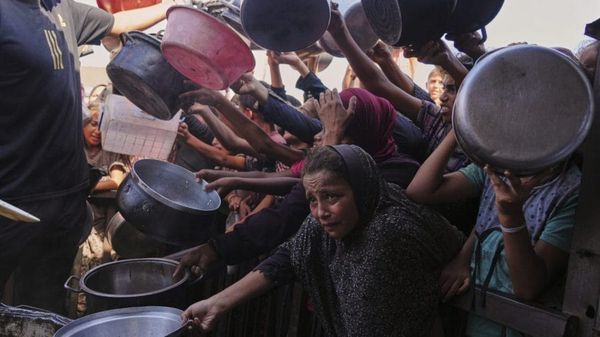
In Sudan, the scale is even more catastrophic. An estimated 33.7 million people — around two-thirds of the population — are expected to need humanitarian assistance in 2026. More than 20 million require health assistance. Twenty-one million face acute food insecurity. The conflict has displaced roughly 13.6 million people — 9.3 million internally and 4.3 million seeking refuge in neighboring countries. Famine conditions have been confirmed in El Fasher and Kadugli, with famine risk identified in 20 additional areas across Greater Darfur and Greater Kordofan.
These are not background statistics. They are the direct consequence of a mineral economy in which armed groups have a financial incentive to seize territory, terrorize populations, and maintain instability. The numbers are the reason anyone should care about smelter audits and SEC filings.
Sexual Violence as a Weapon of War
The connection between mineral extraction and sexual violence in the DRC is not incidental. It is structural, systematic, and extensively documented.
Dr. Denis Mukwege, the Congolese gynecologist who won the 2018 Nobel Peace Prize for his work treating survivors of sexual violence, has spent more than two decades documenting the systematic use of rape as a weapon of war in mineral-rich eastern Congo. His organization, the Panzi Foundation, has treated tens of thousands of survivors and has drawn a direct line between armed group control of mining sites and the use of mass sexual violence to terrorize local populations into submission. Sexual violence in the DRC is a deliberate tactic used by armed groups to control mineral-rich regions — not a byproduct of conflict, but a strategy of domination.
The Mukwege Foundation has warned that any suspension of U.S. conflict minerals law directly increases the risk of sexual violence, because the disclosure requirements — however inadequate — represent the only external pressure on companies to investigate their supply chains. Without that pressure, armed groups face even fewer consequences for using rape as a tool of territorial control.
Cases of sexual violence, including child sexual violence, have increased dramatically as M23 and other armed groups have expanded their control over mineral-rich territories. The violence is not random. It follows the geography of extraction — concentrated in the provinces of North Kivu, South Kivu, and Ituri, where the most valuable coltan, cassiterite, and gold deposits are located. Armed groups use sexual violence to terrorize communities into abandoning land, to punish populations suspected of supporting rival groups, and to establish dominance over territories they intend to mine.
The U.S. Treasury itself, in its August 2025 sanctions announcement, identified mines controlled by armed groups as linked to "forced labor, child labor, and sexual and gender-based violence" — an explicit acknowledgment by the U.S. government that these atrocities are embedded in the supply chain.
Children in the Mines
Approximately 255,000 Congolese work in artisanal cobalt mining. At least 40,000 of them are children — some as young as six years old. They work without protective equipment in hand-dug tunnels with no structural supports and no ventilation. Tunnel collapses are frequent. Cobalt dust causes hard metal lung disease. The children earn as little as $1 to $2 per day extracting the mineral that makes lithium-ion batteries function.
In 2019, International Rights Advocates filed a landmark lawsuit against Apple, Alphabet (Google), Dell, Microsoft, and Tesla on behalf of 14 plaintiffs — guardians of children killed in tunnel collapses and children who were permanently maimed while working in cobalt mines. The case, Jane Doe 1 et al. v. Apple Inc. et al., alleged that the companies knowingly benefited from child labor in their cobalt supply chains.
The DC Circuit dismissed the case in March 2024. The court ruled that purchasing cobalt through the global supply chain did not constitute illegal "participation in a venture" under the Trafficking Victims Protection Act. The companies' argument — that the supply chain was too attenuated to establish legal responsibility — prevailed. None of the families received compensation. None of the companies faced legal consequences. The ruling established that under current U.S. law, there is no accountability pathway for children killed or maimed in the mines that supply the world's largest technology companies.
Sudan: What the Gold Funds
The financial pipeline of conflict gold — documented in detail in Tinsel News's Blood Minerals investigation — is not an abstract economic story. The money buys something specific: the capacity to wage a war that has produced confirmed famine conditions, ethnic cleansing in Darfur, and one of the worst humanitarian disasters of the 21st century.
In North Darfur alone, nearly 85,000 children suffering from severe acute malnutrition were treated between January and November 2025 — roughly one child every six minutes. Families are eating once a day or nothing at all, with many surviving on boiled leaves or animal feed. Eighty percent of health facilities across conflict-affected areas are damaged or out of service.
The World Food Programme has identified Sudan as the world's largest hunger crisis. CARE reports that female-headed households are three times more food insecure than other households, and that famine is spreading faster than the international response can track. The Norwegian Refugee Council has described Kordofan as a "countdown to catastrophe" as the world once again looks away.
The ethnic cleansing in Darfur — targeting non-Arab communities by the RSF and allied Arab militias — follows a pattern that the International Criminal Court investigated more than a decade ago. The same region. The same targeting. The same impunity. The difference is that the RSF now has an independent revenue stream from gold that makes it financially self-sustaining in ways the Janjaweed militias of the 2000s never were. The gold pipeline documented in our Part 2 investigation is not a secondary feature of the conflict. It is the engine.
Mercury, Silicosis, and Contaminated Water
The health toll on mining communities extends far beyond the immediate violence. Artisanal gold mining across the DRC, Sudan, and adjoining countries relies heavily on mercury amalgamation — a process in which liquid mercury is mixed with gold-bearing ore to separate the gold. Mercury is a potent neurotoxin. It causes irreversible neurological damage, kidney failure, and developmental disabilities in children. When mercury is burned off to isolate the gold, toxic vapor is inhaled by miners, their families, and surrounding communities.
The World Health Organization has identified artisanal gold mining as the single largest source of mercury pollution globally. Mining communities report elevated rates of tremors, memory loss, vision impairment, and kidney disease. Children are especially vulnerable — mercury exposure during development causes permanent cognitive impairment.
Silicosis — chronic lung disease caused by inhaling fine mineral dust — is endemic among artisanal miners who work without masks or ventilation in enclosed tunnels. The condition is progressive and irreversible. Miners who survive tunnel collapses often develop silicosis within years of sustained exposure. Water contamination from mining runoff — carrying mercury, heavy metals, and sediment — poisons the same rivers and wells that communities depend on for drinking water, cooking, and agriculture. The environmental destruction is not a side effect of the mining. It is inseparable from it.
From Mine to Phone: A Six-Stage Supply Chain
The distance between the mine and the consumer is not just geographic. It is structural. Each stage in the supply chain adds intermediaries, crosses borders, and obscures origins. By the time a mineral reaches a finished product, five or six entities have handled it, and the conditions under which it was extracted have been rendered invisible.
The Supply Chain: From Mine to Your Phone
Six stages separate the miner from the consumer. Traceability breaks down at Stage 4.
Artisanal Mining
Hundreds of thousands of miners work with hand tools in informal mines across eastern DRC. Miners earn $1–2 per day. Armed groups control many sites, taxing or directly operating extraction. Hand-dug tunnels with no supports or ventilation collapse frequently.
Local Trading & Consolidation
Minerals sold to local traders at mine sites and transported by foot, bicycle, and truck to regional hubs — Goma, Bukavu, Butembe. Armed groups levy taxes at checkpoints along every transport route.
Cross-Border Smuggling
The laundering stage. Minerals are smuggled from DRC into neighboring countries. Rwanda is the primary transit point. An Atlantic Council analysis found M23 exported at least 150 metric tons of coltan to Rwanda in 2024 — 7–10% of DRC's annual global supply. Gold moves through Chad and South Sudan to reach Gulf refineries.
Smelting & Refining — The Chokepoint
The critical stage: once ore is refined into metal, it becomes physically impossible to distinguish conflict-origin minerals from legitimate sources. Approximately 200–300 smelters and refiners worldwide process 3TG. All global supplies are mixed together. For gold, Dubai is the primary destination — a process Tinsel News traced in detail in the Blood Minerals series.
Component Manufacturing
Refined metals become capacitors, solder, vibration motors, and circuit traces. Manufacturing is concentrated in China, Japan, South Korea, and Taiwan. The minerals are now untraceable.
Product Assembly & Consumer Sales
Components are assembled into finished phones, laptops, cars, and medical devices. By this stage, five or six intermediaries separate the mine from the final product. End consumers have almost no visibility into mineral origins.
Refiners are the critical link in this chain. The roughly 200–300 smelters and refiners that process 3TG globally represent the last point at which mineral origins can theoretically be verified. After refining, the metal is fungible. A tantalum capacitor in a Samsung phone is chemically identical whether the coltan came from a legitimate Australian mine or an M23-controlled site in North Kivu. This is not a failure of will. It is a physical property of refined metals.
The DRC and Sudan: Two Theaters, One Pattern
The conflict minerals framework was built around the DRC. Section 1502 of Dodd-Frank covers the DRC plus nine adjoining countries. But the pattern has replicated — most dramatically in Sudan, where the civil war that began in April 2023 is, at its financial core, a gold war.
Sudan produced approximately 70 tonnes of gold in 2025. At current market prices, that represents roughly $11 billion in value. The vast majority is extracted from territories controlled by the Rapid Support Forces under Mohamed Hamdan "Hemedti" Dagalo. A March 2025 Chatham House report estimated that RSF-controlled areas produced 10 tonnes of gold in 2024, valued at $860 million. That gold funds ammunition, vehicles, weapons, and military recruitment. The RSF has an independent revenue stream that does not depend on capturing territory, taxing the population, or receiving external state funding. The gold is the business model of the conflict.
The RSF controls the majority of Sudan's gold-producing territory. A March 2025 Chatham House report estimated RSF-controlled areas produced 10 tonnes in 2024 alone — $860 million funding ammunition, vehicles, weapons, and recruitment.
Gold is not covered by Dodd-Frank's conflict minerals provisions for Sudan. It flows to Dubai through charter flights, is refined without provenance verification, and enters global markets as clean bullion. The framework was built for the DRC. Sudan fell through the gap.
The pipeline is specific and documented. Gold extracted from RSF-controlled mines across Darfur and Kordofan is shipped west through Chad and the Central African Republic, or south into South Sudan. Approximately 90 percent of smuggled Sudanese gold reaches the United Arab Emirates. UN Comtrade data shows the UAE imported over 147 tonnes of gold from Sudan between 2019 and 2023, worth approximately $9 billion. Once the gold arrives at Dubai refineries, its origin is laundered and it enters the legitimate global market.
In March 2025, Port Sudan authorities filed proceedings against the UAE at the International Court of Justice, accusing the UAE of complicity in genocide. Tinsel News has traced this pipeline in granular detail in our Blood Minerals of the Green Age investigation, and documented how conflict gold flows from Sudanese mines through UAE refineries and into the global supply chain.
The Regulatory Landscape: Two Systems, Neither Sufficient
Two major regulatory frameworks govern conflict minerals. Both were designed for the electronics era. Neither adequately addresses the scale of the problem as it exists today.
Dodd-Frank Section 1502 vs. EU Conflict Minerals Regulation
Two frameworks, different approaches, overlapping gaps
U.S. Dodd-Frank Section 1502
EU Conflict Minerals Regulation
Dodd-Frank Section 1502 required all SEC-reporting companies to conduct a Reasonable Country of Origin Inquiry for 3TG minerals and file annual conflict minerals reports. The rule was never popular with industry. During Trump's first term, the SEC signaled in April 2017 that it would not recommend enforcement actions for companies filing only a basic disclosure form. The administration formally recommended repeal in October 2017. Repeal requires Congressional action and has not passed, but enforcement was effectively hollowed out.
Under the current administration, the SEC is expected to further deprioritize compliance. A Harvard Law analysis notes that executive orders aiming to assert presidential control over independent agencies, combined with a stated goal of identifying ten existing regulations to repeal for every new one enacted, create conditions under which the conflict minerals rule may be suspended through a national security exemption — a mechanism that was drafted but never signed during the first term.
The EU Conflict Minerals Regulation, effective since January 2021, improves on Dodd-Frank in one important respect: it applies to all conflict-affected and high-risk areas globally, not just the DRC region. It also requires actual due diligence rather than mere disclosure. But it covers only EU importers above certain volume thresholds — approximately 600 to 1,000 companies — and critically, it does not apply to downstream manufacturers. The companies that assemble the phones and cars are exempt.
Both frameworks cover only four minerals. Neither addresses cobalt, lithium, rare earth elements, nickel, or graphite — all of which are extracted under conditions that parallel or exceed the original conflict minerals problem.
The Green Energy Paradox
The transition away from fossil fuels — the most important industrial shift of the century — is creating massive new demand for minerals extracted under conditions that mirror the original conflict minerals crisis. Solar panels, wind turbines, EV batteries, and grid storage all require minerals from conflict-affected regions. The regulatory framework has not kept pace.
The original 3TG framework was designed for an electronics-era problem. The green energy transition is building something far larger on top of it. The International Energy Agency's 2025 Global Critical Minerals Outlook reported that lithium demand grew nearly 30 percent in 2024. Nickel, cobalt, graphite, and rare earth demand grew 6 to 8 percent. Energy-storage batteries alone could account for nearly one-third of global lithium demand by 2026.
The DRC sits at the center of this expansion. The country holds roughly 70 percent of the world's cobalt reserves, a mineral essential to lithium-ion batteries. Approximately 30 percent of cobalt production comes from artisanal mines — the same mines where 40,000 children work under conditions documented in the Human Cost section above. The U.S. Department of Labor has formally documented the use of child labor in Congolese cobalt mining. Save the Children estimates the scale at more than 40,000 children, some as young as three years old. Chinese-owned companies control roughly half of DRC's cobalt mines, and most raw cobalt is shipped to China for refining — concentrating both the extraction and the processing outside Western regulatory reach.
Rare earth elements, needed for wind turbine magnets and electric vehicle motors, present a parallel problem. China controls approximately 60 percent of mining and 90 percent of processing globally. Myanmar's conflict zones are a significant source. Graphite, essential for battery anodes, is increasingly mined in Mozambique, where an insurgency has displaced hundreds of thousands of people.
The pattern is consistent. Every mineral critical to decarbonization is concentrated in countries where extraction is linked to armed conflict, labor exploitation, or environmental destruction. The regulatory architecture — built to address four minerals in one region — is structurally incapable of governing this reality.
The Accountability Gap
Disclosure did not reduce violence. The courts dismissed the one major lawsuit. Voluntary programs remain optional. At every level — legislative, judicial, and corporate — the systems designed to prevent conflict mineral extraction from funding atrocities have either failed or been deliberately weakened. The accountability gap is not an accident. It is the product of specific decisions by specific institutions.
Three Pathways to Accountability. All Three Failed.
The regulatory pathway — Dodd-Frank Section 1502 — was tested across 17 GAO reports over more than a decade. The final assessment: violence did not decrease. It may have redirected toward gold. The GAO's 2022 report had already found that conditions had not improved since 2014. Disclosure without enforcement is paperwork, not accountability.
The litigation pathway — IRAdvocates v. Apple, Alphabet, Dell, Microsoft, and Tesla — was the most direct attempt to hold companies responsible for the conditions in their supply chains. Filed in 2019 on behalf of families of dead and maimed children. Dismissed by the DC Circuit in March 2024. The court's ruling — that purchasing through a global supply chain does not constitute "participation in a venture" — closed the most promising legal avenue for holding technology companies accountable. No compensation. No consequences. The legal system, as currently constructed, offers no remedy for a child killed in a cobalt mine.
The sanctions pathway is the most recent. In August 2025, the U.S. Department of the Treasury imposed sanctions on PARECO-FF — an armed group involved in illegal mining operations — and three mining companies: CDMC, East Rise, and Star Dragon. The sanctions specifically targeted entities operating in Rubaya, an area in North Kivu province rich in coltan and other critical minerals. The U.S. Embassy in the DRC described the sanctions as targeting entities linked to "violence and illegal mining" — with specific reference to forced labor, child labor, and sexual and gender-based violence at the mining sites. These sanctions are the most concrete U.S. government action against the conflict minerals supply chain in years. But targeted sanctions against four entities do not address the structural problem. Hundreds of armed groups operate across eastern DRC. Gold smuggling routes through Chad, South Sudan, and the Central African Republic remain open. Dubai refineries continue processing conflict gold with minimal independent oversight.
The voluntary pathway — industry programs like the Responsible Minerals Initiative — audits smelters and refiners, and its Conflict Minerals Reporting Template has become the industry standard. But participation is optional. Companies can opt out with no consequence. The program covers 3TG only — not cobalt, lithium, or rare earths.
The diplomatic pathway may offer the most recent hope. On June 27, 2025, the DRC and Rwanda signed a U.S.-facilitated peace agreement that includes provisions for a regional economic integration framework designed to enhance transparency in critical minerals supply chains. Whether it produces results remains to be seen — previous peace agreements in the region have collapsed, and M23 was not a direct party to the agreement.
In March 2025, Port Sudan authorities filed proceedings against the UAE at the International Court of Justice, accusing the UAE of complicity in genocide for its role in facilitating the conflict gold trade that funds the RSF. The case represents the first attempt to hold a sovereign state legally responsible for its role in the conflict minerals pipeline.
What Can Be Done
The OECD Due Diligence Guidance provides a five-step framework that remains the operational baseline for companies serious about responsible sourcing: establish management systems, identify and assess risks, design a response strategy, submit to independent audit, and report annually. Both the U.S. and EU regulations reference it.
What Can Be Done
For consumers, the most effective actions are concrete. Check a company's conflict minerals report, which SEC-reporting companies file publicly. Support manufacturers with transparent supply chain reporting, such as Fairphone and other certified ethical electronics producers. Extend the lifespan of existing devices — longer use means less demand for new extraction. Recycle electronics properly, since urban mining can recover 3TG from e-waste.
But after the DC Circuit ruling in IRAdvocates v. Apple, after the GAO's final assessment, after 15 years of a disclosure regime that did not reduce violence — the most important thing to understand is what the existing system cannot do. It cannot hold companies legally accountable for children killed in their supply chains. It cannot prevent armed groups from using mineral revenue to fund mass rape. It cannot stop conflict gold from being laundered through Dubai and entering the global market. Every mechanism that was supposed to address these failures — disclosure, litigation, voluntary programs — has been tested and found insufficient.
The systemic lever is political. The 3TG framework needs to expand to include cobalt, lithium, rare earths, and graphite. The geographic restrictions of Dodd-Frank need to match the global scope of the EU regulation. Enforcement needs to be restored, not hollowed out through administrative neglect. The smelter chokepoint — where traceability breaks down — needs independent, mandatory auditing, not voluntary industry programs. And the legal framework needs to be rewritten so that companies cannot purchase minerals from supply chains documented to use child labor and face zero legal consequences.
The GAO's final assessment is the data point that should anchor every policy conversation going forward: the existing framework did not reduce violence. It may have redirected it. That is not an argument for abandoning disclosure requirements. It is an argument for building something that actually works — and extending it to the minerals that will define the next century of industrial production.
Read the Investigation: Blood Minerals of the Green Age
Tinsel News's investigative series traces the journey of conflict gold from Sudanese mines through UAE refineries and into the global market. The series documents the supply chain that existing regulations were not designed to address.
Part 1 Blood Minerals of the Green Age: The Sudan Investigation Part 2 The Gold Pipeline: Tracing Sudan's Conflict Minerals Through Dubai Part 3 Architecture of Complicity: Who Benefits From Conflict Minerals?