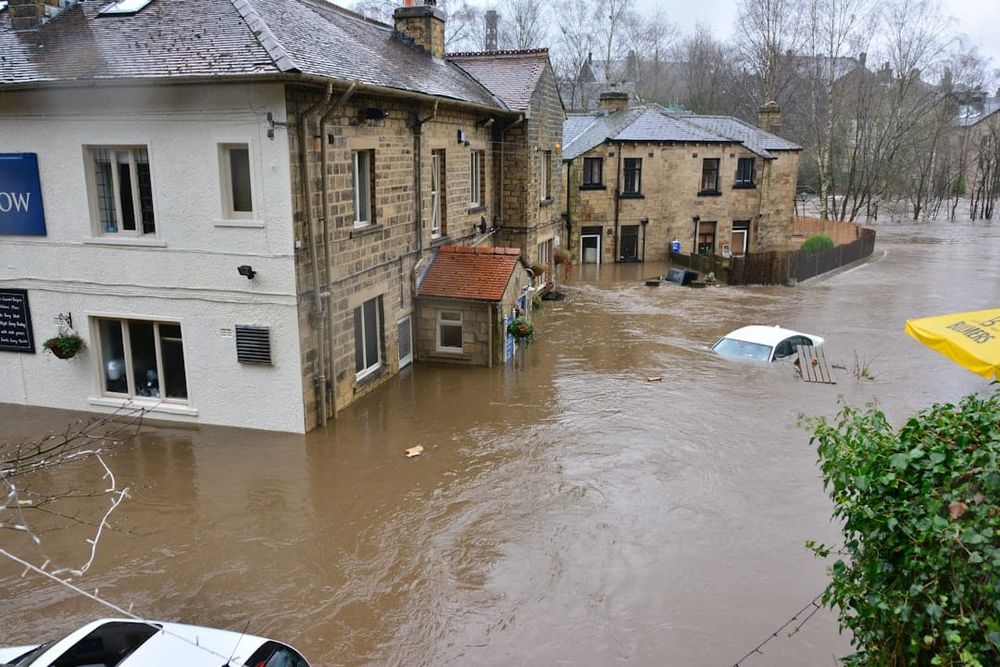
In November 2022, a cyclone named Nargis tore through Pakistan, submerging one-third of the country underwater. Thirty-three million people were displaced. The damage exceeded $30 billion. Pakistan contributes less than 1 percent of global greenhouse gas emissions. The countries that industrialized first — and emitted the most — watched from a distance.
At the UN climate summit that year, negotiators from nearly 200 countries agreed to create something that had been demanded for decades: a fund to compensate nations suffering climate destruction they did not cause. It is called the Loss and Damage Fund. The name is technical. The concept is not. It is about who pays when the planet breaks.
What is the Loss and Damage Fund?
The Loss and Damage Fund is a financial mechanism designed to provide compensation to developing countries for climate-related harms that cannot be prevented or adapted to. It covers two categories of damage: economic losses — destroyed infrastructure, ruined crops, lost livelihoods — and non-economic losses, including cultural heritage sites submerged by rising seas, ecosystems that cannot be restored, and communities forced into permanent displacement.
The fund is administered by the World Bank on an interim basis, a decision that remains controversial. Recipient countries argue the World Bank's governance structure gives wealthy nations disproportionate control over money meant to compensate for harms those same nations caused. The UN Framework Convention on Climate Change oversees the fund's broader policy framework, but operational control sits with the Bank.
Loss and damage is distinct from climate adaptation funding, which helps countries prepare for future impacts — building seawalls, developing drought-resistant crops, relocating vulnerable populations before disaster strikes. Loss and damage addresses what happens when adaptation fails or was never possible. It is the bill for destruction already done.
Economic losses: Destroyed homes, infrastructure, agricultural land, fisheries. Costs that can be calculated in monetary terms.
Non-economic losses: Loss of life, cultural sites, biodiversity, traditional knowledge, community cohesion. Harms that cannot be priced but are no less real.
Slow-onset events: Sea level rise, desertification, glacial melt, ocean acidification. Gradual destruction that displaces millions over decades.
Extreme weather events: Hurricanes, floods, droughts, wildfires intensified by climate change. Sudden catastrophes with immediate, measurable costs.
How was it created?
The demand for a loss and damage fund is not new. Small island nations and climate-vulnerable countries have been asking for compensation since the 1991 UN climate negotiations in Geneva, when Vanuatu first proposed an insurance mechanism for sea level rise. Wealthy nations blocked it. They blocked it again in Kyoto in 1997, in Copenhagen in 2009, and in Paris in 2015.
The breakthrough came at COP27 in Sharm el-Sheikh, Egypt, in November 2022. Pakistan's flooding was recent. Europe had just experienced its worst drought in 500 years. The United States had seen record wildfires and hurricanes. The political conditions shifted. Negotiators agreed to establish the fund, though they left nearly every operational detail unresolved.
A 24-member Transitional Committee spent the next year designing the fund's structure. The committee included representatives from developed and developing nations, though the power imbalance was obvious: wealthy countries had legal teams and decades of institutional experience in climate finance. Many vulnerable nations sent delegations of two or three people.
At COP28 in Dubai in December 2023, countries approved the fund's governing structure. The World Bank agreed to host it for four years, after which the arrangement will be reviewed. The fund officially became operational in 2024, though no money has been distributed yet. The first projects are expected to receive funding in 2025.
Who pays and who receives?
The fund is designed to flow from wealthy, high-emitting countries to developing nations that are disproportionately harmed by climate change. In practice, contributions are voluntary. No country is legally required to pay.
As of May 2025, pledges total approximately $700 million. The largest contributors are the European Union ($300 million), the United Arab Emirates ($100 million), the United Kingdom ($75 million), the United States ($50 million), and Japan ($50 million). Germany, France, and several smaller European nations have also pledged funds. China — the world's largest current emitter — has not committed money, though it has signaled it may contribute on a voluntary basis.
Recipient countries include the 134 nations classified as developing under the UN climate framework. Priority is given to Least Developed Countries (LDCs) and Small Island Developing States (SIDS) — the nations most vulnerable to climate impacts and least responsible for causing them. According to the Intergovernmental Panel on Climate Change, these countries face losses that could reach 20 percent of GDP by 2050 under current warming trajectories.
The United States' $50 million pledge represents 0.0001 percent of its GDP. Climate economists estimate the U.S. share of historical responsibility for climate damages at roughly 25 percent, based on cumulative emissions since industrialization. If the U.S. contribution matched that responsibility, it would owe $100 billion annually — 2,000 times its current pledge.
How much money is involved?
The $700 million pledged so far is a fraction of what is needed. Estimates of annual loss and damage costs in developing countries range from $290 billion to $580 billion by 2030, according to a 2023 UN Environment Programme report. By 2050, those costs could exceed $1 trillion per year.
Pakistan's 2022 floods alone caused $30 billion in damage. Hurricane Maria devastated Dominica in 2017, causing losses equal to 226 percent of the island's GDP. Cyclone Idai hit Mozambique in 2019, displacing 1.8 million people and causing $2 billion in damage in a country with a GDP of $15 billion. The fund's current capitalization could not cover a single major disaster.
The funding gap is not an accident. Wealthy nations have consistently resisted binding commitments. The $700 million in pledges is voluntary, non-binding, and spread over multiple years. Some pledges are loans, not grants — meaning vulnerable countries would have to repay money meant to compensate them for harms they did not cause.
For comparison: wealthy nations spend approximately $2 trillion per year on fossil fuel subsidies, according to the International Monetary Fund. The $700 million pledged to the Loss and Damage Fund is less than the U.S. military spends in two days.
The 'reparations' debate
The term "climate reparations" does not appear in any official UN document. It is used by activists, scholars, and some developing country negotiators to describe the moral and historical basis for the fund. The parallel to reparations for slavery and colonialism is deliberate: both involve compensation for harms caused by one group and suffered by another, harms that created enduring inequalities.
Wealthy nations reject the framing. The United States and European Union have insisted that loss and damage funding is "solidarity-based," not liability-based. The distinction is legal, not semantic. Accepting liability would open governments and corporations to lawsuits. It would establish a precedent that fossil fuel companies — and the governments that enabled them — are financially responsible for climate destruction.
The 2015 Paris Agreement explicitly states that its loss and damage provisions "do not involve or provide a basis for any liability or compensation." That language was non-negotiable for the United States. Without it, the U.S. would not have signed the agreement.
But the moral argument has not gone away. Climate justice advocates point out that the countries least responsible for emissions are suffering the most severe consequences. The average person in the United States has a carbon footprint 16 times larger than the average person in India, yet India faces catastrophic heat waves, flooding, and agricultural collapse. The average person in sub-Saharan Africa emits less CO2 in a year than an American emits in two weeks, yet African nations are experiencing desertification, famine, and displacement on a scale that will force tens of millions to migrate by mid-century.
Some climate economists have proposed alternative funding mechanisms that sidestep the liability question while generating far more money. A carbon tax on fossil fuel extraction, a levy on international aviation and shipping, or a financial transaction tax could raise hundreds of billions annually without requiring direct government contributions. Wealthy nations have blocked all of these proposals.
Where the fund stands now
The Loss and Damage Fund is operational in name only. The governance structure is in place. The World Bank has set up the administrative framework. But no projects have been funded. No money has reached affected communities. The $700 million in pledges has not all been transferred — some countries have committed funds but not yet delivered them.
The first board meeting took place in March 2025. The board approved eligibility criteria and a process for countries to submit funding proposals. The first disbursements are expected in late 2025, pending final approval of individual projects. Early proposals include coastal protection for Pacific island nations, drought relief for the Sahel region, and relocation assistance for communities displaced by sea level rise in Bangladesh.
Meanwhile, the damages continue to accumulate. In 2024 alone, climate-related disasters displaced 32 million people, according to the Internal Displacement Monitoring Centre. Tropical Cyclone Freddy — the longest-lasting cyclone on record — killed over 1,400 people across Malawi, Mozambique, and Madagascar. East Africa experienced its worst drought in 40 years, pushing 23 million people into acute food insecurity. None of these events will be compensated by the fund in time to matter.
The political obstacles remain formidable. In the United States, congressional Republicans have signaled they will oppose any expansion of climate finance. The European Union is facing its own fiscal pressures and rising far-right movements that reject climate action. China's position — whether it will contribute as a donor or remain eligible as a recipient — remains unresolved and could determine whether the fund becomes a serious mechanism or a symbolic gesture. That resistance to international financial obligation has already reshaped other global commitments: the Trump administration's dismantling of two decades of global health infrastructure signaled how quickly the United States can withdraw from the international frameworks vulnerable nations depend on.
Why It Matters NowThe Fund's First Test Is Coming
The Loss and Damage Fund will face its first major test at COP30 in Brazil in November 2025. Developing nations are expected to demand a significant increase in pledges and a timeline for making contributions mandatory rather than voluntary.
The outcome will determine whether the fund becomes a genuine compensation mechanism or remains a political compromise that acknowledges harm without adequately addressing it. Early signs suggest the latter. Wealthy nations have praised the fund's creation while resisting the scale of financing that would make it functional.
For the millions of people already displaced, already mourning losses that cannot be restored, the fund is not an abstraction. It is the difference between rebuilding and aband