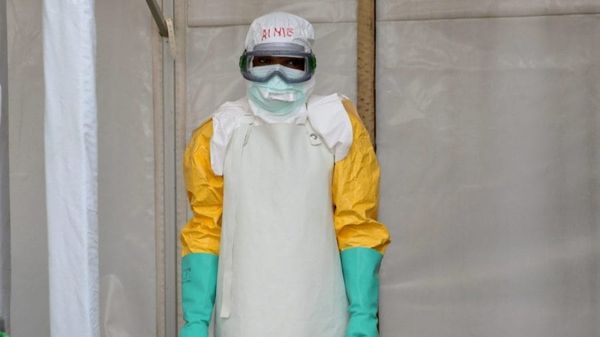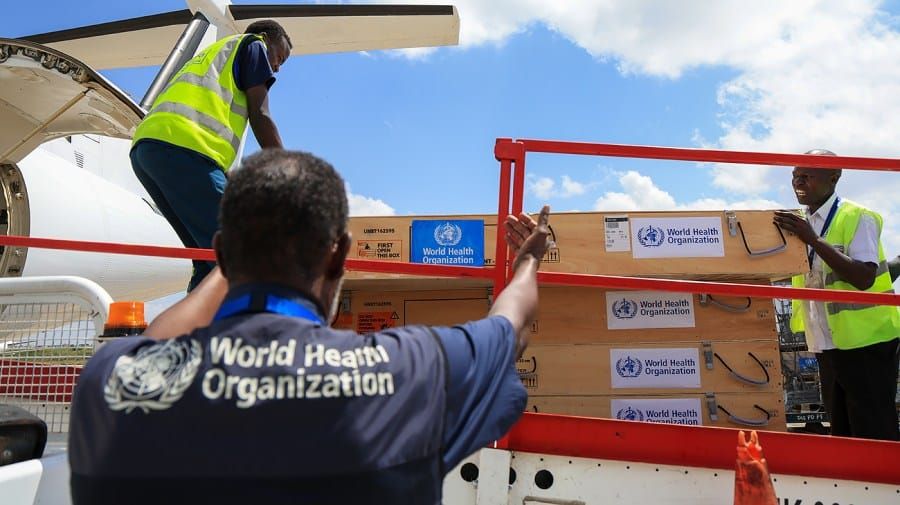
The Ebola outbreak spreading through northeastern Congo has now produced two distinct crises. The first is the outbreak itself — more than 600 cases, at least 139 dead, a vaccine still nine months from deployment, and a public health infrastructure that was systematically dismantled before the first case was confirmed. The second crisis arrived last week, when the United States announced it wanted to build a quarantine facility on Kenyan soil — not for Congolese patients, not for regional health workers, but for Americans who might be exposed to the virus.
On Friday, a Kenyan court blocked the plan, according to The Hill, suspending the Kenyan government's permission for the facility amid a wave of public backlash. Critics accused the Kenyan government of trading away national sovereignty. But the court order, while significant, is the smaller story. The larger one is the logic the U.S. proposal embodies: that the same government which destroyed the global health system capable of stopping Ebola at its source is now rebuilding, selectively, only the part of that system designed to protect Americans.
To understand why a quarantine facility for Americans on Kenyan soil represents something more than a diplomatic misstep, you have to start in Washington — not Nairobi, not Kinshasa. Earlier this year, the Trump administration's dismantling of USAID and the broader foreign aid apparatus eliminated programs that had spent two decades building the early-warning systems, laboratory networks, and community health infrastructure that made Ebola containable. As Tinsel News has documented in detail, that dismantling was not incidental — it was policy, executed through the DOGE process and justified as fiscal efficiency.
The infrastructure that was cut included the very programs designed to detect hemorrhagic fever outbreaks before they crossed borders. It included contact tracing networks in eastern Congo. It included the WHO coordination capacity that allowed regional health ministries to act before a local outbreak became a regional emergency. The USAID dismantling did not just reduce America's global health footprint — it created the conditions in which a manageable outbreak becomes an international emergency that now, apparently, requires emergency quarantine facilities for U.S. nationals on foreign territory.
That is the sequence the U.S. proposal asks the world to ignore. Destroy the system that would have contained the outbreak. Watch the outbreak grow. Build a facility to protect your own people from the outbreak you helped create the conditions for. Ask a sovereign nation to host it. Express surprise when that nation's courts say no.
The programs eliminated through the DOGE-driven USAID restructuring included community health worker networks in the DRC, cross-border disease surveillance between Congo and Uganda, laboratory capacity for rapid hemorrhagic fever identification, and WHO coordination funding that allowed regional health ministries to respond to outbreaks before they crossed borders. These were not abstract programs — they were the specific infrastructure that contained previous Ebola outbreaks before they reached 600 cases.
The Kenyan public backlash was not irrational, and it was not merely nationalist sentiment. Kenya is roughly 1,500 kilometers from the outbreak's current epicenter in northeastern Congo. It is not a frontline state. The proposal to place a U.S. quarantine facility there — bypassing the countries actually bearing the outbreak's weight — carries an implicit message: American health security is worth diplomatic capital, but Congolese and Ugandan health security is not worth the aid dollars that were cut. Kenyans read that message clearly. So did the court.
The power and money logic here is straightforward. The U.S. government has international obligations, including protecting its own nationals abroad. A quarantine facility for potentially exposed Americans is, in isolation, a defensible public health measure. But that defense collapses when you set it against the decision to eliminate the programs that would have made such a facility unnecessary. The administration chose to cut global health infrastructure, accepted the outbreak risk that choice created, and is now spending diplomatic capital in a country not directly affected by the outbreak to manage the consequences for Americans specifically.
The Congolese and Ugandan communities living inside the outbreak zone — the people for whom no emergency infrastructure is being rebuilt, on whose soil no quarantine facility is being proposed — are the measure of that choice. As Tinsel News has reported on the broader containment failure, the communities most exposed to Ebola are also the communities that lost the most when USAID programs were cut. The correlation is not coincidental. It is the architecture of the policy.
There is a systemic pattern here that extends beyond this outbreak. The United States has a documented history of building global health infrastructure during crises, cutting it during periods of political retrenchment, and then treating the resulting emergencies as unpredictable. PEPFAR was built after AIDS had already killed millions. The Global Health Security Agenda was built after Ebola killed more than 11,000 people in West Africa between 2014 and 2016. Each time the infrastructure is rebuilt, it is framed as American generosity. Each time it is cut, it is framed as fiscal responsibility. The people who pay the cost of the cuts are not American.
The Kenyan court's order is, in this context, a form of accountability the U.S. political system has not provided. Congress has not held hearings on the relationship between USAID cuts and the current Ebola trajectory. No administration official has been asked, on the record, to explain why the programs that would have contained this outbreak were eliminated months before it began. The Kenyan judiciary, responding to domestic public pressure, has done what American oversight institutions have not: forced a pause.
Whether the facility is ultimately built — in Kenya or elsewhere — matters less than what the proposal reveals about how the U.S. government has calculated the value of global health infrastructure. The calculation is not difficult to read. When the infrastructure protects everyone, it is expendable. When the outbreak reaches a point where Americans might be exposed, emergency measures are suddenly available. The emergency measures just don't extend to the people who have been living inside the emergency all along.
The next Ebola outbreak will arrive in the same conditions as this one: a detection system that is slower than it should be, a vaccine pipeline that is longer than it needs to be, and community health networks that are thinner than they were two years ago. The U.S. will likely respond the same way — with emergency measures calibrated to American exposure risk, proposed in countries chosen for logistical convenience rather than epidemiological need. Unless the policy that created those conditions is changed, Kenya will not be the last country asked to host the consequences of Washington's choices. It will just be the first one that said no in court.