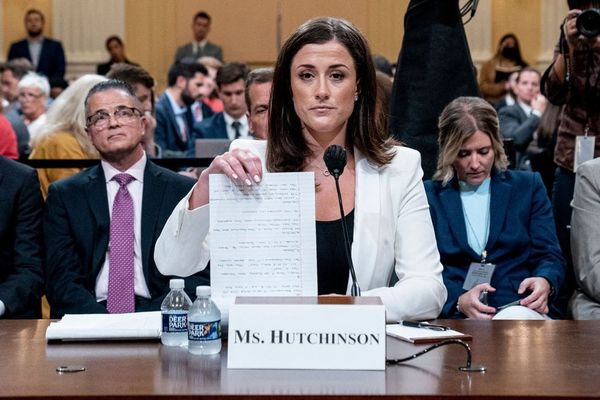
Georgia Fort is a journalist based in Minneapolis. She did not know that the federal government had obtained six months of her telephone records. She was not told. She was not given the opportunity to contest it. According to court papers filed by her lawyers and reported by The Guardian US, she had no legal mechanism to push back — because the government never told her it was happening.
That is not a bureaucratic oversight. It is the design of the program.
The Department of Homeland Security has been deploying what is known as a Section 1509 administrative summons — a legal tool so obscure that most First Amendment attorneys had not encountered it in this context before this administration began using it. Unlike a subpoena, which typically requires judicial sign-off and affords targets some form of notice, the 1509 summons lets the government go directly to telecommunications companies and social media platforms with demands for private records. No judge approves the request. No target is notified. The data moves, and the person whose life is inside it finds out later, if ever.
Section 1509 of Title 19 of the U.S. Code is a customs enforcement tool originally designed to compel the production of business records in trade and import investigations. The Trump administration's DHS has asserted that the provision grants it authority to demand private communications records — phone logs, social media data — from third-party companies without a court order or notice to the individual being investigated. Federal judges have rejected that interpretation in at least some instances; DHS has continued using the tool regardless.
The targets, according to The Guardian US's reporting, are not suspected criminals or foreign agents. They are journalists. Nonprofits. Labor unions. Organizations whose common thread is that they scrutinize, document, or organize resistance to the administration's immigration and enforcement agenda. The pattern is not incidental. The 1509 summons, in this application, is a surveillance instrument aimed at civil society.
What makes this particular story more troubling than the usual account of government overreach is a single documented fact: federal judges have already rejected this legal theory. Courts have looked at the administration's claimed authority to use 1509 summonses against individuals in this context and said no. The administration's response was not to revise its legal position or to seek congressional authorization. It was to go around the courts — directly to the telecommunications companies and platforms, which have their own incentives to comply quietly rather than litigate.
This is the accountability gap that Fort's case makes visible. When the government subpoenas a journalist through normal legal channels, there is at minimum a procedural moment — a filing, a hearing, a chance for a news organization or civil liberties group to intervene. The 1509 summons eliminates that moment. The data is already gone before anyone with standing to object knows to object. By the time lawyers are filing court papers, the records have been in government hands for months.
The choice to go directly to the platforms after judicial rejection is not a legal gray area. It is a deliberate circumvention of judicial authority. Courts that have reviewed the 1509 theory and rejected it did not issue advisory opinions — they ruled. Continuing the same practice through a different channel, one that avoids the courtroom entirely, is the administration treating judicial oversight as an obstacle to route around rather than a constraint to respect. As Tinsel News has reported, the pattern of ignoring court orders has become a governing strategy, not an aberration.
The targeting of journalists is its own category of concern, but the inclusion of nonprofits and unions in the same program tells you what the program is actually for. These are not organizations that share a policy agenda. They share a function: they watch what the government does, they organize people to respond to it, and they create institutional friction against unchecked enforcement power. The DHS, under this administration, has already demonstrated its willingness to use surveillance against domestic dissent. Tinsel News previously reported that DHS sent undercover agents into community meetings and seized financial records of unions — the 1509 summons program fits the same operational logic.
The telecommunications and social media companies receiving these summonses occupy an uncomfortable position. They are not the government. They have no obligation to comply with a legal demand that courts have found to lack valid authority. And yet the incentive structure pushes toward quiet compliance: fighting a government summons is expensive, the legal outcome is uncertain, and the reputational cost of being seen as an obstacle to law enforcement — however legally dubious that enforcement is — carries its own risk. The result is a system in which the government's most aggressive legal claims get tested not in court, where they have already lost, but in corporate compliance departments, where the standard is closer to plausibility than legality.
Press freedom organizations have long documented the chilling effect of government surveillance on journalists' sources — the way that even the possibility of monitoring causes people with information to go silent. The 1509 program compounds that effect: because targets are not notified, sources have no way to know whether their communications with a reporter have already been obtained. The uncertainty itself is corrosive. A source who cannot assess the risk cannot make an informed decision about whether to talk. This is not a side effect of the program. It is one of its functions.
The administration's claimed authority here also has no obvious limiting principle. If Section 1509 authorizes DHS to pull telephone records from a Minneapolis journalist investigating immigration enforcement, it is not clear what it does not authorize. The same legal theory, applied consistently, would permit the same demand against any individual or organization that DHS characterizes as relevant to a customs or border investigation — a category the administration has interpreted with notable elasticity. The use of regulatory and enforcement tools against press institutions has accelerated across multiple agencies; the 1509 summons represents the same impulse operating at the infrastructure level, where the records move before anyone can mount a legal challenge.
Georgia Fort's lawyers found out because they were already in court. Most people whose records have been obtained through this mechanism will not have lawyers in court. They will not find out at all. That asymmetry — government with full access to private communications, individuals with no knowledge and no recourse — is not a feature of a surveillance program that respects constitutional limits. It is a feature of one that has decided those limits do not apply to it.
The next legal challenge will almost certainly face the same structural problem as the last: by the time a court rules, the records are already in government files, and the administration will simply find another channel. The real enforcement mechanism here is not the courts — it is the platforms. If telecommunications companies and social media providers refuse to comply with summonses that courts have rejected, the program ends. If they continue to comply because compliance is easier than resistance, the program continues regardless of what any judge says. That is the pressure point the administration has identified, and it is not one the courts can easily reach.