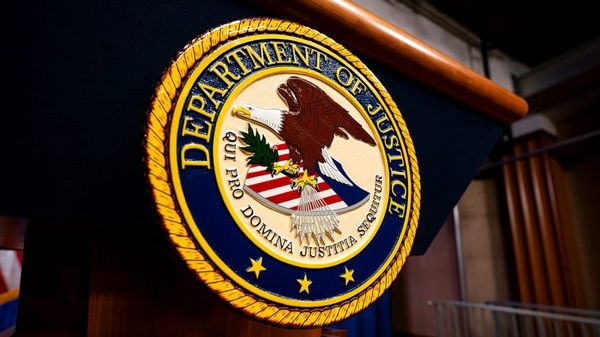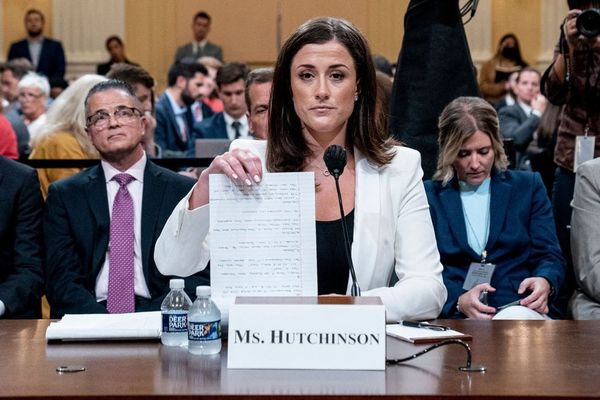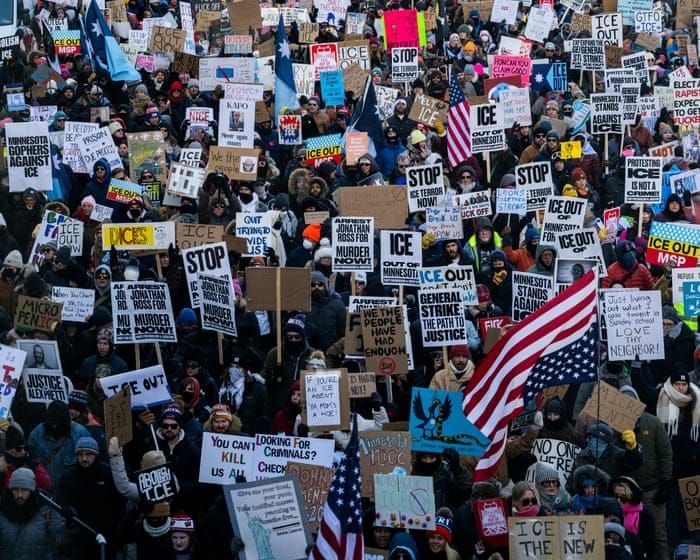
The Department of Homeland Security did not send undercover agents to community meetings in the Twin Cities and New York because it suspected a crime. It sent them because people were organizing against ICE. That distinction — between investigating criminal activity and monitoring political opposition — is the one the agency appears to have erased.
According to The Guardian US, internal investigative reports obtained through disclosure requests show DHS deployed undercover agents to infiltrate community meetings, penetrated Signal group chats, and obtained the financial records of mainstream unions and left-leaning nonprofit organizations. The operation targeted groups opposing the administration's immigration crackdown in Minnesota — not armed militias, not foreign agents, not criminal enterprises. Unions. Nonprofits. People who showed up to public meetings.
This is not a scandal about overreach. It is a description of how the system is now designed to work. What these records document is not an agency that went rogue. It is an agency that received a mandate — suppress organized resistance to immigration enforcement — and executed it using every tool available. The question is not whether DHS exceeded its authority. The question is whether the authority itself has been redefined to treat dissent as a threat category.
According to internal investigative reports obtained by The Guardian US, DHS sent undercover agents to community meetings in the Twin Cities and New York, infiltrated Signal encrypted chats, and obtained financial records of mainstream unions and left-leaning nonprofits — all in connection with opposition to the administration's immigration enforcement operations in Minnesota.
Follow the institutional logic. ICE operations in Minnesota generated organized community resistance — protests, legal support networks, mutual aid, union coordination. DHS responded not by adjusting enforcement strategy but by treating the resistance itself as the problem to be managed. Undercover agents at community meetings are not there to prevent violence. They are there to map the opposition: who leads it, who funds it, who attends. Financial records of unions and nonprofits are not evidence of terrorism. They are intelligence about organizational capacity.
The source material stops short of one question: what legal authority did DHS invoke to obtain the financial records of organizations that had committed no crime? The Bank Secrecy Act, national security letters, and administrative subpoenas all create pathways for federal agencies to access financial data with minimal judicial oversight. The post-9/11 architecture of domestic surveillance was sold as a counterterrorism tool. What these records describe is that architecture being applied to union organizers and nonprofit staff who opposed a deportation program.
The pattern is not new, but the scale and the target are clarifying. COINTELPRO monitored and disrupted civil rights and anti-war organizations through the 1950s and 1970s. The Church Committee investigations in 1975 established that the FBI had conducted surveillance of more than 200,000 individuals and organizations — not because they were criminal threats, but because they were political ones. Congress responded with the Privacy Act, the Foreign Intelligence Surveillance Act, and a series of Attorney General guidelines meant to separate legitimate law enforcement from political monitoring. Those guardrails have been eroding for decades. What these DHS records describe is what erosion looks like when it reaches the baseline.
The choice of targets is precise. Mainstream unions and established nonprofits are not fringe actors. They are organizations with legal standing, donor bases, membership rolls, and public accountability structures. Obtaining their financial records tells every organization operating in the same space: your membership data, your donor lists, your operational funding — none of it is private if you organize against federal enforcement priorities. That chilling effect is not incidental to the surveillance operation. It is the operation.
The encrypted chat infiltration deserves separate attention. Signal is used specifically because it is designed to resist government interception. Penetrating a Signal group requires either a compromised device, a participant who is an informant, or — in some documented cases — social engineering to gain membership. The fact that DHS reportedly achieved Signal infiltration means the agency either recruited informants from within these organizing spaces or deployed technical capabilities against people whose only documented activity was opposing a federal immigration program. Either method, applied to lawful political organizing, is a constitutional problem.
This coverage connects to a broader infrastructure of enforcement expansion that Tinsel News has been tracking. ICE has been purchasing location data from commercial brokers to circumvent warrant requirements — converting the data economy into a surveillance pipeline. TSA handed ICE 31,000 traveler records without public notice or legal challenge. The undercover infiltration of anti-ICE organizing is not a separate story. It is the same story at a different point in the enforcement chain: the government is building a comprehensive picture of who opposes its immigration program, how they are funded, how they communicate, and who leads them.
The political context matters here. Minnesota was a specific theater of enforcement. The Twin Cities have significant Somali, Hmong, and Latino immigrant communities with established organizing infrastructure. Unions in the region have been active in immigrant rights work for years. The DHS operation did not emerge from a criminal predicate — it emerged from a political one: these communities were organized, they had resources, and they were successfully building resistance. The surveillance was the administration's answer to effective opposition.
There is a version of this story in which the response is procedural — congressional oversight hearings, inspector general reviews, FOIA litigation. Those mechanisms exist and should be pursued. But the procedural frame obscures the structural one. The oversight architecture for domestic surveillance has been systematically weakened since 2001. The Foreign Intelligence Surveillance Court operates in secret. National security letters carry gag orders. Inspector general offices have been politicized. DHS stopped publishing immigration enforcement data the moment enforcement went unchecked. The agency that is supposed to be the subject of oversight is also the agency that controls the information oversight depends on.
The people most directly affected by this surveillance — union organizers, nonprofit staff, community members who attended meetings — are also the people least likely to know they were monitored. That asymmetry is load-bearing. The government accumulates intelligence on its political opponents while those opponents have no mechanism to discover, challenge, or correct the record. Financial records obtained through administrative process carry no notice requirement. Undercover infiltration carries no disclosure obligation. The surveilled never find out unless someone leaks the internal reports — which is exactly what happened here.
What these records establish is a new operational doctrine: organized opposition to federal enforcement priorities is a surveillance target. Not a legal target, not a criminal target — a surveillance target. The practical consequence is that any organization that builds enough capacity to effectively resist ICE operations should expect to be infiltrated, financially investigated, and mapped. The administration has answered the question of what it will do when communities organize. The answer is in the internal investigative reports.
The next phase of this story is not whether DHS exceeded its authority in some technical legal sense. It is whether the legal authority has been quietly expanded to make this kind of operation routine — and whether Congress, the courts, or the public will treat the answer as acceptable. Every union that organized against ICE in Minnesota, every nonprofit that ran a legal support hotline, every person who attended a community meeting now knows that attendance was potentially documented by a federal agent. That knowledge is itself a policy outcome. It is what domestic surveillance is designed to produce.