ANALYSIS
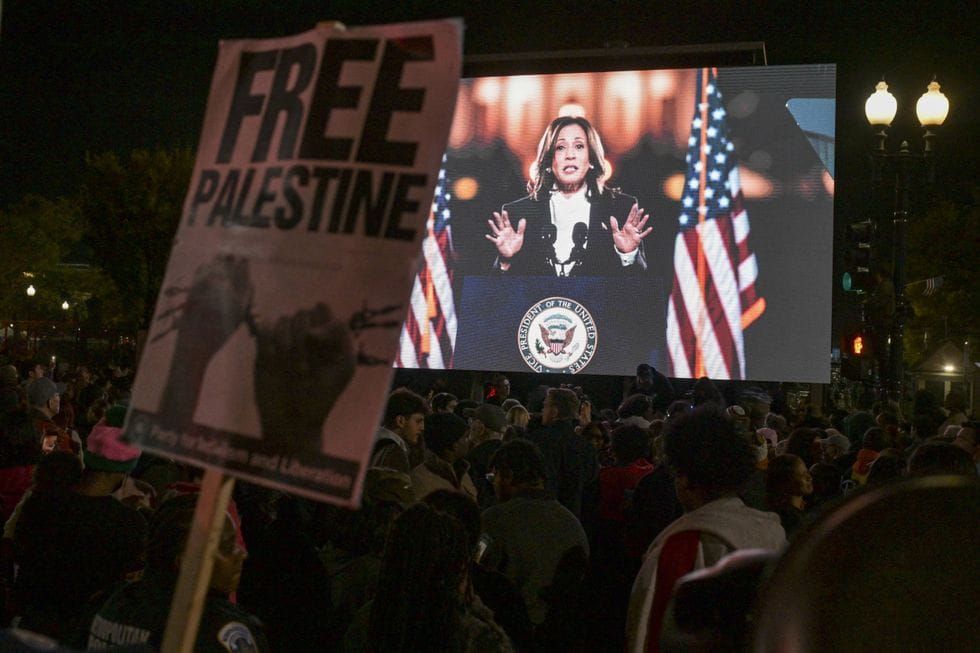
The Democratic National Committee spent months producing an official accounting of why Kamala Harris lost the 2024 election. When it finally arrived in May, the document contained no conclusions about Gaza. That absence is notable. As of Election Day, more than 43,000 Palestinians had been killed, including at least 13,300 identified children, according to figures from the Gaza Ministry of Health. Protest movements demanding a cut-off of U.S. military aid had swept the country for over a year.
The omission looked, to many observers, like a gap. It was not a gap. It was a decision.
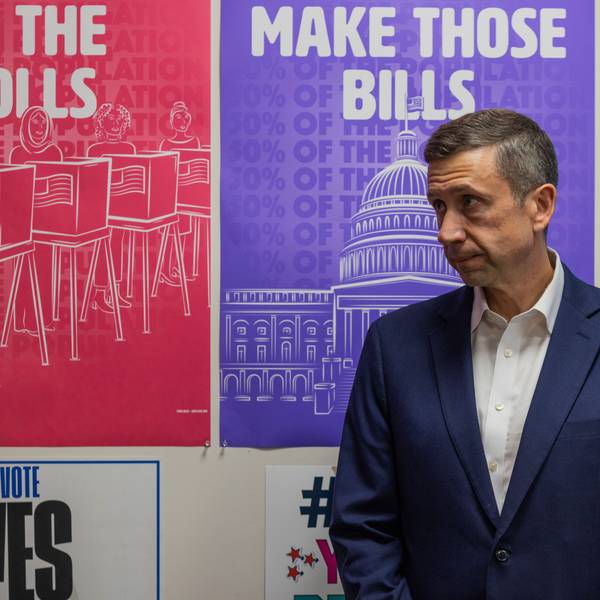
Common Dreams reported that Paul Rivera, the document's author, did examine the role of Gaza in Harris's defeat — and found that it had one. He simply chose not to submit those findings to the DNC for inclusion. Axios first reported the detail on Thursday; Rivera confirmed it. No explanation for the decision has been offered.
Rivera's Gaza analysis was shared with the Institute for Middle East Understanding (IMEU) Policy Project, a pro-Palestinian think tank, which told the DNC that Harris's refusal to break from Biden's Gaza policy proved a liability with progressive voters — especially in Michigan. Rivera did not include this chapter in the official DNC autopsy. His own 564-page independent report, published after he was fired from his DNC advisory role, includes several pages examining Gaza's role in the 2024 result.
What Rivera's independent report does show is specific enough to matter. In Michigan — the swing state that handed Trump a decisive victory — Harris received 30,850 fewer votes than Biden did in 2020 in heavily Arab and Middle Eastern communities including West Bloomfield, Sterling Heights, Dearborn, Dearborn Heights, and Hamtramck. Trump gained 14,874 votes in those same communities. That combined swing accounts for nearly 20 percent of the 234,291-vote shift that delivered the state to Trump. In Dearborn, where the Uncommitted Movement originated and which garnered more than 700,000 votes nationally in the 2024 primary, Harris lost nearly a third of the support Biden had received in 2020. In nearby Hamtramck, her support dropped 39 percent.
Rivera's report does not argue that Gaza alone cost Harris the election. But it establishes a clear causal relationship between her refusal to break from Biden's policy and measurable vote losses in communities whose margins were decisive in a state decided by a fraction of that swing. That is not a peripheral finding. It is the kind of electoral forensics an opposition party needs if it intends to win again.
The question the official autopsy's omission forces is not whether Gaza cost Harris votes — Rivera's own data answers that. The question is: who was the autopsy written for?

An honest post-mortem serves the party's future. It identifies what went wrong so it can be corrected. A post-mortem written to avoid offending current donors and institutional stakeholders serves a different function entirely: it insulates the status quo from accountability while performing the appearance of self-examination. Rivera's decision not to submit his Gaza findings to the DNC — combined with DNC chair Ken Martin's alleged suppression of other critical sections, including a chapter criticizing the party's overreliance on what Rivera called "self-enriching" consultants — suggests the latter was the operating logic here.
Martin has denied Rivera's account of events. Rivera claims to have delivered a three-ring binder containing the full report; Martin says this did not happen. Rivera was subsequently fired from his advisory role following public backlash to the autopsy's release. That sequence — findings withheld, chair disputes the record, author terminated — is not the sequence of an institution interested in learning from failure.
The AIPAC dimension adds another layer that the official autopsy was evidently unwilling to engage. As Tinsel News has documented, AIPAC spent $30 million to defeat a single candidate in a Democratic primary and has built itself into the dominant financial force shaping Democratic electoral outcomes. A party autopsy that honestly examined how U.S. policy on Gaza cost votes in Michigan would, by extension, have to examine who benefits from that policy remaining unchanged — and what financial relationships make changing it politically costly for Democratic leadership. That examination did not occur, at least not in any version the DNC was willing to publish.
This is not a new pattern. The fracture over Israel policy inside the Democratic Party has been visible and documented for years. As Tinsel News has reported, House Democratic leaders split publicly on Israel aid votes, and 40 Senate Democrats voted to block arms to Israel — a number that would have been unimaginable four years ago. The generational shift in Democratic base opinion on Gaza is real, documented, and accelerating. The party leadership's response has been to manage the optics of that shift rather than engage its substance. An autopsy that confirmed Gaza cost the party Michigan would have made that management considerably harder.
Rivera's decision to share his Gaza findings with the IMEU Policy Project rather than submit them to the DNC is itself telling. The findings went to an organization that would use them to make a public argument — not to the institution that could have used them to make an internal correction. Whether that was Rivera's intent or simply the consequence of his choices, the effect is the same: the data exists, it circulates among advocates, and the party that commissioned the study remains officially ignorant of what it shows.
There is a specific kind of institutional failure at work here that goes beyond the familiar story of Democratic timidity on Israel-Palestine. It is the failure of a party to use its own analytical capacity honestly. Rivera did the work. He found what he found. The system around him — the chair who allegedly suppressed chapters, the advisory structure that terminated him, the official document that arrived sanitized — ensured the findings landed somewhere they could not compel change. The autopsy became a document designed to be released, not a document designed to be used.
The voters in Dearborn and Hamtramck who did not show up for Harris, or who voted Uncommitted, or who voted for Trump — they made a political calculation that the Democratic Party has now officially declined to understand. The 2026 midterms are thirteen months away. Michigan is still a swing state. The party that cannot name what happened in 2024 is not equipped to reverse it.