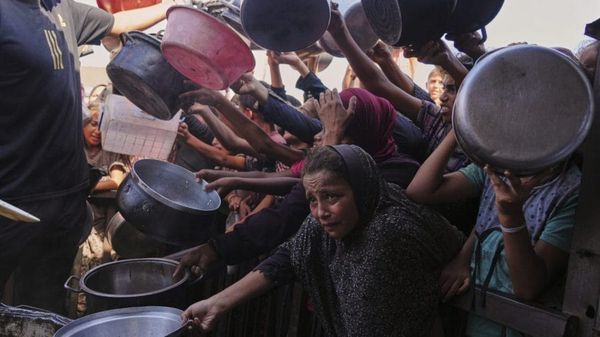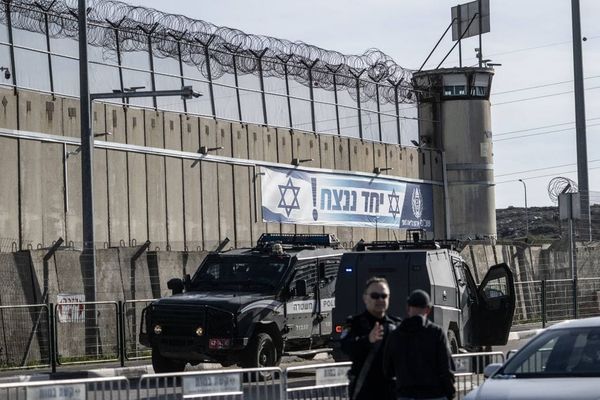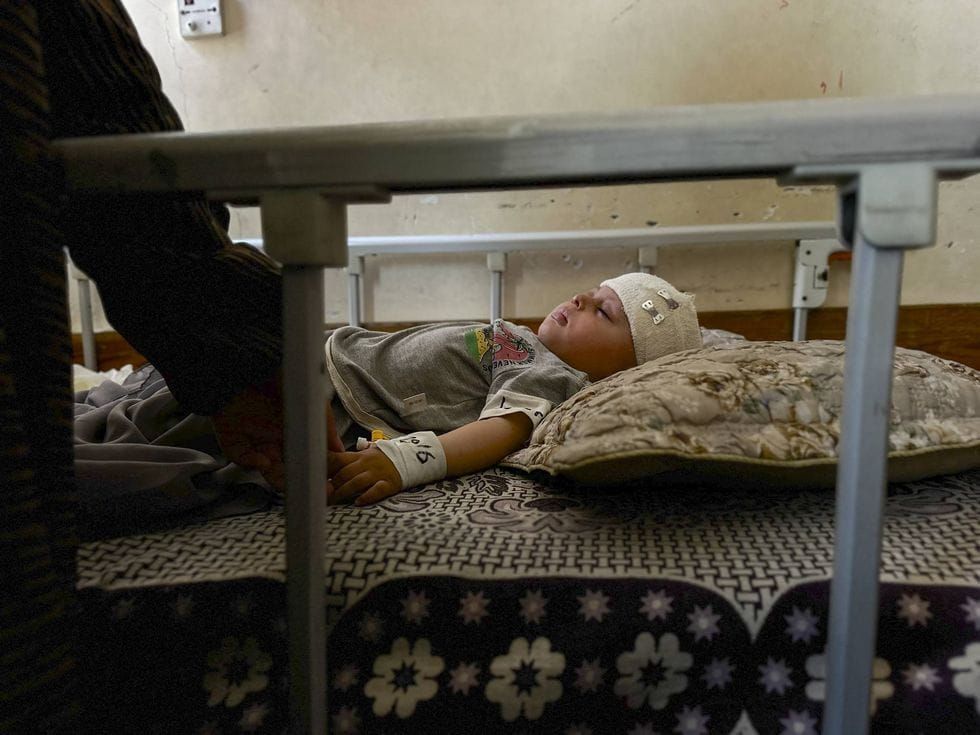
More than 1,000 children under the age of one were killed in Gaza between October 2023 and the ceasefire agreement in October 2025. More than 400 of them were newborns. These figures come not from a Palestinian health ministry or an advocacy group but from the UN Independent International Commission of Inquiry on the Occupied Palestinian Territory, a body established by the Human Rights Council with a mandate to investigate violations of international humanitarian law. The commission's latest report does something beyond tallying the dead. It builds a case.
That distinction — between documentation and argumentation — is the story the source material gestures toward but does not fully name. The commission's report is not primarily a humanitarian appeal. It is an evidentiary architecture. The pattern of injuries, the testimony of medical professionals, the clustering of gunshot wounds to specific body parts on specific days, the anonymous soldier's description of drone killing as a video game — none of this is accidental to the report's structure. It is organized to meet the legal threshold for establishing genocidal intent. The commission is doing the work that a future tribunal will require.
The commission's methodology on gunshot wounds is worth examining in detail. A sample of 168 children killed by gunfire found that 73 were shot in the head and 22 in the chest. One doctor testified: "Based on the clustering of injuries and the targeted body parts, I assess that the Israeli soldiers have been deliberately shooting teenage boys in a game of target practice — a different body part being targeted on different days." The commission assessed this pattern, alongside documented sniper and quadcopter attacks on children, as evidence of intentionality — not battlefield chaos, not tragic error, but deliberate aim.
Under the 1948 Genocide Convention, establishing genocidal intent is the highest evidentiary bar in international law. It requires demonstrating not just that killing occurred, but that it occurred with the specific purpose of destroying a group "in whole or in part." The commission, which issued a prior finding in September that Israel's actions constituted genocide, is now producing the granular documentation that makes that finding prosecutable. The wound patterns, the testimony, the soldier's own words on camera — these are not rhetorical flourishes. They are exhibits.
The soldier's testimony, drawn from an anonymous documentary appearance, is among the most significant passages in the report. "You see everything on a screen. You drop the bomb. It feels like a game. You can sit in some basement of a house, safe, with your helmet off, scratching your balls, half-dressed, and kill Palestinians," the soldier stated. The commission does not cite this as an expression of individual depravity. It cites it as evidence of systematic dehumanization — the institutional condition that makes mass killing of children possible without triggering internal resistance. The drone operator's detachment is not incidental. It is the mechanism.
The report also addresses the question that Israeli authorities have consistently raised in response to civilian casualty figures: collateral damage. The commission rejects this framing directly. The use of high-payload munitions in densely populated areas was not an unfortunate byproduct of targeting combatants — it was, the commission argues, the foreseeable result of a choice. "The Israeli security forces continued and repeated these attacks over a two-year period" with full awareness "that children, with their small, fragile bodies, have a higher chance of death and serious injury in such attacks." Foreseeability, in international humanitarian law, is not a mitigating factor. It is the standard by which proportionality is judged. The commission is arguing that Israel failed that standard, repeatedly and knowingly.
The 1948 Genocide Convention requires proof of "intent to destroy, in whole or in part, a national, ethnical, racial or religious group." Intent can be inferred from a pattern of acts — including the systematic targeting of children, the use of weapons disproportionate to military necessity, and documented statements by military personnel. The commission's September 2024 finding that genocide occurred established the conclusion. This report is assembling the evidentiary pillars that make the conclusion prosecutable before the International Criminal Court or the International Court of Justice.

This matters because the gap between documentation and accountability is precisely where impunity lives. International bodies have produced exhaustive records of atrocities before — in Bosnia, in Rwanda, in Darfur — and those records gathered dust for years before producing prosecutions, if they produced them at all. The commission knows this. The report's structure suggests it is written not for the news cycle but for a legal process that may begin years from now, when political conditions shift and the evidentiary window has not yet closed. Witness testimony fades. Physical evidence disappears. What remains is the documented record.
The United States has been the primary obstacle to that process. As Tinsel News has documented, 40 Senate Democrats voted to block arms transfers to Israel — a number that would have been unthinkable four years ago but still fell short of the threshold needed to force a policy change. The U.S. has vetoed every ceasefire resolution at the Security Council. It has not referred the situation to the ICC, and its executive branch has consistently characterized Israeli military operations in terms that foreclose accountability — "right to self-defense," "complex battlefield," "tragic but not intentional." Each of these formulations is a legal argument dressed as a political statement, and each of them directly contradicts the commission's findings.
The commission's report, taken alongside the ICC's existing arrest warrants for Israeli Prime Minister Benjamin Netanyahu and former Defense Minister Yoav Gallant — issued in November 2024 — creates a legal record that is already in motion. The warrants are not symbolic. They mean that Netanyahu and Gallant cannot travel to the 124 countries that are ICC member states without risk of arrest. The commission's new documentation of child targeting strengthens the evidentiary basis for those warrants and expands the potential scope of charges. As Congress continues to deepen defense ties with Israel, the U.S. is not merely a bystander to this legal process. It is making itself a structural participant in the outcome.
There is a final element of the report that deserves attention and has received almost none: the commission's documentation of entire multigenerational families killed in single strikes. "These deliberate attacks wiped out entire families across two or three or even four generations," the commission stated, noting that Israeli forces were fully aware children would be present. The destruction of family lineage — the elimination of a group's intergenerational continuity — is not incidental to the genocide framework. It is one of its defining features. When a strike kills a grandparent, their children, and their grandchildren simultaneously, it does not merely kill people. It eliminates the transmission of memory, language, culture, and identity that constitutes a people's existence across time. This pattern of targeting is not confined to Gaza — UN human rights investigators have documented similar deliberate strikes on civilians and civilian infrastructure in Lebanon, a finding that broadens the evidentiary landscape considerably.

The commission has now documented more than 20,000 of those children. The question its report poses — not rhetorically, but structurally, through its architecture of evidence — is whether the international legal system has the capacity to respond to documentation this specific, this sourced, and this damning. That answer will not come from this report. It will come from what governments and institutions do with it. The record is now built. The United States has already sanctioned a UN official for documenting war crimes in this conflict. The gap between the evidentiary record and political will to act on it is not a legal problem. It is a test of whether accountability is a principle or a selective instrument — and who gets to decide which it is.