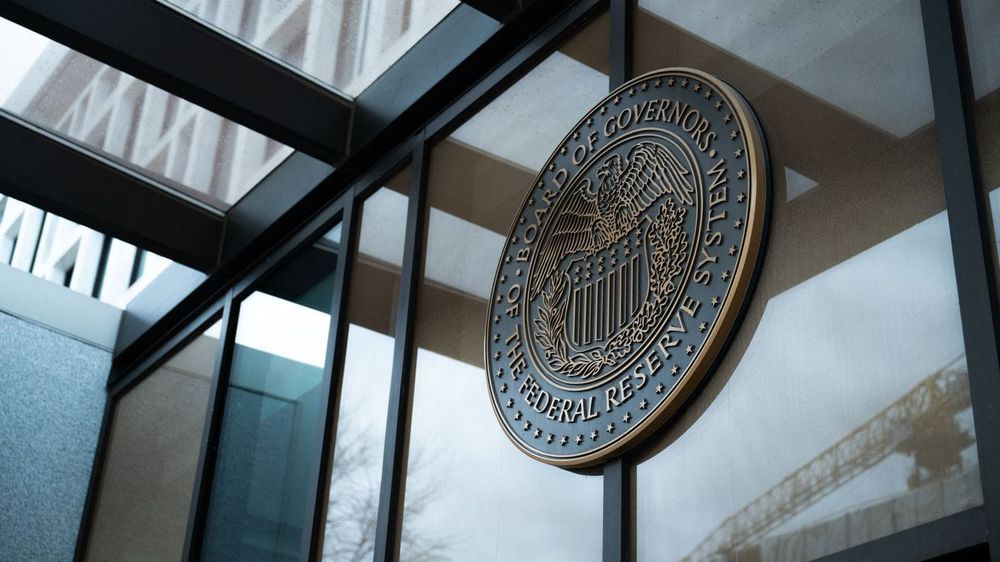
Four Federal Reserve officials dissented at the same policy meeting last week — the most internal rebellion the central bank has seen since October 1992. The number alone is notable. The direction of the dissents is the actual story.
Three of the four officials — Beth Hammack of the Cleveland Fed, Neel Kashkari of the Minneapolis Fed, and Lorie Logan of the Dallas Fed — did not object to holding rates steady. They objected to language in the Fed's policy statement that Axios reported implied further rate cuts were coming. The phrase at issue: that the Fed would assess "the extent and timing of additional adjustments" — wording that treats cuts as the default next move. These three officials wanted that presumption removed entirely. The fourth dissenter, Governor Stephen Miran, went the opposite direction and pushed for a cut immediately.
That split — three hawks pulling one way, one dove pulling the other, all in the same meeting — is not a sign of a lively internal debate. It is a sign of a committee that cannot agree on what direction is even up.
The conventional read on this episode is a story about personnel: Jerome Powell's tenure ends May 15, Kevin Warsh is on track to be confirmed well before the next Fed meeting in mid-June, and the dissents are being read as a preview of the resistance Warsh will face. That reading is accurate as far as it goes. But it understates what is actually at stake.
The deeper issue is that the Federal Reserve is being asked to do two contradictory things at once — and the four-way split is what that contradiction looks like from the inside. On one side, the White House wants rate cuts. President Trump has made no secret of his preference for cheaper borrowing, and Warsh's nomination is widely understood as part of that pressure campaign. On the other side, five consecutive years of above-target inflation have left a significant bloc of Fed officials deeply reluctant to signal that cuts are imminent or inevitable. The three hawkish dissenters are not simply being ornery. They are responding to a real institutional problem: a Fed that signals easing while inflation remains elevated risks losing the credibility that makes its signals matter at all.
This tension does not exist in a vacuum. The United States is currently financing an active military engagement whose costs, as we have reported previously, are being absorbed without formal congressional authorization or a dedicated budget. War spending is inherently inflationary — it pumps money into defense procurement, logistics, and personnel without producing consumer goods or services that absorb that spending. If the Fed cuts rates while war-driven fiscal expansion is ongoing, it is effectively adding monetary stimulus to an already-stimulated economy. The hawkish dissenters understand this. The White House, which wants both the war and the cheap borrowing, is asking the Fed to pretend the tradeoff does not exist.
Warsh, whose nomination advanced through the Senate Banking Committee the same morning the dissents became public, enters this environment with a specific problem. He is being confirmed under circumstances that make him look, fairly or not, like a White House instrument. Three of the most senior regional Fed presidents have now put their objections on the record — formally, in the minutes — before he has chaired a single meeting. That is not an accident of timing. It is a message.
The phrase the three hawkish dissenters objected to — that the Fed would assess "the extent and timing of additional adjustments" — carries specific meaning in central bank communication. The word "additional" implies cuts are the assumed direction of travel. Removing it would signal that the Fed considers rate hikes a live option. In a period of above-target inflation and active war spending, that distinction has real consequences for bond markets, mortgage rates, and the cost of financing federal debt.
The Federal Reserve's institutional authority rests on one thing: the belief that its decisions are insulated from political pressure. That belief has never been perfectly accurate — the Fed is a human institution shaped by the people who run it — but it has been durable enough to anchor global confidence in dollar-denominated assets. What happened at this meeting is a public crack in that foundation. The dissents signal that a significant portion of the committee is prepared to resist political pressure on rate decisions. But the nomination of Warsh, and the conditions under which it is occurring, signals that political pressure is being applied anyway.
The people who will feel this most directly are not bond traders or Senate banking committee members. They are the tens of millions of Americans whose mortgage payments, car loans, and credit card rates are priced off the Fed funds rate. A central bank that cannot project a coherent policy direction — one where the incoming chair is seen as a rate-cut vehicle while three regional presidents are on record opposing even the language of future cuts — is a central bank that will struggle to communicate clearly to markets. That confusion has a cost, and it is not distributed evenly. Households with variable-rate debt, small businesses dependent on credit, and workers sorted into new economic classes by forces beyond their control pay a disproportionate price when monetary policy becomes unpredictable.
It is also worth noting — without overstating — what the four dissents say about the institution Powell is leaving behind. He has been described, including in the Axios reporting, as someone who largely held a fractious committee together through eight years of intense policy debate. The four-way split in his final meeting is not a repudiation of his tenure. It is a measure of how much the external environment has changed around him: war spending, persistent inflation, and a White House that has made monetary policy a political priority in ways that have no recent precedent.
There is also the unresolved question of what Powell does next. His term as chair ends May 15, but his term as a Fed governor runs until early 2028. Whether he remains on the board — potentially as a dissenting voice on a committee now chaired by his White House-backed successor — is an open question he was expected to address at a press conference Wednesday afternoon. If he stays, the dynamic inside the Fed becomes even more complicated. A former chair who was effectively pushed out, sitting in the same room as his replacement, with a documented record of internal dissent already established on his watch, is not a recipe for the quiet institutional authority the Fed depends on.
The broader financial system is watching this transition closely, and not only because of what it means for the fed funds rate. Central bank independence is a structural feature of the global dollar system. When that independence appears compromised — when the most dissents in 34 years arrive the same week a politically-connected nominee clears his committee vote — the question is not just what happens to interest rates in June. The question is what kind of institution Kevin Warsh will actually be running, and whether the three officials who went on record against him before he started will still be there to say so.