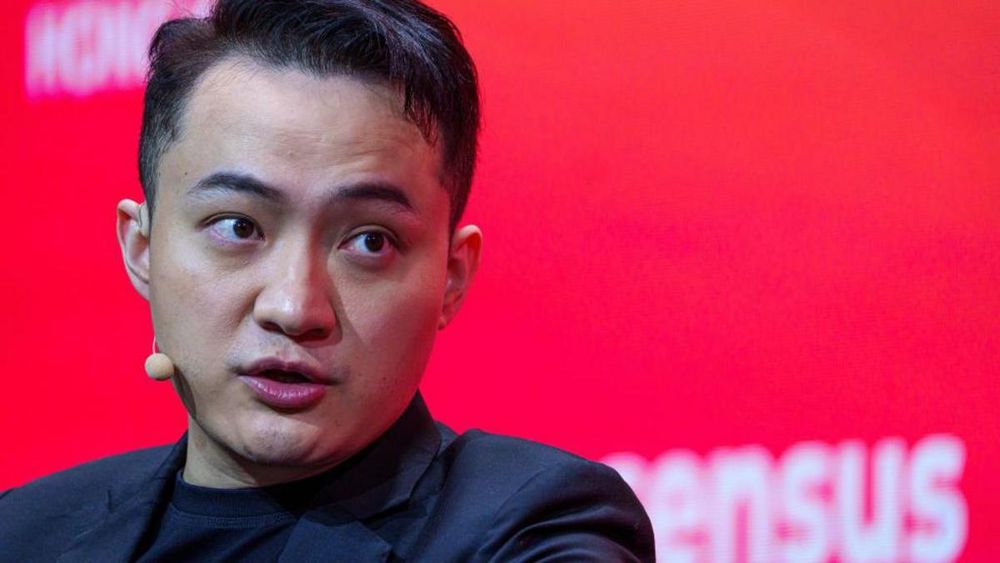
Justin Sun spent $45 million buying into the Trump family's cryptocurrency venture. According to a lawsuit Sun filed this week, World Liberty Financial took his money, gave him tokens, then froze those tokens — leaving him unable to access the investment he had made. As BBC News reported, Sun is now suing the venture, alleging what amounts to extortion: pay more, or stay locked out.
The lawsuit is being covered as a celebrity business spat between two figures who occupy the fringes of financial credibility. That framing misses what the case actually documents: a sitting president's commercial operation allegedly using access to a financial product as a weapon against a customer who had already paid tens of millions of dollars for it.
World Liberty Financial launched in 2024 as the Trump family's entry into the cryptocurrency market. The project attracted investors drawn less by the product's technical merits than by proximity to a man who would, months later, return to the White House. Sun, a Chinese-born crypto billionaire who has faced his own SEC scrutiny over market manipulation allegations, was among the highest-profile buyers. His $45 million commitment wasn't incidental — it was the kind of investment that buys not just tokens, but relationships.
The specific allegation — that World Liberty Financial froze Sun's holdings and demanded additional payment before restoring access — describes a mechanism that has a name in financial regulation: it is the kind of conduct that securities and commodities regulators exist to prevent. The problem is that no regulator has moved to apply those frameworks to the Trump family's crypto operations in any meaningful way. The Securities and Exchange Commission, under its current leadership, has spent the past year retreating from the aggressive crypto enforcement posture of its predecessor. The Commodity Futures Trading Commission has been similarly quiet. The regulatory silence is not accidental.
This matters beyond the specifics of one lawsuit. World Liberty Financial sits inside a broader pattern in which the president's personal and family commercial interests intersect with his official capacity in ways that would have triggered institutional alarms in any prior administration. Investors in World Liberty Financial are not simply buying a speculative digital asset. They are buying adjacency to a president. That adjacency has value — and, if Sun's allegations are accurate, it can apparently be revoked. As Tinsel News has reported on financial instruments tied to political access, Congress has consistently failed to build disclosure or oversight frameworks that keep pace with how money moves around power.
The extortion allegation, if proven, would mean that a crypto project bearing the president's family name used a customer's frozen assets as a bargaining chip. That is not a novel financial crime in the abstract. What makes it structurally different here is the identity of the alleged perpetrators and the regulatory vacuum surrounding them. A financial firm with no family connection to the executive branch that froze a customer's $45 million in assets and demanded more money would face immediate regulatory scrutiny. World Liberty Financial operates in a space where that scrutiny has been deliberately depressurized.
Sun himself is not a sympathetic plaintiff in the conventional sense. The SEC sued him in 2023 over allegations of market manipulation and illegal celebrity endorsements involving his own crypto tokens — a case that has proceeded slowly and inconclusively. His $45 million investment in World Liberty Financial arrived at a moment when proximity to the incoming administration may have carried its own legal calculus. The irony that a man facing federal market manipulation allegations is now suing the president's family over alleged financial misconduct does not make the underlying claim less legally significant. It makes the entire ecosystem more legible: this is what a market without functional regulatory oversight looks like from the inside.
The lawsuit will proceed through civil courts, where the Trump family's legal exposure is at least nominally subject to judicial oversight. But the larger accountability question — who, exactly, is responsible for ensuring that a president's commercial operations do not exploit customers or manipulate access to financial products — has no clean answer. Congress has not acted. Federal regulators have stood down. The courts will decide Sun's specific claims, but they cannot fill the structural gap that allowed a $45 million dispute of this kind to develop in the first place. If the allegations hold, the most consequential thing this lawsuit documents is not what Justin Sun lost — it is what oversight, by design, chose not to see.