The body camera is, in principle, a tool of accountability. The logic is simple: an agent who knows they are being recorded behaves differently, and the recording, when something goes wrong, tells the truth. That logic has driven decades of reform efforts in policing. It is also, according to experts who reviewed the new ICE policy, precisely what the agency's implementation has been designed to prevent.
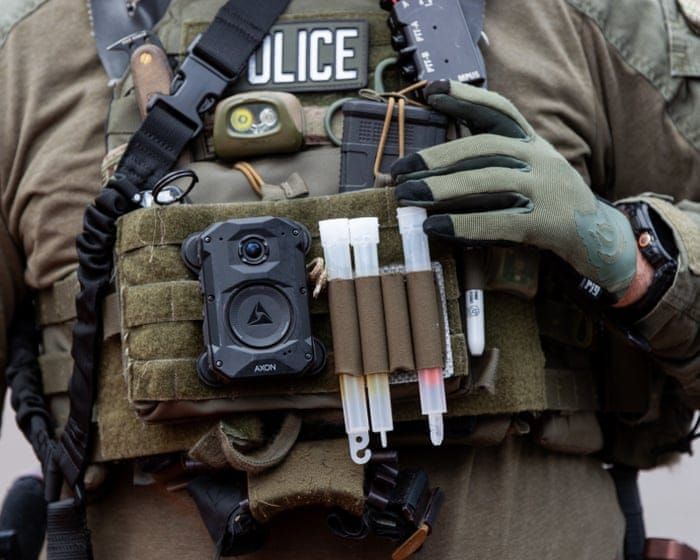
ICE will equip its officers with body cameras by the end of next month, The Guardian US reported Friday. The deployment comes after years of delays and mounting pressure from lawmakers, civil liberties organizations, and the families of people who died or suffered serious injuries during encounters with federal immigration personnel. The cameras are real. So is the policy governing them — which grants the ICE director sole authority to restrict public release of footage unless, in the agency's own judgment, disclosure is "in the best interests of the agency."
Read that standard again. Not in the interests of justice. Not in the interests of the public. Not in the interests of the people whose encounters with ICE agents the cameras are meant to document. In the interests of the agency.
Under the new ICE body camera policy, the agency's director holds unilateral authority to restrict public release of footage. There is no independent review mechanism, no mandatory disclosure timeline, and no external body with authority to compel release. The agency decides what the agency shows.
The gap between what body cameras are supposed to do and what this policy actually does is not a technical oversight. It is a structural choice. Every element of a genuine accountability mechanism — independent review, mandatory disclosure timelines, external oversight — is absent. What exists instead is a camera that records, an agency that decides what the recording means, and a director who determines whether anyone outside the agency ever sees it.
This is not the first time ICE has built the appearance of accountability without the substance. The agency has a documented pattern of constructing oversight frameworks that protect it from scrutiny rather than expose it to scrutiny. Tinsel News has previously covered how ICE killed a man, then built a narrative around the killing — and then deported the witnesses who contradicted it. The body camera policy fits that pattern precisely: the mechanism exists, the accountability does not.
The timing of the deployment matters. Pressure for body cameras intensified after a series of deaths and serious injuries involving ICE personnel. Those incidents raised questions the agency was unable — or unwilling — to answer with existing documentation. Body cameras were the demanded response. But a camera whose footage the agency controls is not a response to that demand. It is a way of appearing to respond while preserving the conditions that made the demand necessary.
Consider what a genuine accountability standard would look like. In jurisdictions where police body camera policies have been found to serve the public rather than the department, footage involving use of force or civilian injury is typically subject to mandatory release within a defined window — often 45 to 60 days — with narrow, specified exceptions reviewable by an independent body. Discretion to withhold is constrained, not unlimited. The default is disclosure. The ICE policy inverts this entirely: the default is agency control, and release requires the director to determine it serves the agency's interests. The broader collapse of police accountability under the new administration makes clear that no external corrective is likely to fill that gap.
The people most directly affected by this policy are the same people who have the least power to challenge it. Immigrants in ICE custody — including asylum seekers who have not been charged with any crime — have limited legal recourse, often no access to counsel at the moment of an incident, and no standing to compel footage release. Their families, frequently separated across borders, have even less. The agency, by contrast, has full access to every recording from the moment it is made. The information asymmetry is total and is built into the policy by design.
The DHS stopped publishing immigration enforcement data — a decision Tinsel News documented when a DHS statistician resigned rather than participate in a data blackout that coincided with the expansion of enforcement operations. Body camera footage that the agency controls is, functionally, another data blackout — one with the additional feature of appearing, to a casual observer, like the opposite. It follows a pattern already visible in how the TSA shared 31,000 traveler records with ICE without any public disclosure or meaningful oversight mechanism.
There is also the question of what the cameras will actually capture. Body cameras record what the officer wearing them points them at. They do not record the inside of detention facilities, the conditions of transport, or the processing that happens before and after field encounters. The incidents that have drawn the most sustained criticism of ICE — deaths in custody, medical neglect, the force-feeding of hunger strikers that international legal scholars have characterized as torture — largely occur in settings where body cameras would not be worn. The deployment is real. Its scope is carefully limited.
The original argument for body cameras in law enforcement was never simply that cameras exist. It was that cameras, combined with mandatory disclosure and independent review, would change the incentive structure for agents who knew their actions would be seen. Remove the disclosure requirement and the independent review, and you remove the incentive change. What remains is a recording device that the recorded agency controls. That is not accountability equipment. It is documentation equipment — and documentation that only one party can access is not accountability. It is a record kept for the record-keeper's own purposes.
Experts who reviewed the ICE policy with The Guardian characterized the "best interests of the agency" standard as the core problem. They are right, but the problem runs deeper than a poorly written standard. A well-written standard requires enforcement. Enforcement requires an authority with the power and independence to act on it. The ICE body camera policy contains no such authority. The director's discretion is not bounded by an inspector general with real power, a congressional oversight mechanism with real teeth, or a judicial review process with real access. It is bounded by the director's own judgment about what serves the agency.
The administration that delayed these cameras for years, that has resisted transparency in immigration enforcement at every turn, that has deported witnesses to contested incidents and shut down data publication when enforcement expanded — this administration now controls what those cameras show the public. The cameras are real. The accountability they were demanded to provide is not. What the policy has produced, instead, is the most useful thing a surveillance apparatus can be for the people running it: a record that belongs entirely to them.