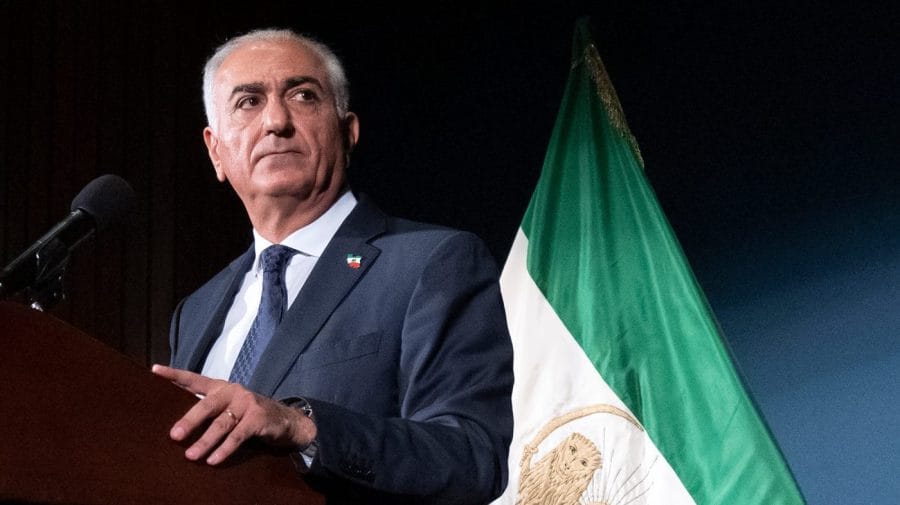
The Trump administration is in talks with a man who hasn't set foot in Iran since he was 17 years old. The Hill reports that Reza Pahlavi, son of Iran's deposed Shah Mohammad Reza Pahlavi, confirmed Friday he has been in contact with Trump officials about Iran's future. The timing — amid escalating U.S.-Iran tensions and ongoing airstrikes that have killed Iranian civilians — suggests Washington may be contemplating another attempt at engineering regime change from abroad.
Pahlavi fled Iran in 1979 when his father's regime collapsed under popular revolt. The Shah's government, installed by a CIA-backed coup in 1953 that overthrew Iran's democratically elected Prime Minister Mohammad Mosaddegh, was defined by torture chambers run by the SAVAK secret police, extreme wealth inequality, and subservience to Western oil interests. Now, as the Strait of Hormuz remains closed and oil prices surge, the 64-year-old crown prince presents himself as a democratic alternative — while living in Maryland and maintaining the title of a monarchy that Iranians overthrew 46 years ago.
Iranian democracy activists inside and outside the country have consistently rejected Pahlavi's claims to leadership. "The Iranian people didn't risk their lives protesting in 2022 to bring back the monarchy," Golnar Nikpour, an Iranian-American activist with the National Iranian American Council, told Middle East Eye last year. "They want democracy, not another autocrat." The Woman, Life, Freedom movement that swept Iran after Mahsa Amini's death in police custody made no calls for restoring the Pahlavi dynasty. Their demands were specific: an end to compulsory hijab, accountability for state violence, and democratic representation.
The Trump administration's engagement with Pahlavi follows a familiar pattern of U.S. foreign policy choosing exiled figures with minimal domestic support to justify intervention. Ahmed Chalabi promised grateful Iraqis would greet U.S. troops with flowers in 2003; instead, the invasion killed hundreds of thousands and destabilized the region for decades. Juan Guaidó declared himself Venezuela's president from Washington's encouragement in 2019, but never controlled a single government building. The Cuban exile community in Miami has influenced U.S. policy toward Cuba for 60 years, while Cubans on the island live under sanctions that primarily hurt ordinary people, not the government.
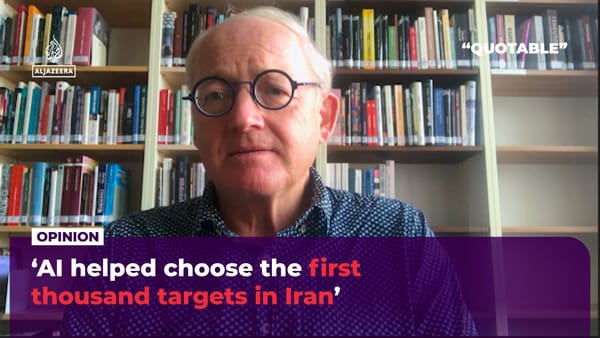
What makes Pahlavi particularly useful to hawks in Washington is his willingness to support military action against Iran. In a 2022 interview with The Times of Israel, he called for "maximum support" to opposition groups and didn't rule out military strikes on Iranian nuclear facilities. This aligns perfectly with the agenda of those who have long sought a pretext for war with Iran — from defense contractors like Palantir and Anduril, whose targeting systems are already being used in the region, to think tanks funded by Gulf monarchies that view Iran as a regional rival.
The Iranian diaspora is not monolithic, but surveys and interviews consistently show little appetite for either the current Islamic Republic or a return to monarchy. A 2023 poll by the Iran Poll and the University of Maryland found that among Iranians inside the country, support for a secular democracy far outweighed any other system — while fewer than 15% wanted a return to monarchy. Even among the diaspora, where Pahlavi has spent decades cultivating support, Iranian-American organizations have repeatedly distanced themselves from his maximalist positions.
Meanwhile, inside Iran, civil society continues to organize despite brutal repression. Labor unions stage strikes. Women defy hijab laws daily. Students protest on university campuses. These movements draw on Iran's long history of grassroots organizing — from the tobacco protests of 1891 to the oil nationalization movement of the 1950s to the Green Movement of 2009. None of them wave the Pahlavi flag. Their symbols are their own: the Kurdish slogan "Woman, Life, Freedom," the image of Mahsa Amini, the names of protesters killed by security forces.
The Trump administration's flirtation with Pahlavi reveals how Washington continues to misunderstand Iran. Officials who sell war through SpongeBob memes and promise quick victories seem to believe Iran is simply a regime sitting atop a population waiting for liberation. This ignores the complex reality of a country where opposition to the Islamic Republic doesn't translate into support for U.S. intervention or foreign-chosen leaders. Iranians remember what happened when the CIA picked their government in 1953. The dictatorship that followed taught them that sovereignty matters as much as democracy — and that the two are inseparable.