Ryan Nichols was pardoned in January 2025 for his role in the January 6, 2021 attack on the U.S. Capitol. By May 10, 2026, according to authorities in Harleton, Texas, he had allegedly threatened a man with a handgun during an argument in a church parking lot. Nichols, 35, is now the fifth person pardoned for the Capitol attack to face new criminal charges, according to The Guardian US.
That number — five — is not a coincidence or a statistical anomaly. It is a direct and predictable consequence of a clemency decision that was never about justice, rehabilitation, or the rule of law. It was about loyalty. And loyalty, it turns out, does not produce law-abiding citizens. It produces people who have learned that the right political allegiance insulates them from consequence.
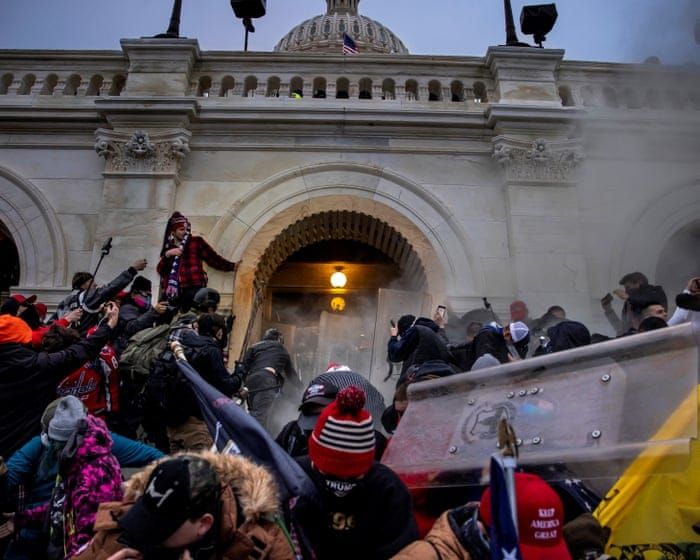
The pardons — issued in bulk on the president's first day back in office — covered more than 1,500 individuals convicted or charged in connection with the Capitol attack. They ranged from people convicted of misdemeanor trespassing to those convicted of seditious conspiracy. The breadth of the clemency was unprecedented in modern American history: a sitting president erasing the legal accountability of people who attacked the legislative branch of the federal government in an effort to overturn a certified election. The president described them collectively as "hostages" and "political prisoners." Prosecutors had described many of them as violent insurrectionists.
On January 20, 2025, the president issued pardons and commutations covering more than 1,500 individuals charged or convicted in connection with the January 6, 2021 Capitol attack. The clemency applied across the full range of charges — from misdemeanor unlawful entry to felony seditious conspiracy. No individualized review of conduct was conducted. The pardons were categorical and immediate.
Presidential pardons extinguish federal criminal liability for past conduct. They do not, and cannot, pardon future crimes. But they do send a message about what the issuing authority considers acceptable behavior — and about what consequences, if any, will follow from acting on the political beliefs that animated January 6 in the first place. When the state tells a group of people that their violence was righteous and their convictions were persecution, it does not neutralize their grievances. It validates them.
The Nichols case is illustrative. He was not a peripheral figure in the Capitol attack. According to prior reporting, he was among those who pushed into the building as part of a coordinated effort. He was convicted, sentenced, and then freed by executive fiat before serving his full term. The pardon did not come with conditions, counseling requirements, supervision, or any mechanism for accountability. It came with a political endorsement. Within roughly sixteen months, he allegedly pointed a gun at someone in a parking lot argument. Whether that trajectory is causal or coincidental is a question for courts and researchers — but it is not a question that the administration appears interested in asking.
This matters beyond the five individuals now facing new charges. Presidential clemency is one of the few unreviewable powers in the American constitutional system. There is no judicial check, no legislative override, no formal accountability mechanism for a pardon decision. The Founders designed it that way, imagining it would be used sparingly to correct injustice. What it has never been designed to survive is systematic use as a political reward — a signal to a movement that violence in service of the right cause will be forgiven, and that the normal machinery of criminal accountability does not apply to the right people.
That pattern connects to a broader erosion of institutional constraint that Tinsel News has covered extensively. As we reported earlier this year, the executive branch has treated judicial orders as optional when inconvenient. The mass pardons fit the same logic: legal accountability is not a neutral system to be respected — it is a tool to be deployed against enemies and suspended for allies. When that logic governs clemency decisions, the result is not mercy. It is selective immunity.
The political calculus behind the pardons was never hidden. The Capitol attackers were a constituency. Their families voted. Their online communities organized. Their grievances — however distorted — were the emotional core of a movement the president needed to keep energized. Pardoning them cost nothing politically within that base and delivered enormous symbolic returns: the message that January 6 was not a crime but a cause. Five new criminal cases do not appear to have changed that calculation.
What comes next is a test of whether state and local prosecutors can operate independently of federal political pressure when the defendants in question are politically connected. The Nichols case is in Texas — a state whose political leadership has broadly aligned with the president. The charges are state charges, which the federal pardon power cannot touch. But political pressure on local prosecutors is not a hypothetical concern in this environment, as the documented pattern of political targeting of perceived opponents makes clear. Whether these five cases — and any that follow — are prosecuted with the same rigor applied to defendants without political patrons will tell us something important about whether accountability still operates below the federal level. The pardons cleared the slate once. They cannot do it again.