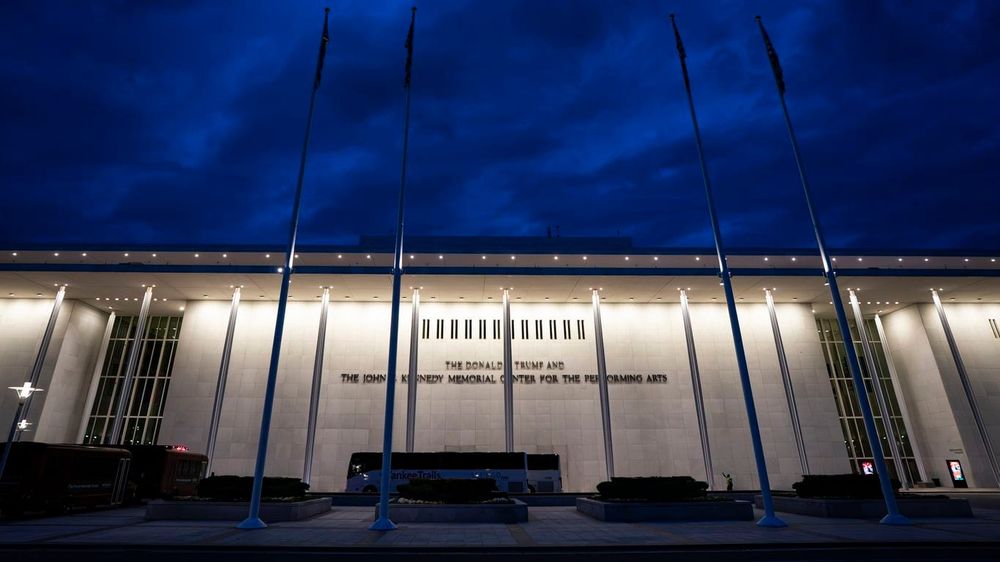
The John F. Kennedy Center for the Performing Arts has a name because Congress gave it one. That is not a technicality. It is the legal foundation of a 94-page ruling issued Friday by U.S. District Judge Christopher R. Cooper, who ordered that President Trump's name be removed from the building and halted the planned closure that would have preceded a major renovation. The decision, first reported by Axios, is a clean and specific ruling: the executive branch does not have the authority to rename a federal institution that Congress created and named.
"Congress gave the Kennedy Center its name, and only Congress can change it," Cooper wrote. The board, he concluded, "overstepped its statutory bounds by unilaterally renaming the Kennedy Center after President Trump." That sentence is doing more than settling a naming dispute. It is drawing a boundary around a pattern of executive behavior that has, over the past several months, treated federal institutions — their names, their missions, their personnel — as properties of the presidency rather than of the public.
The Kennedy Center was established by an act of Congress in 1958 and named for President Kennedy following his assassination in 1963. Its enabling statute gives its Board of Trustees operational authority over the venue, but that authority is bounded by the legislation that created it. The board does not have the power to rewrite the statute under which it operates. This is not an ambiguous area of law. What made the renaming attempt notable is that it was pursued anyway — a pattern Tinsel News has documented across multiple fronts, in which the current administration tests institutional limits and retreats only when courts force it to.
The Kennedy Center is a federally chartered institution created by Congress. Its Board of Trustees holds operational authority under the terms of its enabling legislation — but that authority cannot exceed the statute. Renaming the institution requires an act of Congress, not a board vote. The board cannot amend the law it operates under.
The closure halt matters as much as the name ruling. The administration had scheduled the Kennedy Center to close later this year so renovation work could begin. That plan is now frozen pending further legal proceedings. The practical effect: a federally funded performing arts institution that was being reshaped around presidential branding will remain open and operating under its congressionally mandated name while the courts sort out what the executive branch is actually permitted to do with it.
The accountability question here is not just about a building's name. It is about what happens when an administration treats federal institutions — agencies, courts, cultural institutions, enforcement bodies — as instruments of executive will rather than as structures with their own legal foundations. The Kennedy Center is, in some ways, a low-stakes example of a high-stakes problem. It is a performing arts venue, not a regulatory agency or a military command. But the legal logic the administration applied to it is the same logic it has applied elsewhere: that executive preference, expressed through appointed boards or agency leadership, is sufficient to override the statutory framework Congress established. Judge Cooper's ruling says no, specifically and on the record.
What this ruling does not do is equally significant. It does not prevent the administration from pursuing a renovation. It does not prevent the board from making operational decisions within its authority. It does not resolve the broader political fight over the direction of the institution. What it does is establish, in 94 pages, that the question of what a federally chartered institution is called is a question for Congress — and that an appointed board acting at the pleasure of the president cannot substitute for a legislative act. That principle, applied consistently, has implications well beyond the Kennedy Center's marquee.
The administration has not yet stated publicly whether it will appeal the ruling or seek to pursue a congressional name change through legislation. Given that Republicans control both chambers, a legislative path to renaming the center is theoretically available. That the administration did not pursue it first — choosing instead a board vote — is itself informative about how this White House prefers to operate. The pattern of bypassing Congress in favor of executive action, then retreating when courts intervene, has become a defining feature of how institutional power is being tested in this administration.
Cooper's ruling joins a growing body of federal court decisions pushing back on executive overreach — a body that the administration has, in other contexts, shown limited interest in respecting. Federal judges have issued orders the executive branch has simply ignored. Whether Friday's ruling holds — whether the name stays off the building, whether the closure remains halted — depends not just on the legal merits but on whether the administration treats this ruling as binding. That is no longer a question with an obvious answer.