Benjamin Netanyahu has governed Israel for so long, and survived so many political near-death experiences, that his instincts for self-preservation have become indistinguishable from his instincts for statecraft. The two have merged. When he identifies a threat, the first question worth asking is not whether the threat is real — it is whether the threat is useful.
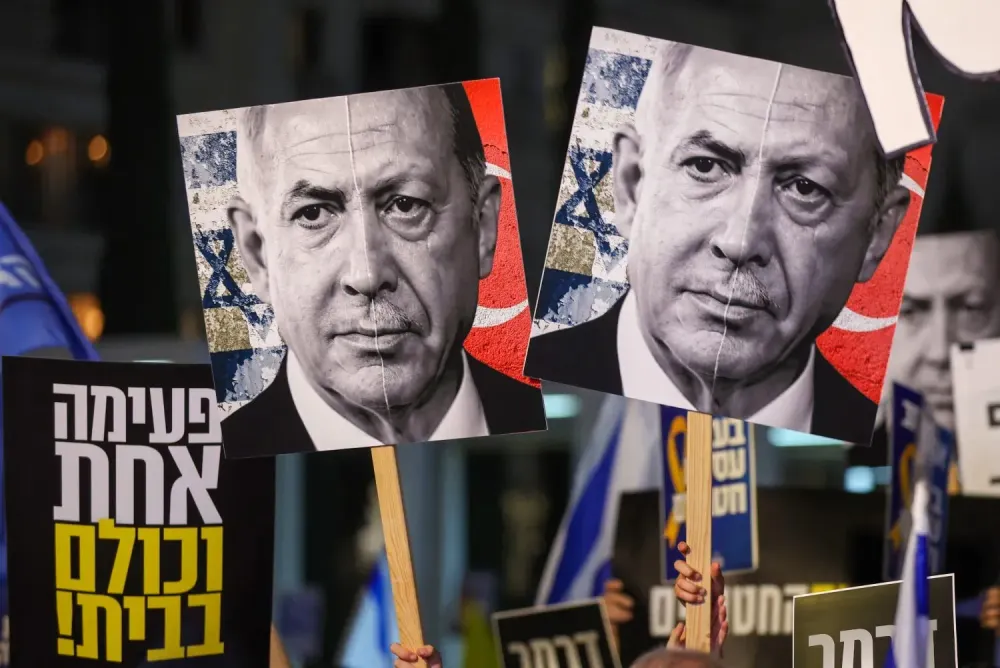
Turkey, under President Recep Tayyip Erdoğan, has been cast in the role of useful threat. Over the past several months, Netanyahu has depicted Erdoğan's Turkey as an expansionist power with designs on the region — a destabilizing force, an Islamist project, an existential menace in the making. The framing borrows from the same rhetorical architecture Netanyahu used to build his Iran narrative: a civilizational enemy, a leader who cannot be trusted, a danger that demands urgent response. As Foreign Policy reported, election politics give Netanyahu a concrete incentive to inflate that threat. What Foreign Policy stops short of saying is this: the inflation itself is the policy.
Netanyahu faces a domestic political environment that is structurally hostile to him. Corruption trials that have dragged for years. A hostage crisis that has fractured his coalition's moral authority. A war in Gaza that has exhausted Israeli society even as it has hardened political divisions. His governing majority depends on far-right partners whose demands grow more extreme as the political ground beneath them shifts. In that environment, a new external enemy is not a distraction from governance — it is governance. It is the mechanism by which a leader who cannot deliver normalcy delivers instead the promise of protection.
Israel and Turkey maintained close military and intelligence ties through the 1990s and into the 2000s. Relations began deteriorating after the 2010 Mavi Marmara incident, when Israeli commandos killed nine Turkish activists aboard a Gaza-bound flotilla. Erdoğan's increasingly Islamist political positioning and vocal support for Hamas accelerated the estrangement. The two countries have not had full ambassadorial relations for extended periods since. Turkey under Erdoğan has positioned itself as a champion of Palestinian rights — a posture that serves Erdoğan's regional ambitions as clearly as Netanyahu's Turkey rhetoric serves his electoral ones.
The actual security calculus between Israel and Turkey is complicated, but it is not the one Netanyahu's rhetoric describes. Turkey is a NATO member. It hosts U.S. military assets at Incirlik Air Base. It has its own regional entanglements — Syria, Libya, the Caucasus — that constrain its capacity to project force toward Israel in any meaningful way. Erdoğan's support for Hamas is real, his rhetoric about Israel is inflammatory, and Turkish-backed armed groups in Syria represent a genuine concern for Israeli planners. None of that amounts to an existential threat. The gap between what Netanyahu says Turkey is and what Turkey actually represents in Israeli strategic planning is wide enough to park a doctrine in.
That gap is where the politics live. Netanyahu's political coalition requires an enemy at a specific register: threatening enough to justify emergency posture, manageable enough not to trigger a crisis that escapes his control. Iran has served that function for decades — but Iran is now enmeshed in a regional conflict that has taken on its own momentum, one that has exposed the limits of Israeli strategic planning rather than validating them. Turkey, at this moment, offers a fresher target. Erdoğan's combative persona, his Muslim Brotherhood-adjacent politics, his explicit solidarity with Palestinian resistance — these make him an easy villain for Israeli domestic audiences conditioned to read the region through a civilizational frame.
The pattern is not new, and it is not unique to Netanyahu. Leaders facing domestic accountability crises have long reached for foreign threat inflation as a political resource. What makes Netanyahu's version distinctive is its sophistication. He does not simply invent threats. He selects real frictions, amplifies them past their actual weight, and then positions himself as the only leader with the clarity to name what others refuse to see. The move is designed to be unfalsifiable: skeptics who question the threat assessment can be accused of naivety, appeasement, or worse. The inflation is self-sealing.
There is a cost to this, and it is paid by people who are not Benjamin Netanyahu. Inflated threat rhetoric between Israel and Turkey does not stay inside the rhetorical arena. It shapes actual policy. It affects the prospects for regional de-escalation at a moment when the Middle East is already carrying more active conflict than at any point in decades. It constrains the diplomatic space available to other actors — including the United States — who might otherwise work to stabilize Israeli-Turkish relations as a component of broader regional architecture. The Tinsel News analysis of the U.S.-Iran framework agreement and the ongoing instability in the Strait of Hormuz both illustrate how quickly managed tensions can unravel when the incentive structures of domestic politics override the logic of regional stability.
Turkey is not blameless in this dynamic. Erdoğan has his own audience to play to, his own authoritarian consolidation to manage, his own reasons to keep the Israeli-Palestinian conflict at a high emotional temperature in Turkish public life. The two leaders are, in a perverse sense, mutually enabling: Netanyahu's Turkey rhetoric gives Erdoğan a foil, and Erdoğan's posturing gives Netanyahu material. Neither benefits from a quiet relationship. Both benefit from a loud one.
What this means for the region's actual inhabitants — Israelis, Palestinians, Turks, Syrians living in contested areas where these competing power projections intersect — is a sustained environment of manufactured urgency that serves political elites on multiple sides while delivering nothing to ordinary people. The threat inflation is not costless. It consumes political oxygen that might otherwise go to hostage negotiations, to ceasefire discussions, to the reconstruction of Gaza, to any of the actual human emergencies that do not require an enemy to be useful.
The accountability question here is not whether Netanyahu is lying about Turkey. He is not, precisely. The accountability question is whether the threat assessment he is presenting to his public — and, implicitly, to the world — reflects the actual judgment of Israeli security institutions, or whether it reflects the judgment of a politician who has learned that security claims are the one currency that never loses its value. Those are different things. Conflating them is how democracies make bad decisions about war and peace.
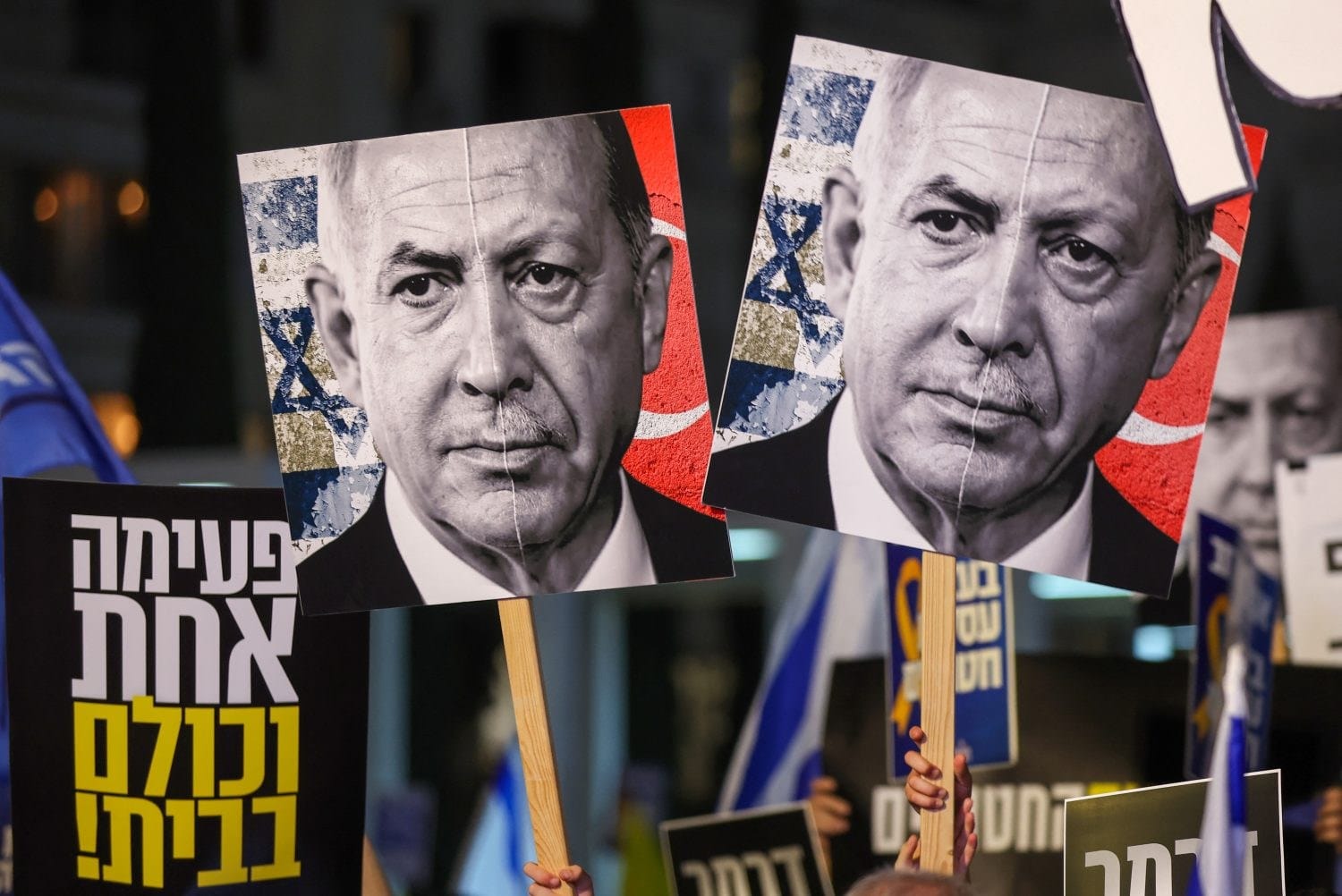
Netanyahu's trial continues. His coalition remains fragile. His electoral calendar is not abstract. And Turkey, a complicated ally-adversary with its own contradictions, is being drafted into a role it did not audition for — not because the threat it poses has materially changed, but because the politician doing the casting needed a new villain before the next vote. That is the story the security briefings will not tell you. It is the one that matters most.