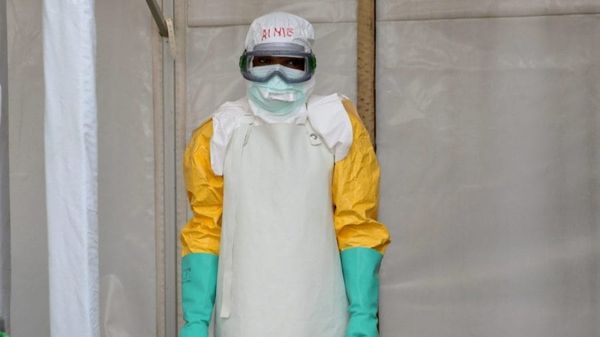
The Ebola virus does not need help. It spreads through direct contact with bodily fluids, kills between 25 and 90 percent of those it infects depending on the strain and the healthcare available, and has no widely deployed cure.
What it needs to be stopped is early detection, rapid isolation, safe burial practices, and health workers who can reach patients without being assaulted. In active outbreak zones across Central and West Africa, that last condition is no longer being met.
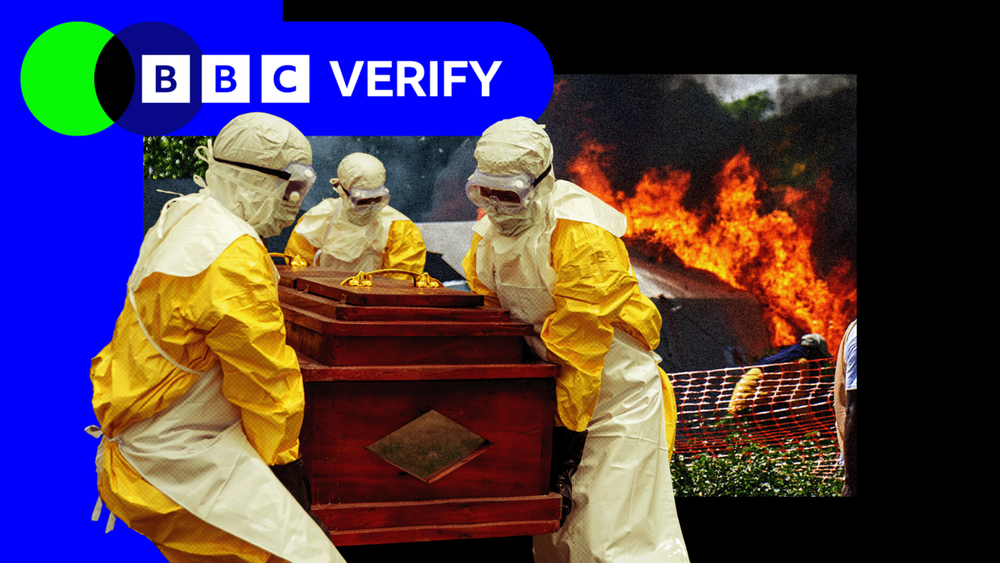
According to BBC News reporting on the current outbreak, false claims about Ebola — that it is not real, that health workers are spreading it deliberately, that treatment centers are killing grounds — are directly linked to attacks on treatment facilities, physical assaults on healthcare staff, and disruptions to burial teams. Safe burials are not ceremonial courtesy. They are a containment measure. When burial teams are blocked, the virus moves.
This is not a story about misinformation in the abstract. It is a story about a specific, documented failure of outbreak response — one with a specific cause and specific beneficiaries. The lies circulating in Ebola-affected communities did not generate themselves. They traveled on infrastructure: social media algorithms optimized for engagement over accuracy, messaging apps with no content moderation at scale, and a global information environment that was profoundly destabilized during the COVID-19 pandemic and has not recovered.
Ebola remains transmissible in the bodies of the deceased for days after death. Traditional burial practices involving direct contact with the body have driven significant transmission in previous outbreaks, including the 2014–2016 West Africa epidemic that killed more than 11,000 people. When communities refuse safe burial teams — often because of distrust fueled by false claims — the virus finds new hosts. Disrupting burials is not a protest. It is, epidemiologically, an accelerant.
The COVID pandemic taught a generation of bad actors — state and non-state alike — that health emergencies are unusually fertile ground for disinformation. Confusion is high. Institutional trust is low. Fear makes people receptive to explanations that assign blame to an identifiable enemy rather than an invisible pathogen.
During COVID, coordinated networks amplified claims that vaccines contained tracking devices, that hospitals were executing patients, that the virus itself was a hoax. Those networks did not dissolve when the emergency ended. They adapted. The same accounts, the same amplification mechanics, the same rhetorical templates are now being applied to Ebola — and the effects are measurable in treatment center attacks and body counts.
The accountability question is not only about who is spreading the lies, though that matters. It is also about who had the power to build early-warning systems against exactly this kind of outbreak-specific disinformation — and chose not to.
The World Health Organization has documented the connection between health misinformation and violence against workers in previous Ebola responses, most extensively during the 2018–2020 outbreak in the Democratic Republic of Congo, where more than 400 attacks on health facilities were recorded. That outbreak killed 2,287 people. The international community's response was to fund more health workers, not to address the information environment those workers were operating in. The pattern repeated.
There is a structural reason this keeps happening. Platforms that profit from engagement have no financial incentive to suppress high-engagement false content during health emergencies in low-income countries. Moderation resources are concentrated in English-language markets. Swahili, Lingala, and Kikongo — languages spoken in active and historically Ebola-affected regions — receive a fraction of the content review that English does.
This is not an oversight. It is a business decision, and its costs are paid by communities that have no power over the companies making it. As we have previously reported on the current Ebola outbreak, the containment infrastructure available to affected countries has also been severely weakened by USAID cuts — removing the community trust networks that historically served as a counterweight to misinformation in outbreak zones.
The violence against health workers is also inseparable from a longer history of extractive relationships between affected communities and outside institutions — including international health organizations. In parts of the DRC and Uganda, communities have had prior experiences with health interventions that arrived without consent, without explanation, and without benefit to local populations.
Distrust of health workers is not irrational given that history. It is a rational response to a track record. Disinformation exploits that distrust — it does not create it. Addressing the misinformation without addressing the underlying conditions that make it credible is a half-measure that has already failed twice.
What the current outbreak makes plain is that there is no such thing as a purely medical response to a disease that spreads in a social environment. Containment requires community trust. Community trust requires accurate information. Accurate information requires an information environment that is not actively hostile to it.
Right now, in the communities where Ebola is spreading, that environment does not exist — and the systems that were supposed to build it have been defunded, deprioritized, or never built at all. Health workers are paying for that failure with their safety. Patients are paying with their lives. The next outbreak, arriving into the same information environment with the same depleted infrastructure, will not be easier to stop. It will be harder.
Tinsel News has covered the collapse of Ebola containment capacity and the consequences of dismantling U.S. global health infrastructure. The violence against health workers is the human face of that dismantling — not an accident, and not a surprise.