The superacueducto — a seventy-two-inch water line built to carry potable water to the San Juan metropolitan area — has been leaking, rupturing, and failing for years. This summer, it broke badly enough that more than 150,000 residents across seven municipalities were placed under strict water rationing, according to Jacobin's reporting on the crisis. Families are tracking down cistern trucks. Neighborhoods are mapping water oases. In an archipelago already accustomed to rolling blackouts and power surges, dry taps have become the new normal.
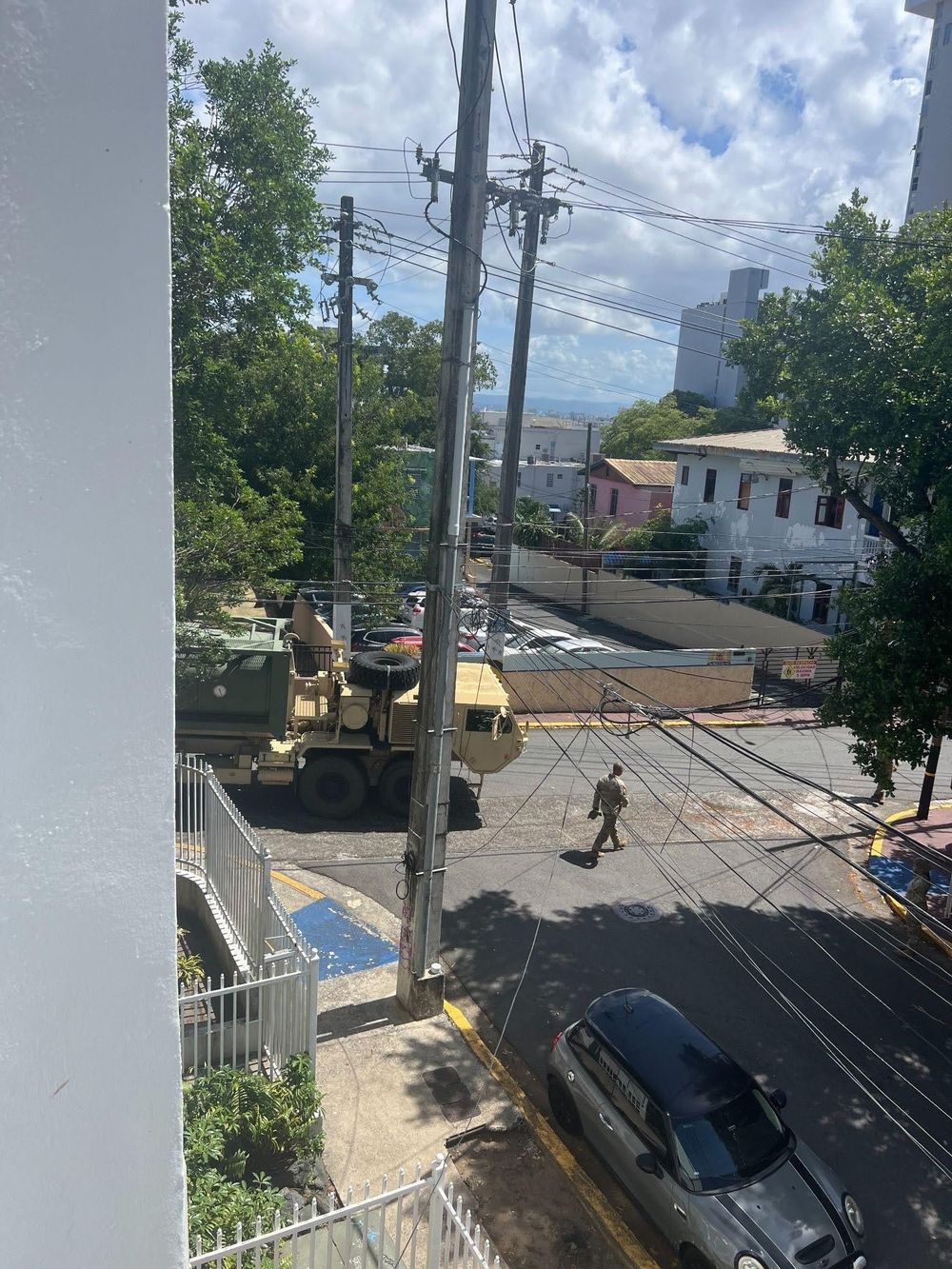
Governor Jenniffer González activated the National Guard to help with distribution and asked Puerto Ricans to be "prudent" with water use — a response that manages to be both logistically inadequate and politically revealing. Prudence is what you ask of people when the system has no more to give them. Hundreds took to the streets in marches organized by the Coalición Exigimos Agua and La Colectiva Feminista en Construcción, demanding what should require no demand at all: reliable access to water.
This summer also marked the tenth anniversary of PROMESA — the Puerto Rico Oversight, Management, and Economic Stability Act, signed by President Barack Obama on June 30, 2016. That timing is not incidental. It is the story.
The Puerto Rico Oversight, Management, and Economic Stability Act, signed in 2016, created a federally appointed fiscal control board — known colloquially as la junta — empowered to override the Commonwealth government and implement austerity measures in order to service Puerto Rico's debt. Its members are either embedded in Puerto Rico's elite networks or drawn from international finance with no ties to the archipelago. None are elected by the people whose lives they govern.
The conventional framing of Puerto Rico's water emergency treats it as a convergence of bad luck: a superacueducto in disrepair, a brutal Atlantic hurricane season, extreme heat, drought conditions draining the reservoirs, a strong El Niño, and Sahara Dust blowing across the Caribbean. All of that is real. None of it is the cause. The cause is a decade of austerity imposed by an unelected fiscal control board — la junta — whose legal mandate is not to keep the water running but to ensure creditors get paid.
PROMESA's architects promised relief. What Puerto Ricans got instead was a board empowered to override their elected government, staffed by members drawn from international finance and the island's own elite networks, with zero democratic accountability to the people whose infrastructure it controls. La junta does not answer to Puerto Ricans. It answers to bondholders. And for ten years, it has prioritized accordingly.
The result is not a water crisis that happens to coincide with a debt crisis. The water crisis is the debt crisis, made visible through the particular cruelty of summer heat and empty taps. Maintenance on aging infrastructure requires sustained capital investment. Austerity, by design, eliminates sustained capital investment. The superacueducto did not rupture because of bad luck. It ruptured because the money that would have fixed it was being directed elsewhere — to debt service, to restructuring fees, to the financial architecture that PROMESA erected and la junta administers.
The infrastructure debate almost never reaches this point: PROMESA did not fail to protect Puerto Ricans from austerity. PROMESA was designed to implement austerity. The distinction matters enormously. A failed promise can be renewed. A system working as intended requires dismantling.
La junta's unelected members — some embedded in Puerto Rico's criollo elite networks, others drawn from international finance with no connection to the archipelago at all — have presided over cuts to pensions, reductions in public services, and the systematic underfunding of exactly the kind of maintenance that keeps a seventy-two-inch water line from rupturing in a drought. When advocates and economists have argued that debt restructuring should prioritize essential services over bondholder returns, la junta has consistently chosen the bondholders. That is not a bug. It is the board's legal function.
The politics of how this story gets told matter as much as the facts themselves. Puerto Rico's crises — Maria, the earthquakes, the power grid, now the water — are routinely covered as natural disasters or infrastructure failures, framings that locate the cause in weather systems and aging pipes rather than in the financial and colonial structures that determine which pipes get fixed and which do not. This coverage pattern is not neutral. It is a form of protection for the system that produced the crisis. As Tinsel News has documented in other contexts, the gap between a preventable public health failure and a natural disaster is almost always a policy choice made by people with financial interests in the outcome.
Puerto Rico's relationship to the United States compounds every dimension of this. The archipelago's residents are U.S. citizens who cannot vote for president and have no voting representation in Congress — the body that passed PROMESA, the body that created la junta, the body that could dissolve it. The fiscal control board was imposed on Puerto Rico by a legislature in which Puerto Ricans have no vote. That is not a quirk of the system. It is the system. Colonial fiscal management and democratic accountability are mutually exclusive, and PROMESA chose the former.
The marchers organized by the Coalición Exigimos Agua and La Colectiva Feminista en Construcción understand something that the disaster-framing obscures: the water crisis is a political crisis, and political crises have political authors. The superacueducto's maintenance backlog did not accumulate in a vacuum. It accumulated over a decade during which la junta held effective veto power over Puerto Rico's budget priorities, during which debt service consumed resources that could have funded infrastructure repair, during which the people bearing the cost of austerity had no mechanism to hold its architects accountable.
The movements demanding water are also, necessarily, demanding something harder to fit in a headline: the end of a governance structure that places creditor returns above the basic conditions of human life. That demand will not be satisfied by cistern trucks or National Guard deployments. It requires either a fundamental restructuring of PROMESA's mandate — reordering its priorities so that essential services precede debt service — or the board's dissolution entirely.
Ten years in, the evidence is unambiguous. La junta has not delivered stability. It has delivered austerity, and austerity has delivered dry taps. The question Puerto Rico's water crisis forces is not whether the infrastructure needs fixing. Of course it does. The question is who decides what gets funded — and whether the people who live with the consequences of those decisions get any say in making them. Right now, they do not. That is the crisis underneath the crisis, and no amount of National Guard water distribution will touch it.