The number is real: Elon Musk is now the world's first trillionaire. The Hill reported that SpaceX's Nasdaq debut popped 11 percent on opening, sending the company's valuation to $1.96 trillion and vaulting Musk past a threshold no human being has ever crossed. The financial press spent the weekend writing about genius. About vision. About one man's singular drive to conquer space.
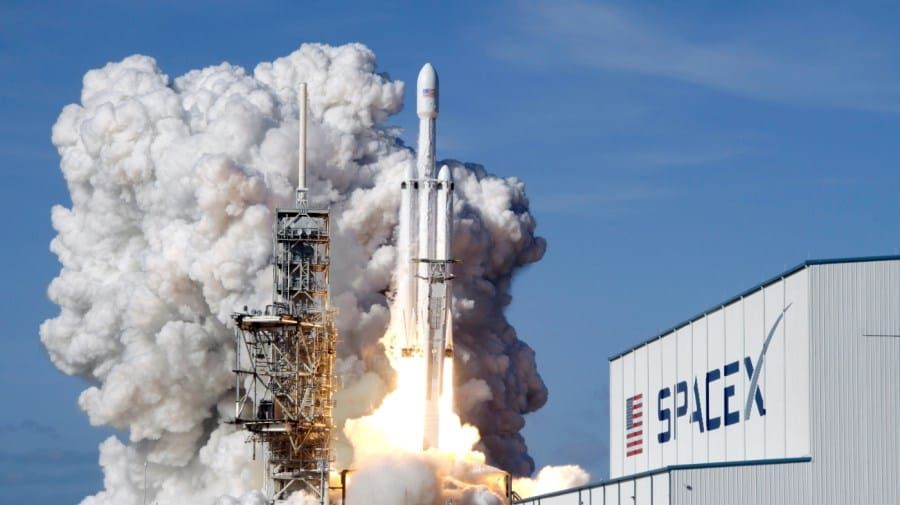
Here is what most of those stories did not tell you: SpaceX's ascent was built, in significant part, on government contracts totaling more than $15 billion. NASA alone has awarded SpaceX over $6 billion through its Commercial Crew and Commercial Resupply Services programs. The Pentagon has contributed billions more. The Department of Defense selected SpaceX for launch contracts worth billions in national security payloads. The company's Starlink satellite network — a core commercial asset that drove the IPO valuation — was seeded by a $900 million FCC rural broadband grant. The rocket that made Musk's fortune possible was, to a degree that the mythology of Silicon Valley does not permit, a publicly funded rocket.
The argument for public investment in space infrastructure is not inherently wrong. There are legitimate reasons a democratic government might decide that launching humans into orbit, maintaining satellite communications, and building next-generation launch vehicles serve the public interest. The original rationale for the Commercial Crew program was that private competition would drive down costs and free NASA from dependence on Russian Soyuz capsules. On that narrow metric, it worked. SpaceX did reduce per-seat launch costs significantly. The program achieved what it claimed it would achieve.
But that is the beginning of the argument, not the end of it. The question is not whether public investment in space was justified. The question is: when public investment produces a company worth nearly two trillion dollars, who captures that value? When taxpayer dollars fund the development of reusable rocket technology, the launch infrastructure, and the satellite network, and that investment matures into the largest IPO in American history — who gets the trillion dollars?
The answer, as of last Friday, is Elon Musk. Not the public that funded it. Not the workers who built it. Not the communities whose tax revenues flowed into federal agencies that wrote the contracts. The value was socialized on the way in and privatized on the way out. That is not a market outcome. That is a policy choice — and it is one that the United States has been making consistently, across administrations, for decades.
This pattern is not unique to SpaceX. As we have previously reported, the government's relationship with the technology sector has long involved underwriting risk while surrendering upside. The internet itself was a Defense Department project. GPS is a military system given freely to commercial operators. The semiconductor industry was built on federal procurement. The pharmaceutical industry prices drugs developed with NIH funding at whatever the market will bear. SpaceX is not an anomaly. It is the logical endpoint of a system designed to transfer publicly created value into private hands.
Now consider the strongest version of the counter-argument, because it deserves a real answer. Defenders of the current arrangement will say: Musk took the risk. NASA could have built this itself and spent twice as much for half the capability. Private companies have incentives that government agencies don't. The commercial model is more efficient. If SpaceX had failed — and it nearly did, three times before Falcon 1 finally reached orbit — taxpayers would not have lost everything. The government bought a service, got the service, and the entrepreneur who delivered it earned the reward.
This is a coherent argument. It is also incomplete in a specific and important way. The risk calculus it describes was not symmetric. When SpaceX struggled in its early years, it received emergency NASA contracts that kept the company alive — contracts that, by the account of Musk himself, saved the company from bankruptcy. The government did not merely buy a service from a robust private actor. It selectively sustained a company through its most vulnerable period, then watched that company go public at nearly two trillion dollars. That is not a market transaction. That is a government choosing a winner, funding that winner through crisis, and then stepping aside as the winner captures generational wealth. The risk, at the critical moment, was shared. The reward was not.
NASA's Commercial Crew Transportation Capability contract with SpaceX has been valued at approximately $2.6 billion. Commercial Resupply Services contracts have added billions more. The Pentagon has awarded SpaceX launch contracts for national security payloads worth billions in additional revenue. The FCC's Rural Digital Opportunity Fund granted SpaceX's Starlink approximately $900 million for rural broadband expansion. These figures represent disclosed contracts; total federal revenue to SpaceX across all programs exceeds $15 billion by multiple independent estimates.
There is also a second problem the counter-argument does not address: Musk's current position. The world's first trillionaire is not a private citizen who built a rocket company and retired to his fortune. He is simultaneously the head of a government efficiency office that has recommended cuts to the very federal agencies that made his fortune possible, a key political figure in the administration that now regulates his companies, and the owner of a social media platform that shapes the information environment in which those regulatory decisions are debated. The concentration of wealth that the SpaceX IPO represents does not stay in the economy as an inert number. It translates directly into political power — the power to shape the rules of the next round of the game.
This is why the trillionaire headline is not just a business story. As we have covered previously, the federal contracts underpinning SpaceX's valuation were already drawing scrutiny before the IPO. That scrutiny will now intensify — or it should. A company whose value was built substantially on public contracts, whose founder now holds significant influence over the government that issues those contracts, and whose IPO just produced the first trillionaire in history is not operating in a normal market. It is operating in a system where the lines between public investment, private capture, and political power have been erased.
The Silicon Valley origin story — the lone genius, the garage, the pure meritocracy of the market — is a narrative that does enormous political work. It makes inequality feel earned. It makes the concentration of wealth feel like the natural consequence of superior ideas and superior effort. It makes the question of who captures the value of public investment feel impolite, even ungrateful. Elon Musk is genuinely talented. SpaceX has achieved things that NASA's internal programs did not. None of that changes the underlying arithmetic: a trillion dollars of private wealth was assembled, in significant part, from public funds — and the public got a launch service in return, not a share of the company.
The wealth gap between Musk and the median American worker — who earns roughly $59,000 a year — is now so large it is essentially unrepresentable. And as billionaire wealth continues to hit record highs, the political question is not whether to celebrate the achievement. The question is whether a democratic society should keep designing systems that funnel public investment into private fortunes of this scale — and whether the first trillionaire's political position makes the next round of those contracts any less of a conflict of interest than the last.