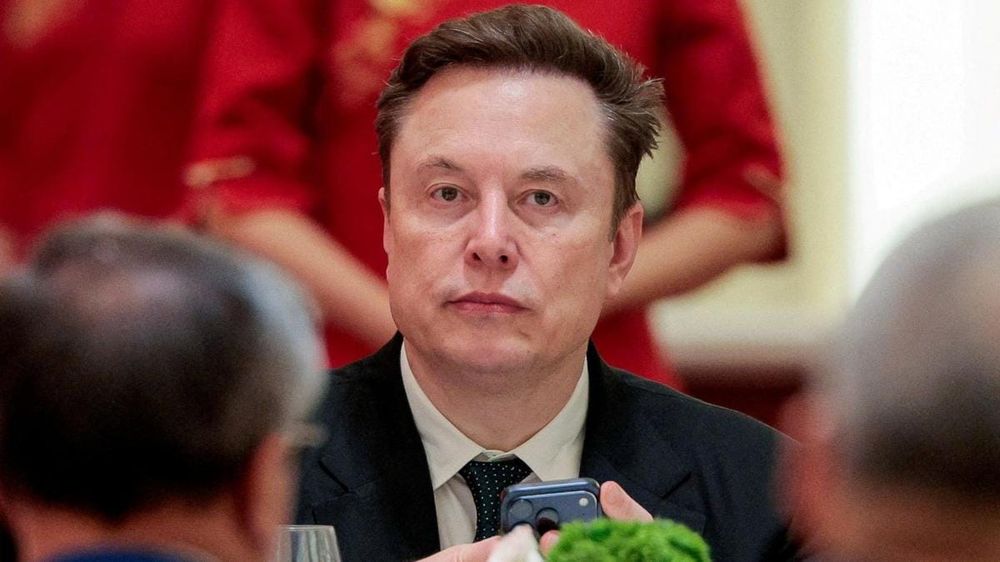
The number SpaceX wants investors to accept is $1.75 trillion. That figure, reported by BBC News, places Elon Musk's space exploration company among the handful of most valuable enterprises on earth — above ExxonMobil, above Walmart, in the same altitude as Saudi Aramco. The company set a target price for prospective buyers earlier than expected, a move that suggests confidence in the appetite for shares and urgency about the timing of a debut.
What the valuation figure does not say — and what no IPO prospectus is designed to volunteer — is how much of that $1.75 trillion rests on a single, structurally fragile foundation: the willingness of the United States federal government to keep writing checks to a company whose owner is simultaneously under federal scrutiny, wielding extraordinary influence inside the executive branch, and running a political operation that has made him one of the most polarizing figures in American public life.
This is not a story about a rocket company going public. It is a story about what happens when a private valuation of historic scale is built on top of public money — and the public starts asking questions.
SpaceX is genuinely impressive as an engineering enterprise. Its reusable rockets changed the economics of launch. Its Starlink satellite network has connected remote communities and, more controversially, supplied battlefield communications to Ukraine. The company has accomplished things that NASA could not accomplish alone, and it has done so faster and cheaper than legacy aerospace contractors. None of that is in dispute.
What is in dispute — or should be — is whether the valuation reflects the company's independent commercial strength or whether it is, in significant part, a government subsidy dressed up as market capitalization. SpaceX's revenue streams run directly through federal agencies. NASA selected SpaceX to build the lunar lander for the Artemis program, a contract worth up to $4.2 billion. The Department of Defense has awarded SpaceX billions in launch contracts. The Federal Communications Commission approved Starlink's spectrum licenses. The company's growth curve is not separable from the decisions of regulators and procurement officers who answer to the same executive branch that Musk has spent the past year aggressively influencing through his role in the Department of Government Efficiency.
Elon Musk has served as an informal adviser to the Trump administration through the Department of Government Efficiency, which has had direct involvement in federal budget and contract decisions. SpaceX simultaneously holds active contracts with NASA, the Department of Defense, and the FCC. Antitrust and ethics watchdogs have raised concerns about whether this dual role — government adviser and government contractor — creates conflicts of interest that existing federal ethics law was not designed to address at this scale.
That arrangement — a federal contractor whose owner holds informal but documented influence over the agencies awarding the contracts — is exactly what federal ethics law exists to prevent. The problem is that existing conflict-of-interest statutes were built for a different era, one in which a person was either inside government or outside it. Musk occupies a position those statutes did not anticipate: technically a private citizen, functionally an actor with access to budget processes, personnel decisions, and regulatory levers that directly affect the value of his own companies. As Tinsel News has reported, the DOJ has already sided with Musk's companies in at least one regulatory dispute — a pattern that critics argue is less a legal position than a business decision.
The scrutiny is not hypothetical. Multiple federal investigations and congressional inquiries have examined whether SpaceX and other Musk-affiliated companies have received preferential treatment in contracting processes. The FAA, which regulates SpaceX launches, has faced questions about whether its oversight was compromised by political pressure. None of these inquiries has produced a definitive finding of wrongdoing — but that is not the same as a clean bill of health. It means the questions are live, and a company preparing to go public is asking investors to price that risk into a $1.75 trillion valuation without fully disclosing it.
There is a structural pattern here that goes beyond SpaceX specifically. The consolidation of government contracting into a small number of politically connected firms has been a documented feature of the American technology economy for two decades. What is new in the SpaceX case is the directness of the connection: the owner of the contractor is not merely a donor or a lobbyist. He is, by any functional measure, a participant in the government itself. The revolving door has been replaced by a door that does not close.

Investors buying into a SpaceX IPO at $1.75 trillion are not just betting on rockets. They are betting on the continuity of a political relationship. If the administration changes, if congressional scrutiny produces real oversight, if a court rules that certain contracts were improperly awarded, or if Musk's influence inside the executive branch becomes a liability rather than an asset — the valuation faces a structural correction that no amount of engineering achievement can offset. This is not a speculative risk. It is the central risk, and it is not the one the headline number invites people to consider.
The timing of the valuation announcement also warrants attention. SpaceX is moving earlier than expected, according to BBC News's reporting. Companies accelerate IPO timelines for several reasons: favorable market conditions, internal liquidity needs, or a desire to lock in a price before circumstances change. Given the current environment — federal investigations active, Musk's political capital potentially peaking, the window for favorable regulatory treatment uncertain — the urgency reads less like confidence and more like prudence about what the next twelve months might bring.
None of this means SpaceX is not a real company with real value. It is. But $1.75 trillion is a number that implies a future, not just a present — and the future it implies depends on a federal government that continues to award contracts to a company whose owner is also, in practice, a government insider. That is not a market valuation. That is a bet on political durability. And as public money has shown elsewhere in this administration, political durability is not the same as institutional accountability.
The deeper problem for American markets — and for democratic governance — is not whether SpaceX's valuation is accurate. It is that the question is almost impossible to answer cleanly. When a company's revenue is this entangled with the political decisions of its owner, when the owner sits inside the government that writes the checks, the market cannot price the company on its merits. It can only price the politics. If that arrangement becomes a template — if the lesson other billionaires draw from this moment is that the fastest path to a $1.75 trillion valuation runs through a government office — the consequences for competitive markets, for public procurement integrity, and for the basic idea that government contracts go to the best proposal rather than the best-connected owner will be severe and lasting.