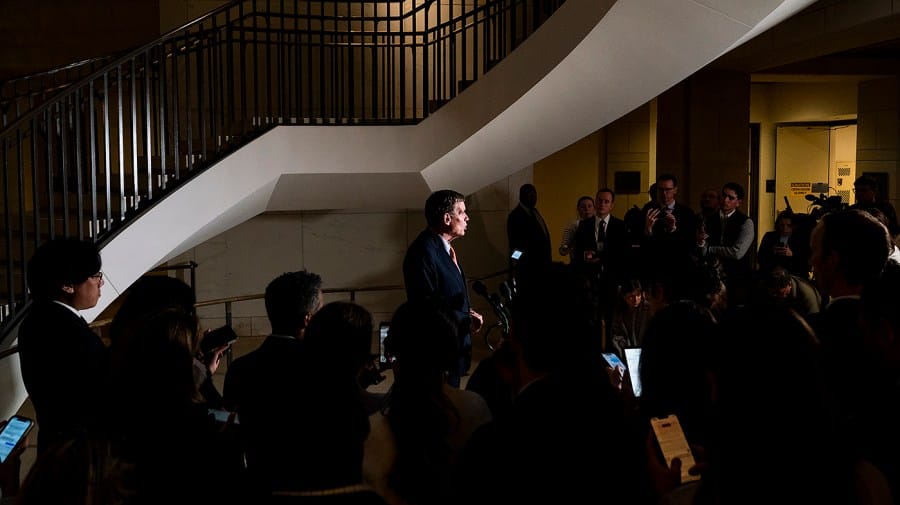
Senator Mark Warner wants answers about a strike on an Iranian girls' school. The Virginia Democrat, who serves as chairman of the Senate Intelligence Committee, told The Hill on Sunday that he desires "a thorough investigation" into the deadly attack. But in the same breath, he cautioned against jumping to conclusions about whether U.S. Central Command was responsible.
This measured response — demanding accountability for specific incidents while accepting the broader war that makes such incidents inevitable — exemplifies how congressional oversight has evolved into a performance of concern rather than a check on military power. Warner's call for investigation follows a familiar script: express grave concern about civilian casualties, demand more information, then continue voting for the defense budgets and authorizations that ensure more civilians will die.
The pattern is not new. During the 20-year war in Afghanistan, senators regularly called for investigations into wedding parties bombed by U.S. drones, hospitals destroyed by airstrikes, and children killed in night raids. These investigations occasionally produced reports acknowledging "mistakes" or "intelligence failures." They never produced a reconsideration of the war itself.
Warner's careful phrasing — "I don't want to jump to the conclusion" — serves multiple functions. It positions him as reasonable and evidence-based, distinguishing him from more hawkish colleagues who dismiss all reports of civilian casualties as enemy propaganda. It also creates space for plausible deniability if the investigation confirms U.S. responsibility. Most importantly, it allows him to express concern about how the war is being conducted without questioning whether it should be conducted at all.
This rhetorical maneuver has become essential to Democratic foreign policy positioning. By focusing on tactical questions — was this strike properly authorized? were civilians adequately considered? — lawmakers avoid the strategic question that their constituents increasingly ask: why are we bombing Iran at all? The mounting civilian death toll becomes a problem of process rather than policy.
The timing of Warner's statement is significant. As chairman of the Intelligence Committee, he receives classified briefings on military operations that most senators do not. His public call for investigation suggests either that he has concerns about what he's learned in those briefings, or that he anticipates public pressure will force some response. Either way, his framing accepts the fundamental legitimacy of U.S. military action in Iran while questioning only its execution.
This acceptance matters because Warner is not a marginal figure. As a senior Democrat from Virginia — home to the Pentagon, CIA headquarters, and countless defense contractors — he wields significant influence over military policy. His support for "thorough investigation" will likely result in closed-door briefings, perhaps a classified report, and assurances that procedures will be tightened. It will not result in any reduction of U.S. military operations.
The investigation Warner seeks will follow a predictable path. Military officials will review targeting procedures, intelligence assessments, and rules of engagement. They may find that someone misidentified the school as a military target, or that a weapons malfunction caused the strike to hit the wrong building. They will not find that bombing a country with no declaration of war, no clear objectives, and no exit strategy inevitably produces dead schoolchildren.
Congressional Democrats have perfected this form of opposition that isn't really opposition. They demand transparency while voting for black budgets. They call for protecting civilians while funding AI-powered targeting systems that make civilian casualties more efficient. They express concern about executive overreach while refusing to reclaim Congress's constitutional war powers.
The result is a system where even skeptical lawmakers become complicit in permanent war. By focusing on procedural questions — was this strike properly vetted? did it follow the rules? — they legitimize the existence of a military apparatus that can strike schools, hospitals, and homes anywhere in the world. The question becomes not whether the United States should maintain a global assassination program, but whether it's being run according to proper protocols.
Warner's constituents in Virginia might ask different questions. How many investigations into civilian casualties must we conduct before admitting that civilian casualties are not aberrations but inevitable results of aerial warfare? How many "thorough investigations" have previous senators demanded, and what changed as a result? If the senator truly wants accountability, why not use his committee position to demand answers before the bombs fall, not after?
The broader context that Warner's statement ignores is that this war has already destabilized global oil markets, enriched adversaries, and killed thousands of civilians. A "thorough investigation" into one strike, however horrific, cannot address the fundamental illegitimacy of a war launched without congressional authorization, sustained without public support, and conducted without any achievable definition of victory.
By calling for investigation rather than cessation, Warner and his colleagues perform a kind of therapeutic politics — expressing concern and demanding process while the killing continues. It's a form of opposition designed to manage public outrage rather than challenge power, to channel dissent into bureaucratic procedures rather than policy changes.
The investigation Warner seeks will likely find what such investigations always find: regrettable errors, lessons learned, procedures tightened. It will not find what everyone already knows: that bombing countries produces dead children, that wars without clear objectives produce endless casualties, and that senators who vote to fund such wars bear responsibility for their consequences, no matter how many investigations they demand after the fact.