Sixty-eight percent of Americans oppose a nationwide ban on medication abortion. The Trump administration knows this number. That's why the ban isn't happening yet.
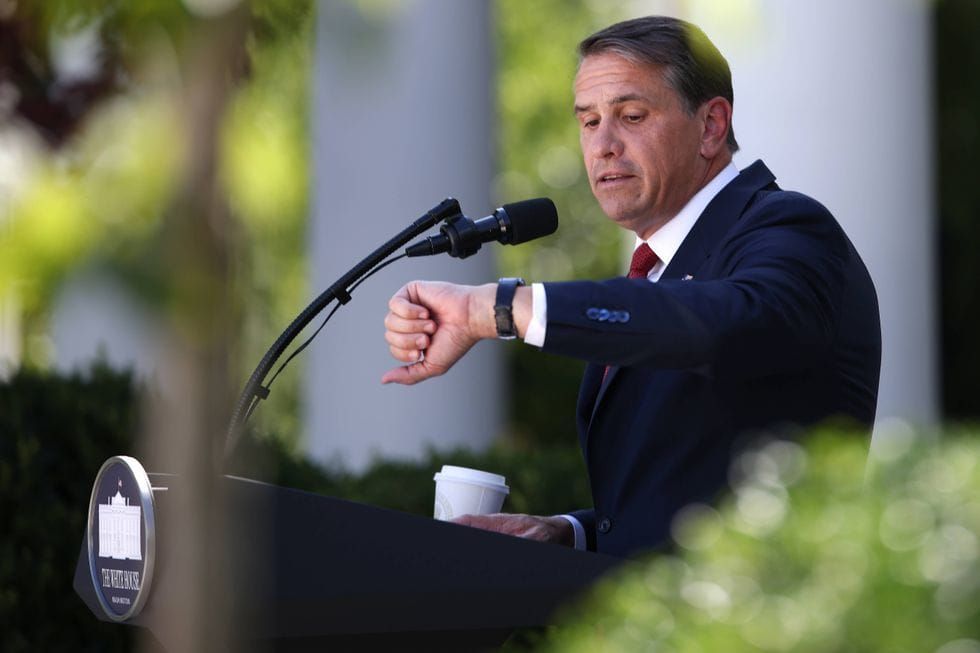
According to a report from Common Dreams, citing original reporting by The Washington Sun, White House Chief of Staff Susie Wiles has intervened to slow-walk any aggressive move against mifepristone until after the November midterms. The reasoning, relayed by a senior administration official, is blunt: "No one wants us taking any real action before the midterms." Anti-abortion advocates who have pressed the White House for faster action say they've been told to be patient. Once the midterms are over and Republicans no longer face a near-term electoral reckoning, the message they're receiving is that "the gloves will be off."
The White House has denied the meetings described in the Sun's report, calling it "completely false." But the denial lands awkwardly against a documented pattern of behavior that is entirely consistent with the story's central claim: this administration is not protecting mifepristone access. It is managing the political timing of ending it.
Most coverage frames this as a story about what the Trump administration wants. That the administration wants to ban the abortion pill has been known since before the inauguration. The sharper story is what the deliberate delay says about the nature of the policy itself: this is not governance responding to public need or even to ideological conviction. It is a coordinated act of deception, a plan to extract maximum electoral benefit before implementing a policy that the administration's own political team knows will harm millions of people and that a decisive majority of Americans do not want.
Attorney General Todd Blanche stated during his July confirmation hearing that the rules allowing mifepristone to be shipped nationwide were "wrong" and that he would seek to review them. He has also, according to the Sun's reporting, privately assured faith leaders he would work to ban abortion "in every single state." These are not the words of an official who believes the current policy is legally sound. They are the words of an official who has decided what the outcome will be and is waiting for the politically safe moment to deliver it.
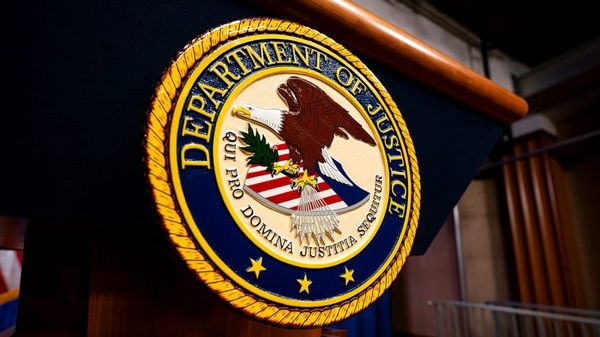
Meanwhile, the Justice Department's behavior in ongoing litigation is itself a tell. During Trump's second term, the DOJ has asked federal courts to pause several state lawsuits challenging FDA policies that allow mifepristone to be prescribed via telehealth and delivered by mail. But it has not defended those FDA policies on the merits. The distinction is not procedural housekeeping. It is a legal strategy. By seeking delays without mounting a substantive defense, the DOJ is holding the litigation in suspension, preventing adverse rulings that would complicate a future crackdown while doing nothing to protect the underlying access. The approach preserves optionality. It is a hand kept close to the chest.
The 1873 Comstock Act banned the shipment of "lewd" and "indecent" materials — including abortion-related items — through the mail. It was never formally repealed. Attorney General Blanche has indicated openness to reviving it as a legal basis for banning mifepristone shipments nationwide. The Nation's abortion access correspondent Amy Littlefield has described Comstock as a "zombie law from the Victorian era" that could function as a "nuclear option" for effectively ending medication abortion in every state, regardless of state-level protections.

There is also the matter of the FDA's ongoing "safety" review of mifepristone, championed by Health and Human Services Secretary Robert F. Kennedy Jr. The drug has been reviewed repeatedly over its 25-year history in the United States. Every review has reaffirmed its safety and effectiveness. The current review is not a scientific process. It is a bureaucratic mechanism for tightening prescription and delivery rules without a congressional vote or a court order. The review gives the administration a paper trail that frames a political decision as a regulatory one.
The administration is not improvising. It is executing a coordinated strategy across three institutions simultaneously — the DOJ in litigation, HHS in regulatory review, and the White House in political timing — to maximize the chance that a nationwide abortion pill restriction survives political blowback and legal challenge. The delay is not hesitation. It is preparation.
The human stakes of that preparation are not abstract. Mifepristone now accounts for nearly two-thirds of all abortions in the United States. Telehealth prescriptions and mail delivery have made the drug accessible in states where clinic-based abortion is restricted or unavailable, functioning as a practical workaround to post-Dobbs state bans. As Tinsel News has previously reported, telehealth abortion pills have quietly become a critical access point as interstate travel for abortion has dropped. A federal restriction on mifepristone shipments would not simply end one method. It would collapse the primary mechanism through which millions of people in restrictive states have maintained any access at all.
The money behind this adds another layer. Anti-abortion organizations have spent decades and hundreds of millions of dollars building the legal infrastructure that made Dobbs possible and that now positions the Comstock Act as a viable enforcement mechanism. These organizations are not peripheral to this story. They are the constituency whose pressure the White House is managing. The senior administration officials who are counseling patience are not doing so because they disagree with the policy. They are doing so because they understand that the policy needs a political window to survive, and that window does not open until after November.
The White House's denial deserves to be read in that context. Denying that specific meetings took place is not the same as denying that the strategy described in those meetings is real. The DOJ's litigation posture, the FDA review, the AG's private assurances to faith leaders, and the anti-abortion advocates' confident expectation that restrictions are coming — none of that is sourced to the meetings the White House denied. It is sourced to the pattern of actions the administration is taking in public, on the record, every day.
The question this story leaves open is not whether the administration intends to restrict mifepristone access. The evidence that it does is substantial and documented. The question is what the deliberate timing strategy means for democratic accountability. Abortion access has already been transformed state by state since Dobbs, but a federal action of this magnitude — one that would override state-level protections in blue states and eliminate the telehealth workaround in red ones — is categorically different in scale. It would affect tens of millions of people. And it is being timed, explicitly, for a moment when the people it affects have the least opportunity to hold its architects accountable at the ballot box.
That is not a policy disagreement. That is a government that has decided its policy cannot survive democratic scrutiny, and has chosen to implement it anyway, on a schedule designed to minimize the scrutiny it receives. The legal fault lines around mifepristone access have been building for years, but what the White House's midterm calculus makes plain is that the administration sees the November election not as a check on its power but as an obstacle to clear. Once it's cleared, the people who have been told to wait say they've been promised the wait will be worth it.