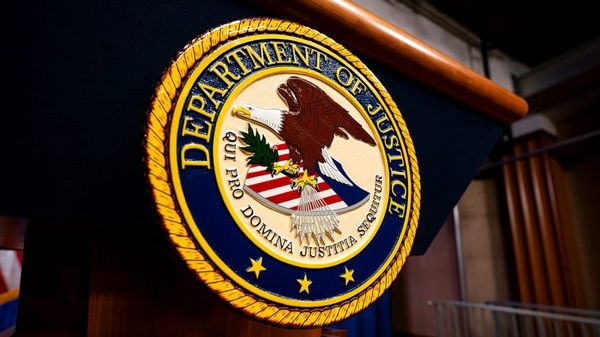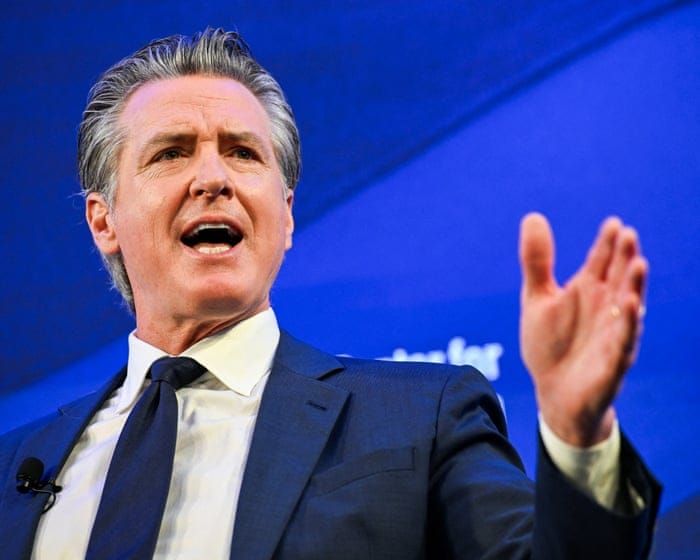
The federal agents did not come with a specific charge. According to California Governor Gavin Newsom, they came looking for one. In a video statement reported by The Guardian US, Newsom stated that Donald Trump had directed the Department of Justice to investigate him and his wife, Jennifer Siebel Newsom — and that federal agents had spent recent days knocking on the doors of family friends and former employees, demanding records and, in Newsom's characterization, "abusing the grand jury process."
Newsom's own explanation was direct: "He's coming after me because I am considering running for president." That framing matters. Not because it proves the investigation is baseless — no one outside the DOJ can assess that from public information — but because the pattern it describes is no longer speculative. The use of federal law enforcement to target political rivals has moved from allegation to documented practice. The Newsom case is not an anomaly. It is an escalation.
The architecture of this approach has been built piece by piece. The DOJ has opened or expanded investigations into figures who share one common characteristic: they represent a potential challenge to the current administration's consolidation of power. Former intelligence officials who questioned war justifications have faced FBI scrutiny. As Tinsel News has reported, the DOJ has been building a case against former CIA Director John Brennan — a pattern of targeting critics that the reporting described as "now undeniable." The Newsom investigation fits that pattern with uncomfortable precision.
The administration does not need to secure a conviction to achieve its political goal. An investigation alone forces targets to hire legal counsel, restricts their political activity, generates negative press, and consumes resources. The investigation is the punishment. The outcome is secondary.
This is the core mechanism that standard political coverage keeps missing. The conversation about whether Newsom is guilty of anything — a question that cannot be answered from available public reporting — is, in a meaningful sense, beside the point. Federal investigations do not need to produce indictments to function as political tools. The announcement of an investigation, the spectacle of agents at friends' doors, the implication of wrongdoing — these produce their effects before a single charge is filed. The investigation is the punishment. The outcome is secondary.
Newsom said as much himself. He framed the investigation not as a legal matter but as a political one, tying it explicitly to his stated consideration of a 2028 presidential run. That connection deserves scrutiny rather than dismissal. The timing of federal investigative activity has, in case after case during this administration, aligned with the political calendar rather than any new emergence of evidence. Investigations appear to accelerate or become public when their targets become more politically visible. That is not how law enforcement is supposed to work. It is how political intimidation does.
The grand jury process Newsom described — agents demanding records from family friends and former employees — deserves its own examination. Grand juries are investigative tools with extraordinary coercive power. Witnesses can be compelled to testify without counsel present. Records can be subpoenaed without the subject of the investigation being charged with anything. Prosecutors control what a grand jury sees and hears. In the hands of a politically directed DOJ, this process becomes a mechanism for generating the appearance of serious wrongdoing while the target has almost no legal recourse to contest it publicly. Newsom's characterization of "abuse" of this process is serious. It should be reported as such, not dismissed as spin.
There is a civil rights dimension here that broader coverage has treated as background noise. As Tinsel News has documented, a DOJ memo has already gutted decades of anti-discrimination enforcement by recharacterizing disparate impact doctrine as unconstitutional. The same department now directing agents to the homes of a Democratic governor's personal friends has simultaneously dismantled the legal frameworks designed to prevent government power from being used against targeted groups. The two moves belong in the same sentence.
The question of democratic norms, often invoked in coverage like this, tends to be treated as abstract. It is not abstract. When a sitting president directs law enforcement to investigate a political rival — and does so openly enough that the rival can say so publicly without apparent fear of contradiction — the chilling effect on political participation is concrete and immediate. Other potential 2028 candidates are watching. Democratic donors are watching. State officials who might otherwise challenge federal overreach are calculating the personal cost of visibility. The goal is not necessarily to destroy Newsom. It may be to make the price of running visible enough that others quietly decide not to.
The international dimension is not incidental. Governments that use law enforcement against political opponents do not typically announce the practice. They normalize it through incremental escalation — each step justified by the specifics of the individual case, each step making the next one easier. Observers in countries that have traveled this road recognize the sequence. The United States is not immune to it. The assumption that institutional inertia and legal norms will self-correct has been tested repeatedly since January 2025, and the results are not reassuring. As Tinsel News has covered, the executive branch has treated judicial orders as optional when they conflict with its priorities. A DOJ that ignores courts on immigration enforcement does not become more restrained when the target is a political rival.
Accountability requires naming what is happening with precision rather than euphemism. A president directing the Justice Department to investigate a potential political opponent — using the grand jury process to pressure associates, generating public spectacle, and doing so at the moment the target announces political ambitions — is the abuse of prosecutorial power for political ends. It does not require proof of innocence to say so. It requires only an honest account of what the pattern shows.
Newsom is a wealthy, powerful politician with significant legal resources. He can hire lawyers, give press statements, and fight back publicly in ways most targets of federal investigation cannot. The people who cannot do any of that — the family friends who got agents at their doors, the former employees who now face grand jury subpoenas for the crime of having worked for someone the president dislikes — do not have a press conference to call. They are collateral damage in a political operation, and their exposure is the mechanism by which the operation works.
The 2028 election cycle is already being shaped by decisions made in 2026. If the cost of declaring a presidential candidacy is a federal investigation of your spouse and your social circle, the field of people willing to pay that cost will narrow. That narrowing is not an accident. It is the point.