The government's own data shows that 4.8 million Americans dropped their Affordable Care Act health coverage between 2025 and 2026. That is not a rounding error. That is not a statistical anomaly. That is the largest single-year enrollment collapse in the ACA's history — and the people who caused it have spent the months since blaming the people who lost coverage.
The official explanation, offered by Health and Human Services Secretary Robert F. Kennedy Jr. and Centers for Medicare and Medicaid Services Administrator Mehmet Oz, is that the drop reflects successful fraud enforcement. Oz went further, telling reporters that current ACA enrollment was at "too high of a number." The implication: millions of Americans were gaming the system, and the administration cleaned it up.
A June 2025 analysis from Public Citizen tested that claim against the actual enrollment data. It did not hold up. Not at the margins. Not in any meaningful sense. The fraud explanation is not a misreading of the evidence — it is a fabrication designed to obscure a policy choice that congressional Republicans made, and that millions of low- and middle-income families are now paying for with their health.
Here is how fraud in the ACA marketplace actually works, according to Public Citizen's analysis. The system's subsidy structure is most generous to people who report incomes just above the federal poverty line. A fraudster trying to maximize their benefit would therefore claim income near the poverty threshold — low enough to attract maximum subsidies, high enough to avoid Medicaid eligibility. If the administration were genuinely purging fraudulent enrollees at scale, the data should show the sharpest declines among people reporting incomes at or near the poverty line.
That is not what happened. The people losing coverage are concentrated at incomes well above the poverty line — low- and middle-income families whose monthly premiums roughly doubled after Congress allowed enhanced ACA subsidies to expire at the end of 2024. These are not people who cheated their way in. They are people who could afford coverage when the subsidy made it affordable, and cannot afford it now that it does not. The mechanism is not fraud enforcement. It is sticker shock.
The Public Citizen report goes further. Enrollment is actually growing among people who report income right at the poverty line — the income bracket that would theoretically be most attractive to a fraudster. The administration's own preferred narrative would predict the opposite. When the data moves in the direction opposite to your theory, the theory is wrong. The Public Citizen authors do not believe this uptick reflects fraud either: they attribute it to people living just below the poverty line in states that refused to expand Medicaid, who fall into a coverage gap — too poor for ACA subsidies, not poor enough for Medicaid — and who are reporting slightly higher incomes to access the marketplace at all. This is a rational response to a broken system, not evidence of criminal intent.
Enhanced ACA subsidies, first enacted during the COVID-19 pandemic, significantly reduced premiums for low- and middle-income enrollees — in some cases to zero. Congressional Republicans declined to extend them in the 2024 budget process. The subsidies expired at the end of 2024. ACA enrollment collapsed in 2026. The sequencing is not subtle.
The fraud narrative is not an innocent mistake. It is a specific rhetorical move with a specific political function: it shifts moral responsibility from the legislators who let subsidies expire onto the people who lost coverage. If 4.8 million Americans dropped their health insurance because they couldn't afford it after Congress cut their subsidies, that is a policy failure with identifiable authors. If 4.8 million Americans dropped their health insurance because they were cheating, it is a law enforcement success. The administration chose the second story. Public Citizen's analysis, working from the same government data, shows the first story is true.
This matters beyond the ACA. As Tinsel News has reported, Congress had the legislative vehicle to extend enhanced subsidies and chose not to bring it to a vote. The subsidy expiration was not an oversight. It was a decision — made by lawmakers who understood the enrollment consequences and accepted them. The fraud framing allows those same lawmakers to retroactively recast their decision as responsible governance rather than a deliberate withdrawal of healthcare access from millions of working families.
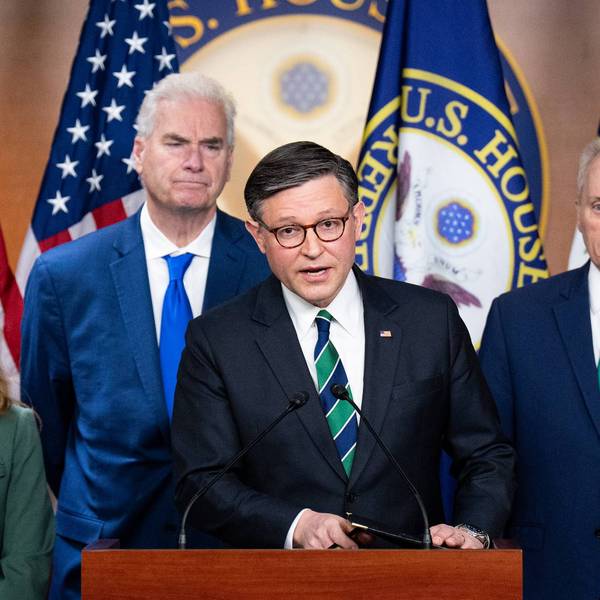
RFK Jr. and Oz are doing the political work that the legislators who cut the subsidies cannot safely do themselves. A member of Congress cannot stand at a town hall and tell constituents that 4.8 million people losing health coverage is a good thing. An appointed official can reframe it as fraud enforcement and let the talking point circulate. By the time the analysis catches up — as Public Citizen's has — the narrative has already done its job in the press cycle.
The accountability question here is not primarily about Kennedy or Oz. They are messengers. The accountability question is about the congressional Republicans who allowed the enhanced subsidies to expire, who understood that expiration would price millions of people out of coverage, and who have now been handed a convenient cover story by two administration officials willing to misread their own data in public. The subsidy expiration was the cause. The enrollment collapse was the effect. The fraud claim is the alibi.
The ACA marketplace is not the only federal health program absorbing damage. The Congressional Budget Office projects that Medicaid cuts included in Republicans' 2025 budget law will leave more than 10 million fewer people enrolled in the program by 2034. That number sits alongside the 4.8 million who already lost ACA coverage — a combined trajectory toward a United States where tens of millions of people who had health coverage under current law will not have it under the laws being written now. The administration's fraud framing is not just dishonest about the present. It is preparation for explaining away a much larger number in the future.

As Tinsel News has tracked, the same legislative session that allowed ACA subsidies to expire also advanced SNAP cuts that stripped food assistance from hundreds of thousands of children — a pattern of simultaneous withdrawal from the programs that sustain low- and middle-income families. The ACA enrollment collapse is not a standalone event. It is part of a coordinated reduction in the public programs that make healthcare and nutrition accessible to people who cannot absorb market-rate costs.
The fraud claim will not survive sustained scrutiny. Public Citizen's analysis is methodologically straightforward, and the government data it draws on is public. What the claim will do — what it is already doing — is give legislators and media outlets a reason to treat the enrollment collapse as a law enforcement story rather than a healthcare access story. That reframing is the point. If the 4.8 million people who lost coverage were cheaters, no one owes them anything. If they were low- and middle-income families priced out by a deliberate legislative choice, someone does. The administration has made clear which version of events it prefers. The data has made equally clear which version is true.
The CBO projects more than 10 million Medicaid losses by 2034. The ACA has already lost 4.8 million enrollees in a single year. The officials responsible for both outcomes are describing the first as a success and have not yet been asked to explain the second. That accounting will arrive — in emergency rooms, in delayed diagnoses, in the kind of medical debt that ends retirements and bankrupts families. It will arrive in communities that cannot absorb it, in states where the coverage gap is widest, among people who have no political representation in the rooms where these decisions were made. The fraud was never in the enrollment data. It was in the explanation.