ANALYSIS
The last time the federal food assistance program lost participants this fast was 1996, when welfare reform stripped 2.2 million people from the rolls over eight months. That cut became a defining mark of an era — cited for decades as a cautionary example of what happens when Congress engineers poverty rather than reduces it. According to Common Dreams, citing an updated analysis from the Center on Budget and Policy Priorities, the GOP's 2025 One Big Beautiful Bill Act has already done nearly twice the damage — and the law's most consequential provisions have not yet taken effect.
That comparison is not rhetorical. Tahra Hoops, director of economic analysis at Chamber of Progress, made it directly: the 1996 welfare reform cut 2.2 million people from food assistance over eight months. The One Big Beautiful Bill has removed nearly 4 million people from the Supplemental Nutrition Assistance Program in roughly the same window — with the unemployment rate flat. No economic crisis is driving these numbers. The law is.
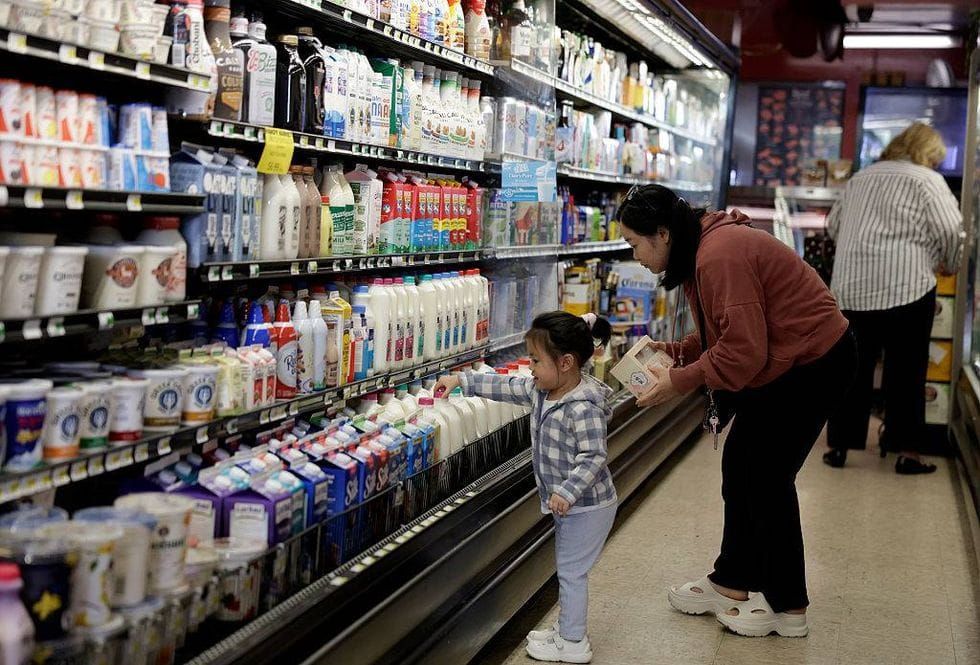
The CBPP analysis, updated Monday, estimates that SNAP participation nationwide fell by more than 10 percent between the law's July 2025 enactment and March 2026. In 13 states where enrollment data is available, 808,000 children have stopped receiving benefits — nearly half of the 1.7-million-person total decline in those states. Arizona has seen enrollment collapse by more than 50 percent. These are not rounding errors. They are the predictable output of a law designed to make food assistance administratively hostile.
Here is the mechanism the coverage has largely missed: the One Big Beautiful Bill does not simply cut SNAP benefits outright. It restructures the financial relationship between the federal government and states in a way that turns states into enforcers of their own beneficiaries' exclusion. Starting in 2027, most states will be required to pay between 5 and 15 percent of SNAP benefit costs — totaling hundreds of millions of dollars annually in many states. The share each state owes will be calculated based on current error rates, including errors states are making right now. The CBPP analysis is explicit: this structure creates a direct financial incentive for states to reduce enrollment aggressively, even when people remain legally eligible. Deny enough claims fast enough, and the error rate drops. So does the state's liability.
The result is a system that rewards speed over accuracy and penalizes due process. Katie Bergh, senior policy analyst at CBPP, described what is already happening: states have "raced to minimize their exposure to these massive new costs," and "many people who remain eligible for SNAP on paper — including kids — are losing the benefits they need." The children being removed are not ineligible. They are collateral damage in a cost-minimization strategy that the federal law explicitly incentivizes.
Beginning in 2027, states will be required to pay 5–15% of SNAP benefit costs. The amount each state owes is tied to its current error rate — including errors being made today. This creates a financial incentive to cut enrollment now, before the cost-sharing kicks in, even when cutting means denying benefits to eligible recipients.
Which brings us to the political geography that the source reporting does not address — and that deserves direct examination. Arizona, the state with the steepest documented enrollment decline, voted for Donald Trump in 2024. The state's two Republican senators, both of whom voted for the One Big Beautiful Bill, represent a constituency that is now losing food assistance at a rate that has no modern precedent. The same pattern holds across the states with available data. The communities absorbing the damage are not abstractions in a Washington budget fight. Many of them are the rural, working-class, and lower-income constituencies that delivered the electoral margins that made this law possible.
This is not an argument that those voters were wrong to vote as they did, or that they deserve what followed. It is an observation about accountability that almost no coverage of this story is making: the bill's sponsors built a coalition that includes the people it is now starving. The political logic that sold the One Big Beautiful Bill — waste, fraud, dependency — was always in tension with the actual enrollment data, which shows that the overwhelming majority of SNAP recipients are children, elderly adults, people with disabilities, and working adults whose wages do not cover food costs. The bill's passage did not change who was on SNAP. It changed who administers the exclusion.
The numbers will get worse before Congress has any structural incentive to fix them. The CBPP analysis is clear that the current enrollment decline reflects the law's early provisions — the administrative burden increases, the procedural barriers, the state-level scramble to get ahead of the 2027 cost-sharing formula. The program's largest cuts have not yet taken effect. When they do, the states with the highest error rates — often the states with the most complex, under-resourced eligibility systems — will face the steepest financial penalties for accurate administration. The incentive to deny first and adjudicate later will intensify.
Bergh's call is unambiguous: "Millions losing SNAP, including children, is an emergency that Congress needs to fix now, before more people are hurt." But Congress is the same body that passed the law in the first place. The Republican majority that authored the One Big Beautiful Bill retains the votes to block any corrective legislation. And the law's architects have shown no indication that 808,000 children losing food assistance constitutes a policy failure rather than a policy outcome.
Policy analyst Michael Linden offered a sharper framing, describing the law's impact on SNAP as "the Memorial Reflecting Pool of keeping kids from going hungry" — a reference to the administration's widely mocked renovation of the Lincoln Memorial pool, which became a symbol of expensive incompetence producing visible damage to something that previously worked. The analogy is precise in one respect: the harm is documented, the cause is identifiable, and the people responsible are still in office.
The pattern here connects to a broader dynamic in this administration's domestic policy: Congress has already allowed 5 million people to lose health coverage this year through a separate set of legislative decisions, and Social Security's full-benefit timeline has accelerated by a full quarter under policies still in effect. The One Big Beautiful Bill's SNAP provisions are not an isolated error. They are part of a consistent legislative direction: restructure the federal social contract so that the cost of austerity is borne by the people least positioned to absorb it, through mechanisms that obscure direct causation.
The obscuring mechanism in this case is the state cost-sharing formula. When a family in Arizona loses SNAP benefits, the immediate actor is a state agency, not a congressional office. The denial letter comes from a state bureaucracy. The appeal goes to a state tribunal. The federal law that created the financial incentive for that denial is one legislative step removed — visible in the CBPP analysis, invisible in the daily experience of a family that no longer has food assistance. That distance is not accidental. It is the architecture of deniability.
The CBPP projects that the number of people losing access to SNAP will grow in coming months. The 2027 cost-sharing provisions have not yet created their full incentive structure. States are still calibrating their exposure. The 808,000 children who have already lost benefits are the early data points in a trend line that the law's own design will extend. Congress built a machine. The machine is working exactly as designed.
What accountability looks like here is specific: the members of Congress who voted for the One Big Beautiful Bill own the 4 million people removed from SNAP, the 808,000 children among them, and the structural incentives that will drive those numbers higher. The pattern of embedding financial incentives into federal law that produce predictable harm to vulnerable populations — then attributing the harm to state-level administration — is a legislative strategy, not a bureaucratic accident. Naming it clearly is the minimum the story requires.