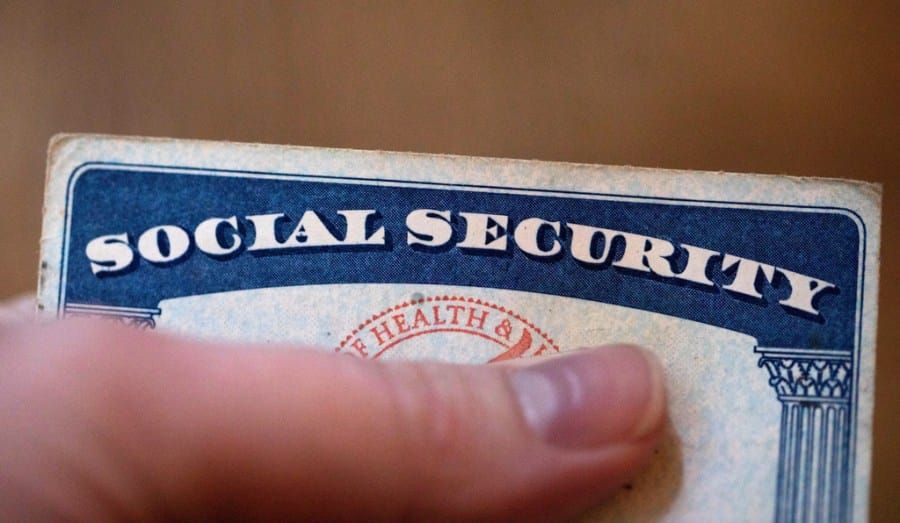
The Social Security Administration holds some of the most sensitive personal data the federal government collects: names, earnings histories, disability records, banking information, family relationships, immigration status, and dates of death. Every American who has ever worked, collected benefits, or been assigned a number at birth is in that system. According to reporting by The Hill, the Trump administration transferred the records of 500 million Americans — living and dead — to Elon Musk's Department of Government Efficiency. The administration has not identified the legal authority under which it did so.
That last sentence is the story. Not the scale of the transfer, though the scale is extraordinary. Not the identity of the recipient, though that raises its own questions. The story is that a private operation run by the world's wealthiest individual now reportedly holds the complete Social Security records of every person who has ever lived and worked in the United States — and the government has not pointed to a single statute, regulation, or court order that permitted the handover.
DOGE is not a federal agency in any conventional sense. It has no statutory charter, no Senate-confirmed leadership, no established privacy compliance infrastructure, and no defined mandate under the Privacy Act of 1974 — the federal law that governs how agencies may collect, maintain, use, and disclose personal records. The Privacy Act requires that data collected for one purpose not be used for another without explicit authorization. Social Security records exist to administer retirement, disability, and survivor benefits. They do not exist to be analyzed by a cost-cutting operation whose leader holds active financial interests across multiple industries that employ, contract with, and depend on the federal government.
That conflict of interest is not incidental. Musk's companies — Tesla, SpaceX, Starlink, and X among them — collectively hold billions of dollars in federal contracts and regulatory relationships. SpaceX alone has received more than $15 billion in NASA and Defense Department contracts. The same man whose businesses depend on federal procurement decisions now reportedly has access to the earnings records, disability statuses, and financial information of every American worker. The power asymmetry is not abstract. It is structural, and it runs in one direction.
The Privacy Act contains a provision that allows agencies to share records with other federal entities under a "routine use" exception — but only when that use is compatible with the original purpose of collection, and only when it has been published in the Federal Register with opportunity for public comment. No such notice appears to have been filed before this transfer occurred. Critics argue that even if DOGE were treated as a legitimate federal entity for these purposes — a legal interpretation that itself remains contested — the routine use pathway still requires procedural steps the administration did not take.
This is consistent with a pattern this administration has established across multiple agencies. As Tinsel News has reported, the TSA transferred 31,000 traveler records to ICE without public notice or established oversight mechanisms, and the ICE has purchased location data from private brokers specifically to avoid warrant requirements. The Social Security transfer fits the same architecture: move data first, litigate authority later, and rely on institutional inertia to normalize what would previously have been unthinkable.
The scale here is qualitatively different, however. Thirty-one thousand traveler records is a surveillance program. Five hundred million Social Security records is the entire administrative spine of American civil life. The database reportedly includes not only living beneficiaries but the deceased — meaning it encompasses a comprehensive historical record of American economic participation stretching back generations. Combined with other federal databases DOGE has reportedly sought access to — IRS records, Medicare and Medicaid files, federal employee personnel data — the aggregate picture is of a private operation constructing what would be the most comprehensive civilian surveillance infrastructure ever assembled in the United States, with no public mandate and no independent oversight.
Supporters of the administration argue that DOGE's mission — identifying waste, fraud, and redundancy in federal spending — requires access to cross-agency data. That argument deserves to be taken seriously on its merits, and then rejected. Fraud detection in Social Security is a legitimate governmental function. The Social Security Administration's own Office of Inspector General performs exactly that work, with established legal authorities, congressional oversight, and privacy protections built into its operating framework. If the goal were genuinely fraud reduction, the existing institutional infrastructure exists to do it. What DOGE provides that the OIG does not is insulation from oversight — and a direct line to a private individual whose financial interests are intertwined with federal policy at every level.
The human stakes are not hypothetical. Social Security records contain the disability determinations of millions of Americans — information about mental health conditions, chronic illness, and functional limitations that people disclosed to a government agency under the expectation of confidentiality. They contain the earnings histories of undocumented workers who paid into the system for years. They contain the banking information of retirees on fixed incomes. They contain data on survivors of domestic violence who changed their names and addresses specifically to prevent their location from being discoverable. Every one of those people made a decision to share sensitive information with a government agency operating under established legal protections. None of them consented to that information being transferred to a private operation with no defined legal status and no established accountability mechanism.
The administration's response to legal challenges against DOGE's data access has been to contest standing — arguing that plaintiffs cannot demonstrate sufficient concrete harm to bring suit. This is a familiar procedural defense, but it inverts the logic of privacy law. The harm from unauthorized mass data transfer is not always immediate and individual. It is structural and prospective: once data is transferred, it cannot be un-transferred. Once it is accessible to a private operation with undefined retention and use policies, the exposure is permanent. Courts that require plaintiffs to demonstrate harm before the harm has materialized are effectively ruling that mass surveillance is permissible until someone can prove they have been surveilled in a way that hurt them — a standard that would gut privacy protection as a meaningful legal concept.
There is a deeper question the framing of "data theft" obscures. The more precise problem is not that data was stolen — it is that it was handed over by officials who had the physical access to do so, without the legal authority to permit it. That distinction matters because it locates the accountability correctly. The failure is not a breach. It is a decision. Someone at the Social Security Administration authorized this transfer. Someone in the White House approved it. Someone in DOGE's operation requested it and received it. Those are named, identifiable actors making identifiable choices — and the legal exposure they carry is not theoretical.
Several state attorneys general have filed or indicated they are preparing legal challenges. Federal judges in at least two districts have issued temporary restraining orders limiting DOGE's access to other agency databases while litigation proceeds. The courts, not Congress, have so far been the primary check on this expansion of executive data authority — which is itself a measure of how far the normal mechanisms of democratic accountability have already degraded. As Tinsel News has documented, democracy experts warn that institutional "stabilization" often masks a permanently diminished baseline — the emergency recedes, but the power that was seized does not return.
The Social Security data transfer will likely be litigated for years. Courts may ultimately order its deletion, restrict its use, or compel disclosure of what has already been done with it. What courts cannot do is restore the condition that existed before: 500 million Americans whose most sensitive government records were held by an agency with clear legal obligations and established oversight, rather than by a private operation whose accountability structure is still being argued over in federal court. The legal battle ahead is real. But the transfer already happened — and the people whose data moved had no say in it, no notice of it, and no recourse that arrived in time to prevent it.