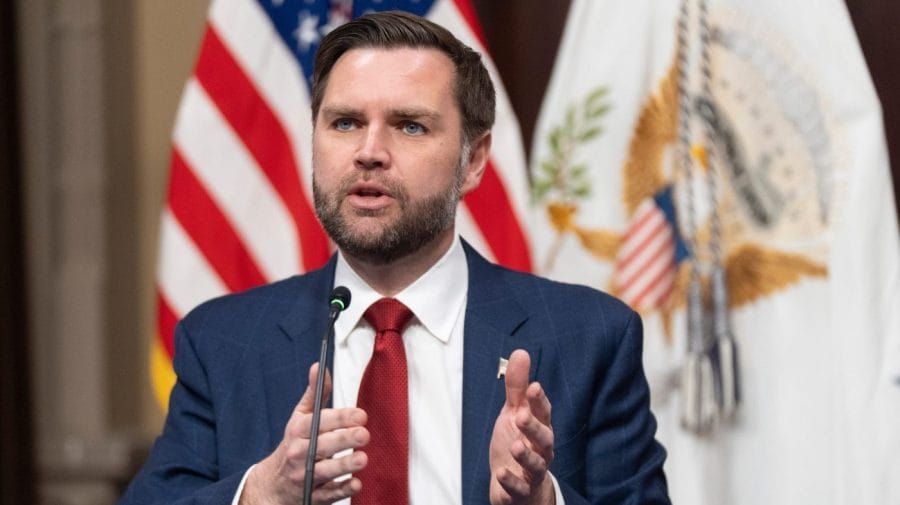
The federal government's oversight power has always been susceptible to political capture. What is new is the open announcement of it. On Friday morning, President Trump told The Hill that Vice President JD Vance's new role as the administration's so-called "fraud czar" would focus "everywhere," but "primarily" on Democratic-led states — naming California, Illinois, Minnesota, Maine, and New York by name. The parenthetical he added about Minnesota — "Somalia beware!" — left little room for ambiguity about which communities, not just which governments, he had in mind.
This is not a leak. It is not a dog whistle. It is a formal announcement, made by the President of the United States, that the executive branch intends to deploy its investigative resources along partisan lines. The question worth sitting with is not whether this is unusual — it plainly is — but what it means when a government stops pretending that federal oversight is neutral and simply states, out loud, that it is not.
The structural problem is this: fraud enforcement, by its nature, finds what it looks for. Federal investigators do not audit everything simultaneously. They choose targets, allocate personnel, and prioritize jurisdictions. When the president publicly designates the target list — and the target list maps directly onto the electoral map — the investigative apparatus becomes an instrument of political pressure rather than a check on genuine wrongdoing. Every audit opened in a blue state becomes, at minimum, a political event. Every finding, however minor, becomes ammunition. Every state government under investigation is a government on defense during an election cycle.
The announcement also carries a specific threat function. Minnesota was named alongside a parenthetical reference to Somalia — a reference to the state's Somali-American community and, almost certainly, to Representative Ilhan Omar's district. That framing does not arrive without context. Disinformation targeting Omar and her constituents has been a recurring feature of the current political environment, amplified through social media and, at times, by major news outlets operating without adequate verification. Attaching a federal oversight mandate to that same community — from the president, in an official announcement — is a different category of act. It converts political hostility into administrative targeting.
The accountability question here runs in two directions. The first is institutional: what oversight exists for the fraud czar role itself? Vance holds no Senate-confirmed investigative authority. The "czar" designation is informal — a title, not a statutory office. That informality matters. Statutory offices have defined mandates, reporting requirements, and congressional oversight mechanisms. An informal czar role, assigned by the president to the vice president, operates outside that architecture. There is no clear mechanism by which Congress compels Vance to testify about his investigative priorities, no inspector general with jurisdiction over the role, no formal record of the criteria by which states are selected for scrutiny.
The second accountability question is electoral. The states named — California, Illinois, Minnesota, Maine, New York — are not random. They are states with Democratic governors, Democratic-controlled legislatures, and, in several cases, competitive federal races in 2026. Minnesota's Senate seat is among the most closely watched in the country. New York has multiple competitive House districts. Illinois is home to a Democratic governor whose national profile has been rising. The announcement of enhanced federal scrutiny, made now, in these states, functions as a pre-election pressure campaign regardless of whether a single fraud case is ever filed.
This pattern has a history worth naming. The politicization of federal investigative resources is not a new phenomenon in American politics, but it has typically operated through plausible deniability — through the quiet reallocation of U.S. Attorney resources, the selective timing of indictments, the private direction of investigative priorities. What is different here is the public declaration. The administration is not hiding the targeting. It is announcing it, apparently calculating that the announcement itself serves a political purpose — either as a deterrent to state-level opposition or as a signal to the base that the executive branch is being wielded on their behalf.
That calculation has consequences for how federal oversight functions as an institution, not just in this administration but in the ones that follow. Every norm that is broken publicly becomes easier to break again. A Democratic administration that later announced it would focus its fraud enforcement "primarily" on Republican-led states would be doing so against a backdrop in which the current administration established that this is simply what fraud czars do. The precedent being set is not just a policy choice — it is a constitutional degradation being performed in plain sight. Democracy researchers have documented how institutions erode not through single catastrophic breaks but through the gradual normalization of actions that were once unthinkable — each one making the next one easier to absorb.
The communities most directly in the crosshairs deserve more than a structural analysis. Minnesota's Somali-American community — the one the president singled out with a parenthetical — is a community that has built civic infrastructure, elected representatives, and participated in democratic life under conditions of persistent hostility. The message embedded in Trump's announcement is not subtle: federal resources will be directed at you, your community, your state, because of who you are and how you vote. That is not fraud enforcement. That is intimidation dressed in administrative language.
There is also a media framing problem worth naming. Coverage of this announcement has largely treated it as a political story about Trump and Vance — a story about personalities and posturing. The more important story is the one about what federal oversight becomes when it is openly partisan. The current administration has already moved toward using federal enforcement as political targeting, with the Deputy Attorney General floating the idea of armed immigration agents at polling sites. The fraud czar announcement fits a pattern — not of isolated provocations, but of a systematic effort to make federal power feel threatening to communities and governments that oppose the administration.
Congress has the authority to respond. It can demand that Vance testify about the criteria by which states are selected for scrutiny. It can open oversight hearings on the fraud czar role's mandate, budget, and reporting structure. It can pass legislation requiring that any executive fraud enforcement initiative be subject to inspector general review and congressional notification. Whether the current Congress will exercise any of that authority is a different question — but the tools exist, and their non-use is itself a choice with consequences.
What the administration has done, in one Friday morning post, is establish that the executive branch will allocate its oversight resources based on how states voted. The states that supported the president get one kind of federal relationship. The states that did not get the fraud czar. That is not a governing philosophy. It is a protection racket with a federal seal on it — and the fact that it was announced openly, without apparent concern for how it would be received, tells you something about how much the administration expects to be held accountable for it. Meanwhile, ten states are organizing to tax billionaire wealth as the same federal government that is threatening blue-state oversight simultaneously cuts food assistance and defunds hospitals — a reminder that the states being targeted are also the ones most actively pushing back on the administration's economic agenda.