The Trump administration's Justice Department entered a Colorado courtroom last Friday on behalf of Elon Musk's artificial intelligence company, xAI, in a lawsuit challenging the state's new AI regulation law. The legal argument the DOJ offered — that Colorado's law violates the 14th Amendment's equal protection guarantee — is technically coherent. It is also, on inspection, a remarkably convenient position for a federal administration whose most prominent private-sector ally runs one of the companies the law was designed to constrain.
The DOJ's intervention, reported by The Guardian US, rests on a specific constitutional claim: that Colorado's requirement that AI companies guard against unintended discriminatory effects is itself discriminatory, because the law permits some actions aimed at promoting diversity while prohibiting others. That is a real legal tension, and courts will have to resolve it. But the constitutional argument is the vehicle, not the destination. The destination is federal preemption — a framework in which Washington, not Denver or Sacramento or Albany, sets the rules for how artificial intelligence companies operate in the United States.
Colorado's AI regulation law requires companies deploying high-risk AI systems to take reasonable care to protect consumers from known or reasonably foreseeable risks of algorithmic discrimination. It is one of the first comprehensive state-level AI laws in the country. xAI filed suit challenging the law before it took effect. The DOJ's intervention on Friday aligned the federal government formally with xAI's legal position.
This is the original thesis the source material leaves on the table: the DOJ's intervention is not primarily a legal event. It is a market-shaping event. When the federal government enters a lawsuit on the side of a private AI company owned by a figure with documented financial relationships to the current administration, and does so in service of a broader strategy to replace state-level AI oversight with a federal framework, the constitutional argument becomes secondary to the structural outcome. The question worth asking is not whether the DOJ's 14th Amendment theory will prevail. The question is who benefits if it does.
The answer is not complicated. A federal AI framework — particularly one shaped by an administration openly hostile to diversity requirements and algorithmic accountability rules — would almost certainly be more permissive than the patchwork of state laws currently taking shape. Colorado's law is among the strictest. California, Texas, and more than a dozen other states have active AI legislation in various stages of passage or implementation. If the federal government succeeds in establishing preemptive authority over this space, every one of those laws becomes vulnerable. The companies that would benefit most from that outcome are the large AI developers — xAI, OpenAI, Google DeepMind, Meta AI — that currently face the most exposure under state-level discrimination and accountability requirements. Tinsel News has tracked the rapidly shifting global landscape of AI regulation; what is happening in Colorado is the domestic front of that same fight.
The DOJ's specific 14th Amendment argument deserves scrutiny on its own terms. Colorado's law requires AI developers to guard against unintended discriminatory outcomes — bias baked into training data, for instance, that causes a hiring algorithm to systematically disadvantage Black applicants, or a credit-scoring model that penalizes residents of majority-Latino zip codes. The DOJ claims this requirement is itself unconstitutional because the law carves out space for diversity-promoting actions. In other words: the administration is arguing that a law designed to prevent algorithmic discrimination against protected classes is a form of discrimination. This is the same legal theory driving the administration's broader rollback of civil rights enforcement, applied now to the regulation of automated systems. It is not a neutral reading of the Constitution. It is a policy position dressed in constitutional language.
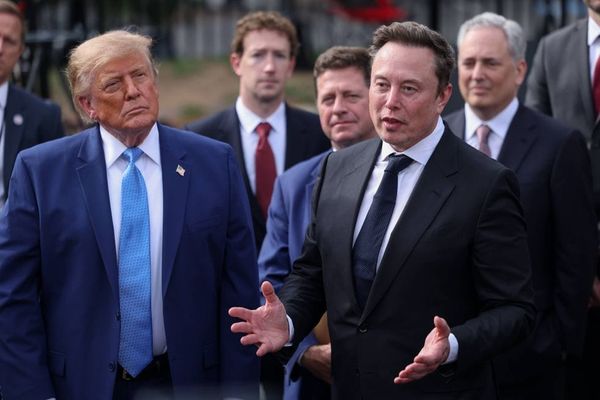
The power and money lens is clarifying here. Musk's relationship with the current administration is not incidental background. He served as the head of the Department of Government Efficiency, a role that gave him direct access to federal data systems and regulatory architecture. xAI's Grok model competes directly with OpenAI's ChatGPT and Google's Gemini in a market where regulatory costs are a meaningful competitive variable. A company that does not have to comply with Colorado's anti-discrimination requirements, or California's forthcoming transparency mandates, or New York's proposed algorithmic impact assessment rules, operates at a structural advantage over companies that do — or over smaller competitors that cannot afford the lobbying infrastructure to shape a federal alternative. The DOJ's intervention does not just help xAI win a lawsuit. It helps establish the principle that state-level AI accountability is constitutionally suspect.
The systemic pattern here extends beyond AI. The administration has applied the same playbook — federal intervention to preempt state regulation — across environmental standards, immigration enforcement, and financial oversight. What is new is the explicit alignment of that strategy with the financial interests of a specific private actor who maintains an unusually close relationship with the executive branch. The DOJ's recent proposal to shield federal prosecutors from state ethics rules follows a similar logic: federal authority expands, state accountability mechanisms shrink, and the people best positioned to exploit that gap are those already operating at the federal level.
There is also a democratic accountability problem that the constitutional debate obscures. Colorado's AI law was passed by an elected legislature responding to documented harms from automated decision systems. Those harms are not hypothetical. Algorithmic discrimination in hiring, housing, credit, and criminal justice has been documented by academic researchers, federal agencies, and investigative journalists for more than a decade. Colorado's legislators looked at that evidence and decided their constituents deserved legal protection from it. The DOJ's intervention tells Colorado — and every other state considering similar legislation — that this democratic judgment is constitutionally infirm. That is a significant claim. It warrants more scrutiny than it has so far received.
The human impact of this fight is easy to lose inside the procedural language of federal litigation. But the people most affected by algorithmic discrimination are not abstract. They are job applicants whose resumes are filtered by automated screening tools trained on historically biased hiring data. They are mortgage applicants in redlined neighborhoods whose creditworthiness is assessed by models that replicate the geography of segregation. They are people whose bail recommendations, parole decisions, and child welfare assessments are shaped by systems that no one has adequately audited. Colorado's law was an attempt to give those people a legal recourse. The DOJ's intervention is an attempt to take it away — and to ensure that any replacement comes from a federal government currently accelerating AI deployment across law enforcement, immigration, and military targeting without comparable accountability requirements for its own systems.
The administration's stated rationale — that a coherent federal framework is preferable to a confusing patchwork of state laws — is not without merit as a policy argument. Regulatory fragmentation is a genuine problem for companies operating nationally, and there is a reasonable case that uniform national standards, properly designed, could provide stronger protections than fifty inconsistent state regimes. But that argument assumes the federal framework being built would be at least as protective as the state laws it displaces. Nothing in this administration's regulatory record suggests that is the intent. The DOJ did not intervene in Colorado to build something better. It intervened to prevent something that already exists from taking effect.
If the administration succeeds in establishing federal preemptive authority over AI regulation through this lawsuit or the broader legislative framework it is assembling, the practical consequence will be felt most acutely by the communities that state laws like Colorado's were written to protect. The companies whose compliance costs drop will report those savings to shareholders. The people who would have had legal recourse against discriminatory algorithms will not have a line item to point to. That asymmetry — between who benefits from deregulation and who bears its costs — is the story the constitutional argument is designed to make invisible.
Colorado's law may or may not survive judicial review. The 14th Amendment question is genuinely contested, and courts have been unpredictable on equal protection claims in the post-Students for Fair Admissions era. What will not be resolved by any court ruling is the underlying political question: whether the federal government's entry into AI regulation is designed to protect the public from algorithmic harm, or to protect the AI industry from accountability. The DOJ's decision to take Elon Musk's side in this particular fight, at this particular moment, is not a neutral answer to that question.