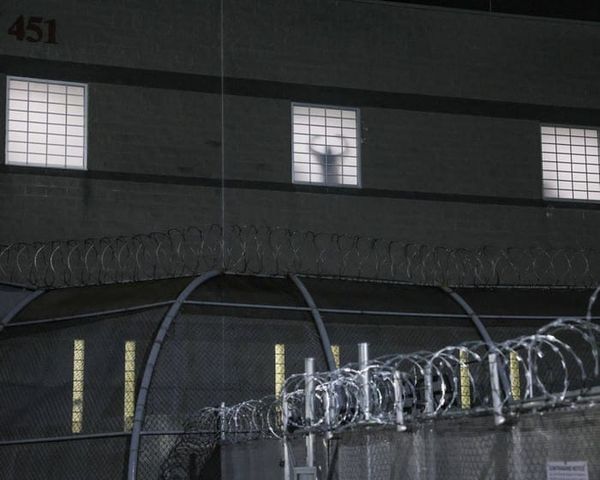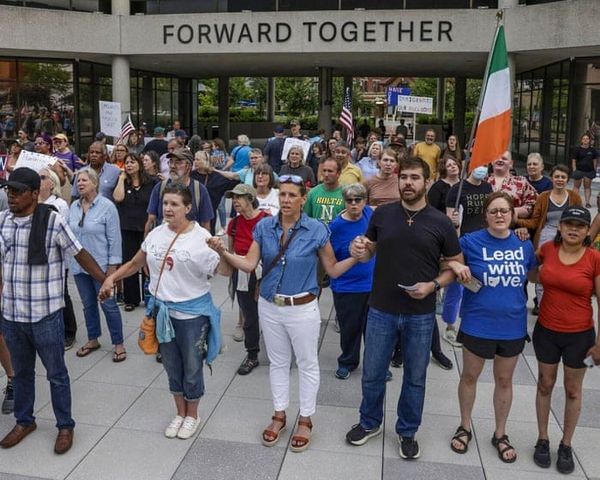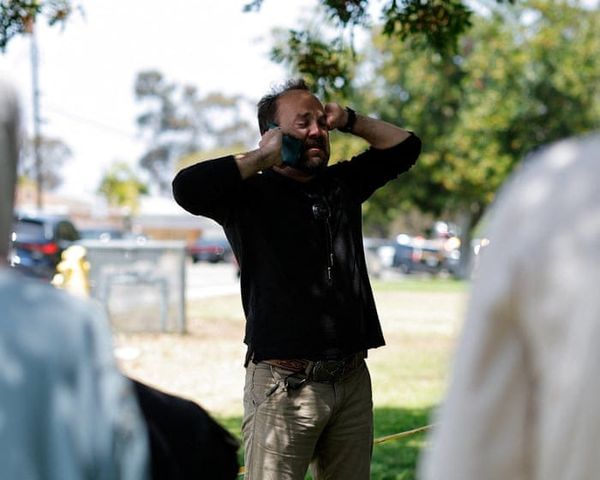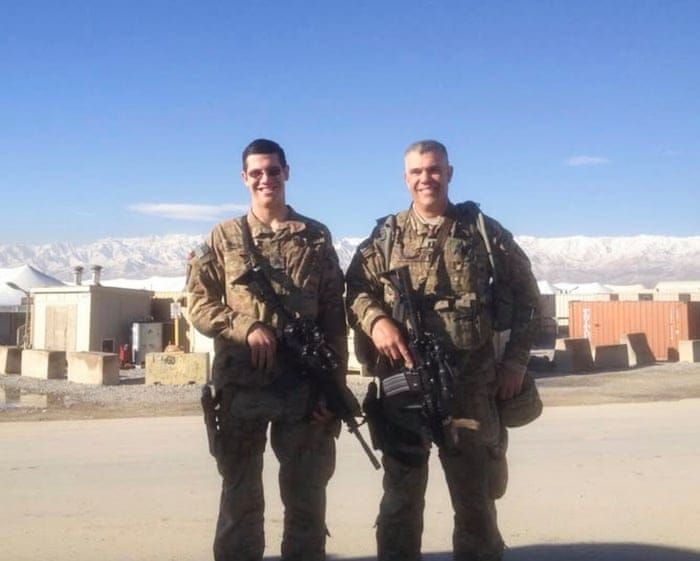
The federal government just secured felony conspiracy convictions against three people who protested outside an Immigration and Customs Enforcement facility in Spokane, Washington. One of them is a U.S. Army veteran who served in Afghanistan. All three now face up to six years in federal prison and fines of up to $250,000 each — for participating in a demonstration.
The verdict, reported Thursday by The Guardian US, did not emerge from a prosecution for violence, property destruction, or threats against individuals. It emerged from a June 2025 protest against ICE. The charge was conspiracy — a felony that, in this context, transforms the act of organizing collective dissent into a criminal enterprise.
Legal experts told The Guardian that the Spokane case represents a serious escalation in the Trump administration's attack on First Amendment rights. That framing is accurate as far as it goes. But it understates what is actually happening. This is not an escalation of a legal dispute. It is the construction of a new legal architecture — one in which the organizational infrastructure of protest itself becomes the crime.
The conspiracy charge is the critical mechanism here. Federal conspiracy law does not require the underlying act to be violent, or even completed. It requires only an agreement between two or more people to commit an offense and at least one overt act in furtherance of that agreement. Applied to protest organizing, it means that the planning of a demonstration — the group chat, the shared logistics, the coordinated presence outside a federal building — can constitute the crime. The protest itself becomes evidence of the conspiracy.
This is not a novel legal theory. Conspiracy charges have been used against labor organizers, civil rights demonstrators, and anti-war activists throughout American history. What is new is the target: people opposing the specific machinery of immigration enforcement, in a political environment where ICE operations have expanded dramatically and where the administration has made clear it views dissent against those operations as a threat to be neutralized. The Spokane verdict is not an outlier. It is a proof of concept.
The presence of a military veteran among the defendants deserves more than a passing mention. The administration has consistently invoked military service as a legitimizing credential — for policy, for loyalty, for American identity. A veteran who served in Afghanistan and returns home to be convicted of a felony for protesting federal immigration tactics is not an irony. It is a data point about who the enforcement apparatus is actually aimed at. The people most willing to contest the expansion of ICE's authority are being told, through prosecution, that their dissent carries a price the government has deliberately set high enough to deter.
That deterrence function is the point. Six years in federal prison and a $250,000 fine are not proportionate responses to a protest. They are a message — and the message is not addressed to these three defendants alone. It is addressed to every organizer, every legal observer, every activist who has considered showing up outside an ICE facility. The prosecution's goal was never primarily to punish the people in the dock. It was to price collective action out of reach for everyone watching.
Federal conspiracy charges (18 U.S.C. § 371) require only an agreement between two or more people to commit a federal offense and a single overt act in furtherance of that agreement. The law was historically used against organized crime and terrorist networks. Applied to protest organizing, it reframes coordinated demonstration as criminal enterprise — making the planning process itself prosecutable, regardless of whether the underlying act caused harm.
The pattern extends well beyond Spokane. As Tinsel News has covered, the administration has deployed ICE with near-total impunity against detained populations, while Congress has handed the agency $75 billion and almost no oversight rules. The Spokane prosecution fits within a broader strategy: insulate the enforcement apparatus from accountability by raising the legal cost of challenging it. You cannot easily organize against an agency when organizing itself is the charge they'll use against you.
The accountability question that the Spokane verdict forces into view is not whether these three defendants broke the law. A jury decided that they did. The question is who decided to bring this prosecution, under what theory, and what the intended effect was. Federal prosecutors have discretion. Felony conspiracy charges against protest participants are a choice — a choice made by officials who serve at the pleasure of an administration that has treated opposition to immigration enforcement as an existential political threat. The charge was available. The decision to use it was deliberate.
There is also a power asymmetry embedded in this case that is worth naming directly. The people being prosecuted were protesting an agency with a $75 billion budget, arrest authority, and a documented record of detaining U.S. citizens by mistake, separating 145,000 U.S. citizen children from their parents, and operating detention facilities where 42 people have died in custody since January 2025. The protesters had signs and a permit. The federal government had the conspiracy statute.
What the Spokane verdict establishes — if it survives appeal — is that federal conspiracy law is now a viable instrument for suppressing organized opposition to immigration enforcement. That is a significant legal development, and it will be tested in courts that have shown, at best, mixed willingness to constrain executive overreach in this area. The defendants will face sentencing with felony records that will follow them regardless of what any appellate court eventually decides about the underlying charge.
The veteran in this case served a government that now considers his protest a felony. The government he served is the same one that will decide how long he goes to prison for it. That is not a paradox requiring resolution. It is the administration's position, stated plainly through a jury verdict: the right to dissent against immigration enforcement does not survive contact with the conspiracy statute.