The director of the Federal Bureau of Investigation is suing a magazine for reporting on how he does his job. That sentence is worth sitting with before anything else.
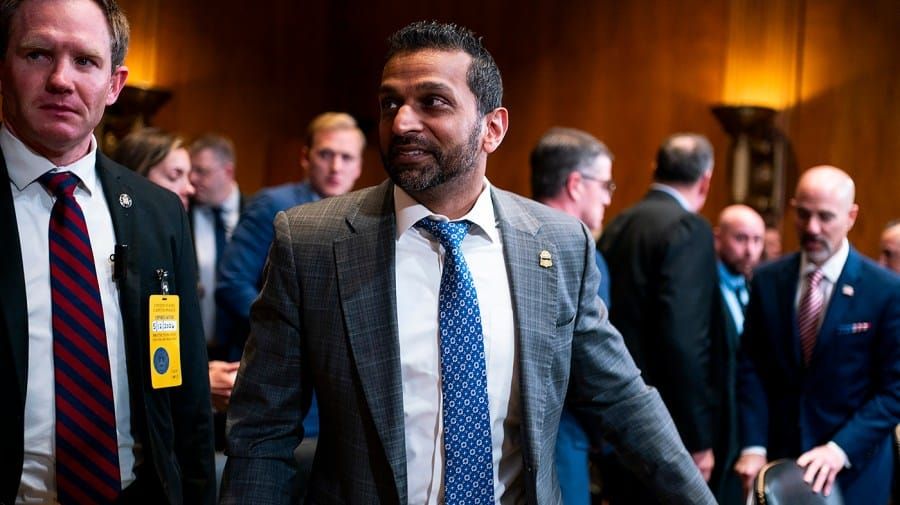
Kash Patel filed a defamation lawsuit in April against The Atlantic over articles that, according to The Hill, alleged excessive drinking and questioned his performance as FBI director. The Atlantic is now moving to dismiss the case, filing a motion that describes the lawsuit as an "assault" on the Constitution. The magazine argues that Patel's sources were credible, that its reporting met the legal standard for coverage of a public official, and that the suit is designed not to vindicate a reputation but to punish journalism.
That framing — a lawsuit as punishment rather than remedy — is not rhetorical overreach. It has a name in First Amendment law: a SLAPP suit, or Strategic Lawsuit Against Public Participation. The mechanism is simple. A powerful figure files expensive litigation against a news organization or individual speaker. The goal is not necessarily to win in court. The goal is to make the act of reporting costly enough that journalists, editors, and publishers think twice before covering that figure again.
Under the Supreme Court's 1964 ruling in New York Times v. Sullivan, public officials must prove "actual malice" to win a defamation case — meaning the outlet either knew the reporting was false or acted with reckless disregard for the truth. This standard was designed to protect robust press coverage of government conduct. As FBI director, Patel is among the most powerful law enforcement officials in the United States. Courts have consistently held that the higher standard applies to figures in his position.
Patel's lawsuit claims The Atlantic relied on sources who were "not in a position" to know what they reported. That is a standard litigation argument, and courts will evaluate it on its merits. But the context in which this lawsuit arrives matters enormously — and it is context that Patel's legal filing cannot erase.
The FBI director is not a private citizen whose livelihood was damaged by careless gossip. He is the head of the nation's most powerful domestic law enforcement agency, confirmed by the Senate, commanding roughly 35,000 employees and a budget exceeding $10 billion. His conduct in that role is, by any legal and democratic standard, a matter of profound public concern. Reporting on how he performs — his judgment, his habits, his fitness for the position — is not an optional courtesy extended to him by the press. It is the press doing its job.
The pattern this lawsuit fits into is not subtle. As Tinsel News has documented, the current administration has moved methodically to use the instruments of federal power against critics, journalists, and institutions it views as adversarial. The DOJ has opened investigations into political opponents. The FCC has threatened broadcast licenses over coverage it dislikes. Now the FBI director — the head of the agency that investigates crimes — is in federal court trying to make a magazine pay for covering him.
The chilling effect does not require Patel to win. It requires only that the lawsuit proceed long enough, and cost enough, to make the next editor hesitate. Litigation is expensive. Discovery is intrusive. Sources get nervous when subpoenas arrive. The Atlantic has the resources to fight this. Many outlets do not. The message reaching a smaller publication, a freelance journalist, or a local reporter covering a federal official is legible: this is what covering us costs.
There is also a specificity problem with Patel's framing that deserves attention. His lawsuit alleges the sources were not credible — not that the reporting was fabricated. That is a materially different claim. Journalism about senior officials routinely relies on sources whose identities are protected and whose access to information is disputed by the subjects of that reporting. That is how reporting on powerful institutions works. If the legal standard required sources to be pre-approved by the official being covered, investigative journalism about government conduct would cease to exist.
The Atlantic's motion to dismiss invokes the actual malice standard established in New York Times v. Sullivan — the foundational precedent that prevents public officials from using defamation law to silence criticism of their conduct in office. That standard has faced sustained attack from multiple directions, including from Supreme Court justices who have questioned whether Sullivan should survive. A case brought by the sitting FBI director, in this legal climate, is not an isolated grievance. It is a pressure point on a doctrine that has protected American journalism for sixty years.
What Patel has not done, publicly, is produce affirmative evidence that The Atlantic's reporting was false. He has argued the sources were unreliable. He has claimed he was defamed. But the distinction between "I dispute this" and "this is provably untrue" is the entire terrain on which defamation cases are fought — and the burden, under Sullivan, falls on him. He must show not just that the reporting was wrong, but that The Atlantic knew it was wrong and published it anyway, or acted with reckless indifference to its truth.
That is a high bar. It was designed to be. The people who set it understood that powerful officials would always prefer not to be reported on, and that the law could not be their instrument for achieving that preference.
This fits the broader assault on press freedom the current administration has pursued. The DOJ has subpoenaed journalists. The FCC has threatened licenses. Foreign journalists have had their visas cut. And now the FBI director is in civil court over a magazine story about his drinking and job performance. Each action is individually defensible as a legal proceeding. Together, they describe an environment in which journalism about federal officials carries escalating institutional risk — one that a federal judge recently had to intervene to push back against when the Pentagon required media organizations to pledge loyalty before covering the Defense Department.
The Atlantic's dismissal motion is the right response: fight it in court, name what it is, and do not treat a SLAPP suit as a normal legal dispute requiring only a normal legal defense. Calling it an "assault on the Constitution" is not hyperbole. It is an accurate description of what happens when the nation's chief law enforcement officer uses the courts to make his own coverage more expensive. Courts have drawn that line before — most recently when police officers who sued a rapper for mocking their failed raid were told they had no grounds to silence him — and the principle holds regardless of how much institutional power the plaintiff commands.
The motion to dismiss will be decided on legal grounds. But the test that matters most is not whether Patel wins or loses this case. It is whether the next reporter assigned to cover the FBI director asks their editor whether the story is worth the risk — and whether the editor, thinking of legal costs and subpoenas and source exposure, says no.
That outcome would not appear in any court record. It would simply be the silence where accountability journalism used to be. And that, not any jury verdict, is what a lawsuit like this is built to produce. For a parallel account of how the DOJ has structured its own loyalty enforcement mechanisms, see Tinsel News's coverage of the DOJ memo gutting anti-discrimination enforcement — another instance where the legal instrument and the political function are operating in the same direction at once.