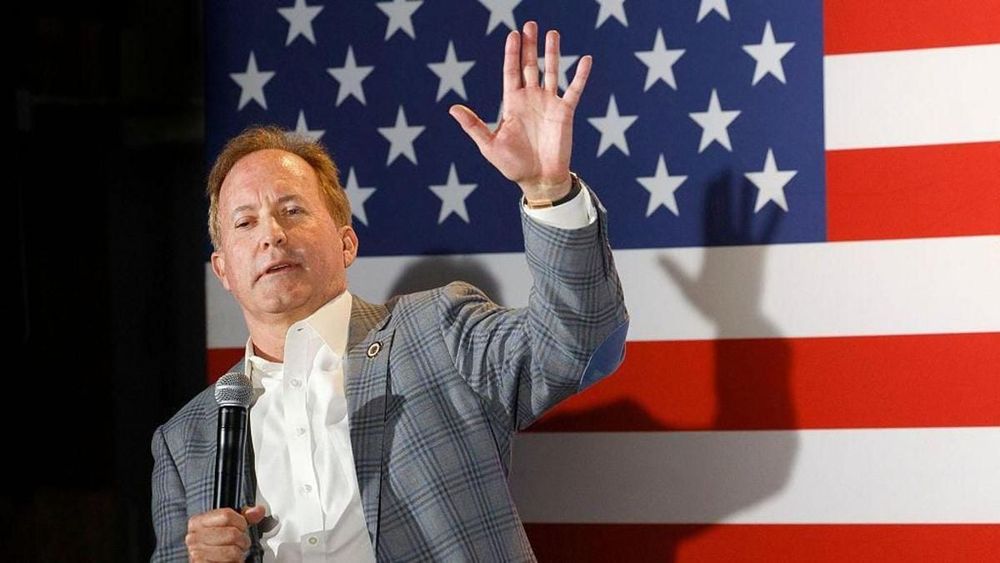
Ken Paxton has been under felony indictment for securities fraud since 2015 — a case that has dragged through the Texas courts for nearly a decade without resolution. In 2023, the Republican-controlled Texas House impeached him on charges including bribery, abuse of office, and obstruction of justice, making him only the third Texas official impeached in the state's history. His own wife, a sitting Republican state senator, faced public questions about whether she would support him. He was acquitted by the Texas Senate — a body that included allies he had helped elect. Now, Donald Trump has endorsed him for the United States Senate.
According to BBC News, Trump's move dismayed Senate Republicans, many of whom have served alongside the incumbent, John Cornyn, for years. Cornyn is not just a Senate veteran — he is a former member of Republican leadership, a reliable conservative vote, and by any conventional measure a safe incumbent. The fact that Trump chose to back a challenger facing criminal jeopardy over a loyal party soldier is not a miscalculation. It is a statement.
The original thesis here is not that Trump endorsed a flawed candidate. He has done that repeatedly. The thesis is what this endorsement formalizes: that in the Republican primary system, demonstrated loyalty to Trump now outranks criminal record, institutional standing, and the preferences of sitting Senate colleagues. Paxton earned this endorsement not despite his legal baggage but, in part, because of how he carried it — by using his office to serve Trump's interests, most visibly in his 2020 lawsuit asking the Supreme Court to overturn election results in four battleground states. The Court dismissed it. Paxton kept his job. Trump remembered.
Ken Paxton was indicted on felony securities fraud charges in 2015. In 2023, the Republican-controlled Texas House impeached him on 20 articles, including bribery and obstruction. He was acquitted by the Texas Senate in September 2023. The original securities fraud case remains unresolved. He is currently serving as Texas Attorney General.
Paxton has spent years cultivating this moment. His political action committee ran ads specifically targeting Trump's Palm Beach media market — a strategy Tinsel News documented last year — buying television time in a media zone whose primary audience was a single person. It worked. The endorsement is not a surprise to anyone watching the incentive structure of Republican politics. It is the logical output of a system that rewards those who perform loyalty loudly enough and punishes those who enforce institutional norms.
What the endorsement costs is harder to quantify but not difficult to identify. Cornyn is the kind of senator the Republican establishment has historically protected: experienced, ideologically reliable, and electorally safe in a state Trump won by more than 25 points in 2020. Senate Republicans who have served with him for decades — people who understand what it means to manage a legislative body and what it costs to lose institutional knowledge — are reportedly alarmed. That alarm matters less than it once would have, which is itself part of the story.
Texas is not a swing state, which means the Republican primary is the election. Paxton's legal history does not disqualify him there — it may not even be a serious liability. The voters who turn out in Texas Republican primaries have demonstrated, repeatedly, that Trump's endorsement functions as a moral clearance certificate. If Trump says Paxton is fine, the question of whether Paxton is fine is, for that electorate, settled. This is how a decade-old felony indictment becomes a footnote.
The broader pattern is one Tinsel News has tracked across multiple cycles. The Republican Party's internal accountability mechanisms — committee assignments, leadership sanctions, primary challenges from the establishment — have been systematically dismantled or captured. As Tinsel News reported on the pattern of using primary threats as political retribution, the primary system no longer selects for competence or even conventional electability. It selects for the willingness to subordinate institutional obligation to personal allegiance. Paxton, who used the Texas attorney general's office to pursue Trump's legal objectives even as his own office was engulfed in scandal, is the purest expression of that selection pressure.
For the Senate as an institution, the implications are direct. If Paxton wins — and in a Texas Republican primary, that is no longer an outlandish outcome — the chamber gains a member whose political survival has depended entirely on one man's favor, whose record includes using prosecutorial power to serve personal and political interests, and who has demonstrated that oversight and accountability can be weathered if the right allies are in place. That is not a senator. That is a dependent. And a Senate caucus increasingly populated by dependents cannot function as a co-equal branch of government, regardless of which party controls it. The Cornyn endorsement fight is a skirmish. The institutional erosion it represents is not.