ANALYSIS
The sequence is worth stating plainly. A Brooklyn coffee shop posted on social media that it did not want a pro-Israel congressman as a customer. The post went viral. The congressman called it "sad" on CNN. Then the Trump administration's Justice Department opened a federal investigation into the coffee shop.
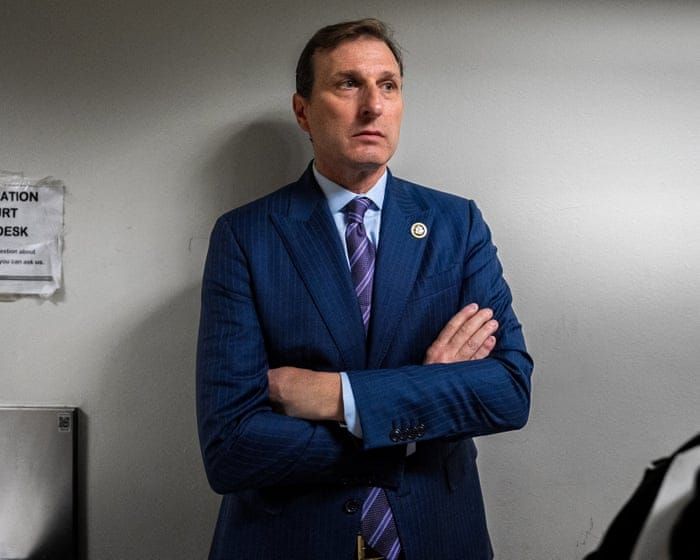
That sequence — political speech, political embarrassment, federal investigation — is not a coincidence. It is, according to reporting by The Guardian US, exactly what happened to Poetica Coffee in Brooklyn after it banned Democratic Congressman Dan Goldman, who represents New York's 10th congressional district and holds pro-Israel views, following a Sunday visit.
The stated legal theory behind the investigation has not been made fully public. But the mechanism is not difficult to reconstruct. Federal civil rights statutes — designed to protect people from discrimination based on race, religion, national origin, sex, and disability — do not, on their face, protect political viewpoints. Goldman was not denied service because he is Jewish. He was denied service because he supports specific Israeli government policies. Those are legally distinct categories, even if the administration prefers to treat them as identical.
This distinction matters enormously — not just for this case, but for what the investigation tells us about how the current DOJ is choosing to exercise its power.
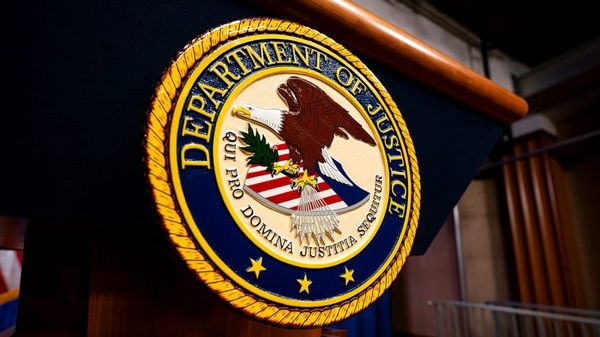
Federal civil rights statutes, including those enforced by the Department of Justice, prohibit discrimination based on protected characteristics such as religion, race, and national origin. Opposition to a specific government's foreign policy — including Israel's — is not a protected characteristic under current federal law. Courts have consistently distinguished between religious identity and political viewpoint. The legal basis for any civil rights investigation into Poetica Coffee's ban on Goldman, who was denied service over his political positions rather than his religion or ethnicity, is, at minimum, contested.
The DOJ under the Trump administration has already demonstrated a pattern of deploying federal investigative power against political targets. Tinsel News has documented how the department opened an investigation into Gavin Newsom — a development that fits the same template: a political adversary, a federal investigation, a chilling effect on anyone watching. The Poetica Coffee case follows the same architecture, applied this time not to a sitting governor but to a small business in Brooklyn.
Small businesses do not have legal teams on retainer. They do not have press operations or political allies who can generate counterpressure. A federal investigation — regardless of its ultimate outcome — carries immediate costs: legal fees, reputational exposure, staff anxiety, the possibility of subpoenas and document demands. The investigation itself is the punishment. The DOJ knows this. That is why the tool is useful.
Goldman's response to the ban — describing it as "sad" in a CNN interview — is worth examining on its own terms. A member of Congress whose views on Israel have drawn significant opposition from constituents in one of the most politically engaged districts in the country used his national media access not to engage the substance of that opposition, but to frame himself as a victim of it. The move transforms a business's exercise of its own expressive rights into a grievance narrative — one the federal government then acted on.
The irony is structural. Goldman is a Democrat. The administration investigating the coffee shop on his behalf is the same administration working to strip federal protections from the communities most of his constituents belong to. The alignment between a Democratic congressman's political embarrassment and a Trump DOJ investigation is not ideological — it is transactional. Both parties, in this instance, had something to gain from treating a coffee shop's social media post as a federal matter.
There is a broader context that neither Goldman nor the DOJ has addressed. The decision by a private business to refuse service to a public official over that official's political positions is itself a form of protected expression. Courts have long recognized that commercial spaces retain expressive rights, particularly when the refusal is communicative rather than discriminatory in the civil rights sense. A coffee shop saying "we don't want to serve someone whose votes we believe contribute to civilian deaths" is making a political statement, not engaging in invidious discrimination.
The administration's willingness to investigate that statement — while simultaneously defending, in other contexts, the right of private businesses to refuse service based on religious or political objections — is not a principled legal position. It is a selective one. The principle being applied is not "businesses cannot refuse service on political grounds." The principle being applied is "businesses cannot refuse service to politicians whose embarrassment is useful to us."
This is the same DOJ that has gutted decades of civil rights enforcement through internal memos reinterpreting anti-discrimination law. The department that is now invoking civil rights statutes to investigate a Brooklyn coffee shop has spent the past year systematically narrowing what those statutes cover for everyone else. That contradiction is not accidental. It is the signature of enforcement weaponized as politics: the law expands when it serves power, contracts when it protects the vulnerable.
The Poetica Coffee case also sits inside a much larger pattern of the government treating criticism of Israel — or support for Palestinian rights — as something approaching a federal offense. Mahmoud Khalil was detained by ICE two days after the FBI cleared him, with the administration continuing to describe him as a threat after that clearance. Federal courts have been asked to treat pro-Palestine protest as outside First Amendment protection. A coffee shop's social media post banning a congressman fits this pattern: political speech about Israel, followed by federal action, regardless of whether the legal theory holds.
What the investigation communicates to every small business, community organization, or individual who might consider making a public statement about a politician's Israel policy is legible: the federal government is watching, and it is willing to open a case. You do not need to be convicted. You do not even need to be charged. The investigation is enough.
Poetica Coffee deleted its post. That detail — buried near the end of the original reporting — may be the most important one in the story. The mechanism worked.