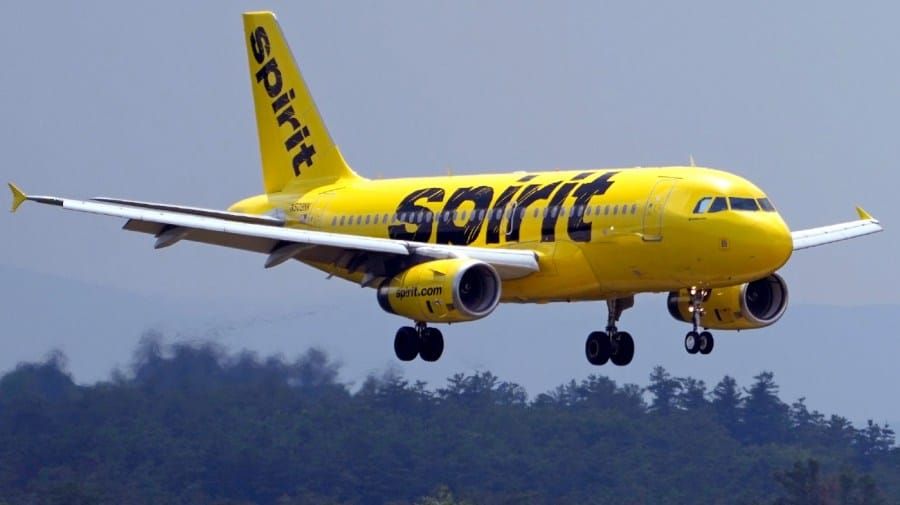
Spirit Airlines ceased operations earlier this month after years of financial distress, leaving roughly 4,500 employees without jobs and millions of budget travelers without their cheapest option. The carrier's collapse — accelerated when the Justice Department blocked its proposed merger with JetBlue in 2024, and then the Trump administration declined to broker a rescue deal — was the largest U.S. airline bankruptcy in more than a decade.
Within weeks of the shutdown, the airline industry's chief lobbyist had already converted the wreckage into an argument. Chris Sununu, the former New Hampshire governor who now serves as CEO of Airlines for America — the trade association representing American, United, Delta, Southwest, and Alaska Airlines — told The Hill this week that Spirit's collapse was "a lesson" in the need to approve mergers when "somebody is putting up a red flag." The lesson Sununu drew: regulators should have let Spirit merge. The lesson he did not draw: the major carriers his organization represents spent years benefiting from Spirit's financial fragility while blocking the structural changes that might have saved it.
This is how regulatory capture completes its cycle. An industry creates the conditions for a competitor's failure, watches that competitor collapse, and then uses the collapse as evidence that the industry needs less oversight. The argument is elegant in its circularity. And it is being made by a man paid to represent the carriers who stood to gain the most from Spirit's exit.
Airlines for America (A4A) is the principal lobbying organization for the U.S. commercial aviation industry. Its members include American Airlines, United Airlines, Delta Air Lines, Southwest Airlines, Alaska Airlines, and several cargo carriers. The organization advocates before Congress and federal agencies on issues including merger approvals, consumer protection rules, labor regulations, and antitrust enforcement. Chris Sununu, former Republican governor of New Hampshire, became its CEO in 2024.
Spirit was, by design, a disruptive carrier. Its ultra-low-cost model — stripped-down fares, fees for everything else — forced legacy carriers to compete on price on routes where Spirit operated. Academic research consistently found that Spirit's presence on a route drove down average fares, sometimes dramatically, because American, United, and Delta had to match or lose passengers. When Spirit left a market, prices rose. This is not a contested point. The airline industry's own economists have documented it.
That competitive pressure is precisely what made Spirit valuable to consumers and inconvenient to the carriers Sununu now represents. The major airlines did not need to actively sabotage Spirit — they simply needed to survive long enough for Spirit's structural weaknesses to do the work. Spirit's model depended on high aircraft utilization and thin margins, leaving it vulnerable to fuel price spikes, the COVID-19 pandemic's demand collapse, and engine maintenance groundings that idled significant portions of its fleet. By 2023, the carrier was burning cash it did not have.
The proposed JetBlue merger, blocked by the Justice Department in January 2024, might have provided a lifeline — though antitrust critics argued, with justification, that it would have eliminated a genuinely independent low-cost competitor by absorbing it into a carrier with higher cost structures and fare expectations. The DOJ's concern was not abstract: JetBlue had a documented history of raising fares on routes after acquiring competitors. The merger's opponents were not wrong to worry about what Spirit's routes would look like under JetBlue management, even if the alternative turned out to be no Spirit at all.
What Sununu's argument conveniently omits is that the U.S. airline industry has already consolidated to an extraordinary degree. Four carriers — American, United, Delta, and Southwest — control roughly 80 percent of domestic air travel. That consolidation was achieved through a series of mergers approved between 2008 and 2013: Delta-Northwest, United-Continental, Southwest-AirTran, and American-US Airways. Each was approved with promises of consumer benefits that largely did not materialize. Baggage fees, which were rare before consolidation, became industry-standard revenue streams. Service to smaller markets declined. Labor had less negotiating power. The lesson of that consolidation wave, if anyone wanted to draw one honestly, is that fewer competitors means higher prices and worse service for everyone except shareholders.
Sununu's framing — that Spirit's collapse was a regulatory failure rather than a market outcome shaped by the structure his members helped build — is the kind of argument that sounds reasonable until you follow the money. Airlines for America exists to advance the interests of carriers that compete against ultra-low-cost airlines like Spirit. Its members benefit, structurally, from a market with fewer budget competitors. The argument that regulators should approve more mergers, coming from the trade association of the carriers that consolidation most benefits, deserves at least as much scrutiny as the argument that regulators should block them.
There is a version of the Spirit story in which antitrust enforcement failed consumers by blocking a merger that might have preserved some low-cost capacity. That argument deserves engagement. But it is not the argument Sununu is making. He is not arguing for better antitrust analysis or smarter merger review. He is arguing, on behalf of American and United and Delta, that the general principle of merger approval should be loosened when companies claim distress. That principle, applied broadly, would make every struggling competitor a candidate for absorption by a larger rival — which is precisely how you get from eighty percent market concentration to ninety.
The travelers who bore the real cost of Spirit's collapse are not airline executives or lobbyists. They are the passengers — disproportionately lower-income, disproportionately traveling to secondary markets that legacy carriers deprioritize — who used Spirit because it was the only option they could afford. A round-trip Spirit fare between Fort Lauderdale and Detroit or between Orlando and Cleveland could run under $100. The comparable fare on American or United on the same route, with Spirit gone, does not. Those passengers are not part of Sununu's analysis. They do not have a trade association.
This pattern — an industry lobby using a competitor's failure as evidence for less competitive oversight — is not unique to aviation. It is the standard operating procedure of concentrated industries facing antitrust scrutiny. The argument always sounds like concern for consumers. It is always, in reality, concern for incumbents. And it almost always works, because the people making it have resources, access, and former governors on their payroll, while the people who paid $89 to fly Spirit to see their families are not in the room.
The real lesson of Spirit Airlines is not that regulators should approve more mergers. It is that an aviation market already dominated by four carriers has no structural mechanism to protect budget travelers when a low-cost competitor fails — and that the industry which created that structure is not a credible guide to fixing it. The next time a budget carrier files for bankruptcy, Sununu or his successor will be back with the same argument. The industry that profits from consolidation will continue to use each casualty as a reason for more of it. That is not a lesson in regulatory failure. It is a business model.