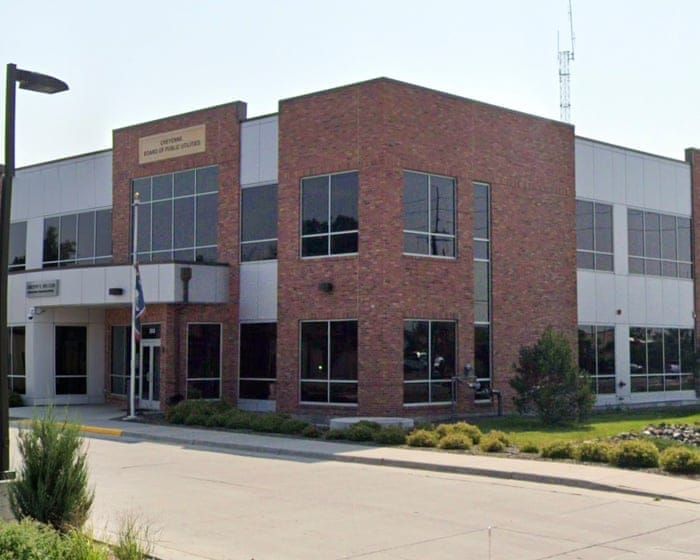
Somewhere in Cheyenne, Wyoming, there is a wastewater rule that did not exist before Meta started building its AI datacenter. The rule exists now because a contractor working on that datacenter flushed bacteria-contaminated water into the city's public sewer system during construction — and regulators had no specific framework in place to prevent it. The rule came after the contamination. That sequence is the story.
The incident, first reported by the Wyoming Tribune Eagle and subsequently covered by The Guardian US, prompted Cheyenne water authorities to implement new, strict safety regulations governing how wastewater from large construction projects is disposed of. Meta said it was working with officials to be a "good neighbor" and stated that drinking water supplies were not affected. Neither claim changes the structural fact the incident exposes: a company worth hundreds of billions of dollars was building a facility with known environmental footprint, and the regulatory framework governing its waste disposal was not ready for it.
This is not primarily a story about one contamination incident in Wyoming. It is a story about who pays when the AI industry moves faster than the governments responsible for protecting the people who live near its infrastructure.
Large-scale AI datacenters require enormous quantities of water for cooling server hardware. Construction phases generate additional wastewater through hydrostatic testing of pipes, concrete curing, and equipment flushing. This water can carry bacteria, sediment, and chemical contaminants. Municipal sewer systems in smaller cities are often not designed to handle the volume or composition of this discharge without prior treatment.
Look closely at who answers for what. Meta did not directly flush the water — a contractor did. That distinction is precisely the kind of corporate liability buffer that allows large technology companies to build sprawling physical infrastructure while maintaining distance from its consequences. The contractor acts. The company issues a statement about being a good neighbor. The municipality rewrites its rules. The affected community absorbs the interim risk. This is not unique to Meta. It is the operating model of the AI infrastructure build-out.
The broader pattern is documented. As Tinsel News has reported, communities from red and blue states alike are pushing back against AI datacenter siting decisions that consume local water and power resources with limited public input. Voters in Monterey Park, California, banned datacenters outright by a margin of 86 percent. Seattle imposed a moratorium. New York's legislature voted to pause hyperscale datacenter approvals. The resistance is bipartisan because the costs are local and the benefits are not.
What the Wyoming incident adds to this picture is a specific, documented example of what "costs are local" actually means in practice. Bacteria-contaminated water in a municipal sewer system is not an abstraction. Cheyenne has a population of roughly 65,000 people. It is not a major metropolitan area with redundant treatment infrastructure. When a contractor working on a facility that will serve Meta's global AI operations flushes contaminated water into that city's sewer system, the risk is borne by Cheyenne residents — not by Meta's shareholders, not by the AI users whose queries will eventually route through that datacenter, and not by the contractor's parent company.
Meta's statement that drinking water supplies were not affected may be accurate. It is also the minimum threshold of harm that a company of Meta's scale should be expected to clear. The bar — did we poison the drinking water? — is extraordinarily low for a company that reported $164 billion in revenue in 2024. The relevant question is not whether harm reached the tap. It is whether a company with Meta's resources and planning capabilities should have been operating through contractors without adequate wastewater protocols in place before construction began.
Follow the money and the calculus is plain. Meta chose Wyoming in part because the state offers favorable conditions for large-scale infrastructure development — land availability, relatively low regulatory friction, and a political environment historically receptive to major industrial projects. That calculus benefits Meta. It does not automatically benefit Cheyenne. The gap between what a state offers a corporation to attract investment and what the corporation is required to contribute to the community's safety and infrastructure is where incidents like this one live.
The problem extends beyond any single company. The AI datacenter construction wave — driven by Meta, Microsoft, Google, Amazon, and a constellation of smaller operators — is placing enormous physical demands on municipalities that were not designed to absorb them. Water consumption, power grid load, wastewater management, traffic, and emergency services are all affected. The regulatory frameworks governing these impacts were largely written before AI infrastructure existed at its current scale. The result is a predictable enforcement gap: companies build, incidents occur, rules get written in response. Lax enforcement is not always the product of captured regulators — sometimes it is simply the product of regulations that have not caught up with the industry they are supposed to govern.
That distinction matters for what accountability should look like. The Cheyenne water authority's response — implementing new safety regulations — is appropriate and necessary. But it is reactive. It protects the next project, not the community that absorbed the risk from this one. A more adequate accountability structure would require companies like Meta to conduct environmental impact assessments specific to wastewater management before construction begins, to hold contractors to documented disposal protocols with enforceable penalties, and to carry financial liability for remediation costs even when violations are attributed to third-party contractors. None of that is standard practice in the current regulatory environment.
Meta's "good neighbor" framing is worth examining on its own terms. A good neighbor does not require the neighborhood to rewrite its rules after the fact. A good neighbor arrives with adequate protocols in place. For a company that has positioned its AI infrastructure investment as a contribution to regional economic development — and that has received substantial public goodwill and, in many cases, public subsidies on that basis — the baseline expectation should be higher than "drinking water was not affected." As Tinsel News has reported, Big Tech's environmental commitments have consistently failed to keep pace with AI's actual resource consumption, and the gap between stated values and operational practice is now a documented pattern rather than an isolated failure.
Wyoming will have better wastewater rules for AI datacenter construction going forward. That is a genuine, if modest, improvement. What it does not address is the fundamental asymmetry of the current model: the AI industry captures the economic value of its infrastructure, while the communities hosting that infrastructure absorb its environmental risks — and wait for the rules to catch up.