President Donald Trump told reporters aboard Air Force One on Sunday that protecting the Strait of Hormuz might not be worth American lives — a statement that directly contradicts the entire premise of the war he launched six weeks ago. "Maybe we shouldn't even be there at all," Trump said, according to The Guardian US, adding that the United States has "plenty of oil of its own."
The comment exposes what military analysts and foreign policy experts have warned since January: the president ordered strikes on Iran without a coherent strategy, clear objectives, or exit plan. Now, with gas prices hitting $5.80 nationwide and American forces engaged in their largest Middle East deployment since Iraq, Trump appears to be discovering in real time what his own war is supposed to achieve.
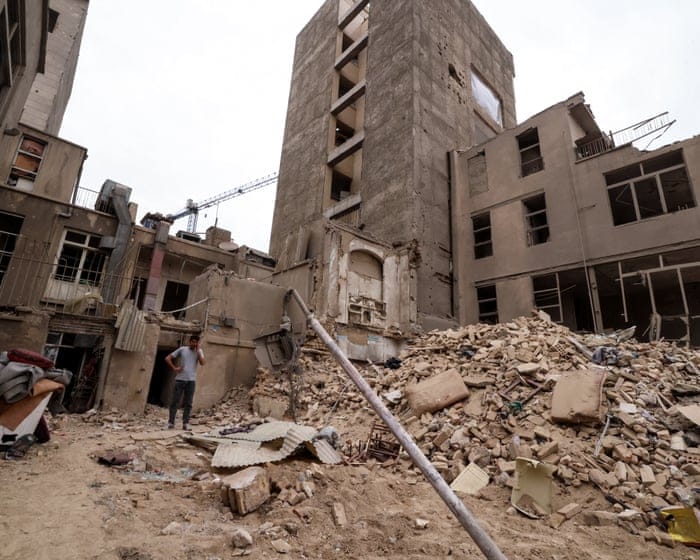
The contradiction is stark. Just hours before his Air Force One remarks, Trump was pleading with European and NATO allies to send naval forces to help secure the strait, through which 20% of global oil supplies normally flow. The White House has spent weeks arguing that protecting this shipping lane justifies the military action that has already cost 127 American lives and an estimated 4,300 Iranian civilian deaths, according to independent monitoring groups.
"This is what happens when foreign policy is made by impulse rather than strategy," retired General Stanley McChrystal told reporters last month, criticizing what he called Trump's "we should because we can" approach to military action. "You end up in a war without knowing why you're fighting it."
The timing of Trump's reversal is particularly damaging. Iran has kept the Strait of Hormuz closed for 43 days, creating the largest oil supply disruption in history. Working families across America are paying the price at the pump while Russia reaps windfall profits from elevated oil prices. European allies have resisted Trump's calls for military support, with most NATO members refusing to commit forces to what they view as an American war of choice.
Trump's suggestion that the U.S. has "plenty of oil of its own" ignores basic economics. American refineries are configured for specific grades of crude oil that come through global markets. Even with domestic production at record levels, a prolonged Hormuz closure would devastate the U.S. economy. Treasury Department analysis obtained by Reuters estimates that keeping the strait closed for six months would trigger a recession deeper than 2008.
The president's confusion about his own war's objectives fits a pattern. In February, he claimed victory over Iran even as Iranian forces tightened their grip on the strait. Last week, he insisted the U.S. would keep bombing until it gets "better terms" without specifying what those terms might be. Defense Secretary Pete Hegseth's promise of "no quarter" to Iranian forces suggests an escalation strategy even as the president publicly questions the entire mission.
What makes this incoherence dangerous is that real people are dying while Trump figures out what he wants. Iranian civilians bear the heaviest burden, with U.N. monitors documenting strikes on residential neighborhoods, hospitals, and schools. American service members are fighting without clear objectives. Regional allies like Dubai and Abu Dhabi face Iranian retaliation threats. Global energy markets remain in chaos.
Trump's Air Force One comment suggests he is just now grasping what critics warned before the first missiles flew: starting a war is easy, but ending one requires knowing why you started it in the first place. A president who launches military action without that understanding condemns both nations to a conflict without purpose or end. The question now is how many more will die before Trump decides whether his war is worth fighting.