The FIFA World Cup is, by design, a logistical impossibility made real: 48 nations, thousands of players, officials, journalists, and supporters from every corner of the planet, converging on a single host country for a month. It requires, at minimum, that the host nation let the world in. That assumption is now in serious doubt.
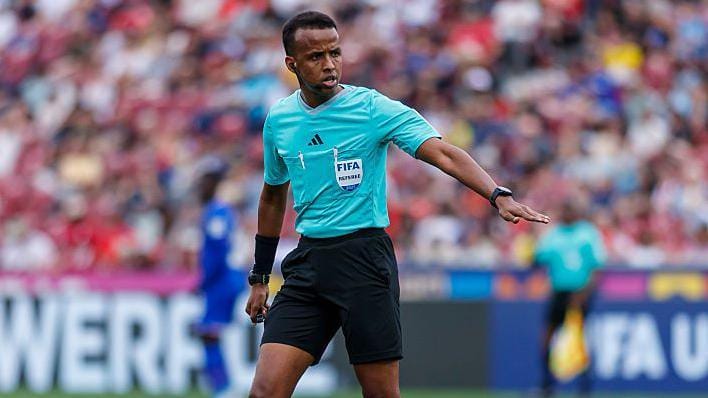
Omar Artan, a referee from Somalia, was denied entry to the United States according to BBC Sport, becoming the most visible example of a problem FIFA has not publicly confronted: the country hosting the 2026 World Cup is enforcing immigration policies that are incompatible with running an open international tournament. Artan is not a fringe case. He is an accredited FIFA official — exactly the kind of person a host nation is supposed to welcome without question.
FIFA awarded the 2026 tournament to a joint bid from the United States, Canada, and Mexico in 2018, when the political and operational assumptions underpinning that decision looked different. The bid promised infrastructure, stadiums, and commercial scale. What it did not promise — and what FIFA apparently did not require — was a binding guarantee that the U.S. government would grant entry to every accredited participant, regardless of nationality, religion, or country of origin. That omission is now the tournament's central vulnerability.
FIFA's standard host country agreements require governments to facilitate visa issuance for accredited participants. They do not override national immigration law or grant FIFA the legal authority to compel entry. When the host country's immigration enforcement regime tightens after the bid is awarded, FIFA has no formal mechanism to enforce compliance.
The problem extends well beyond one referee. Supporters traveling from Muslim-majority nations, journalists holding passports from countries currently subject to U.S. travel restrictions, staff members with immigration histories that trigger secondary screening — all face a tournament experience that begins not at the stadium gate but at the border, where the answer may simply be no. For fans from Somalia, Sudan, Iran, Libya, Syria, Yemen, and other nations that have faced U.S. travel bans in various forms since 2017, the question of whether they can attend a World Cup match on U.S. soil is not theoretical. It is a concrete barrier that FIFA has so far declined to address in public.
This is where FIFA's silence becomes its own story. The organization has issued no public statement on Artan's case. It has not announced any emergency diplomatic framework to protect accredited officials from denial of entry. It has not indicated whether it has sought — or received — assurances from the U.S. government that tournament participants will be treated differently from ordinary visa applicants. For an organization that generated $7.5 billion in revenue from the 2022 Qatar World Cup, FIFA's power over its host governments is real and substantial. It is choosing not to use it.

The deeper structural failure belongs to the bidding process itself. FIFA's evaluation criteria for host nations weigh stadium capacity, broadcast infrastructure, and hotel room counts. They do not include enforceable human rights benchmarks or immigration access guarantees with legal teeth. The organization faced withering criticism for awarding the 2022 tournament to Qatar, where migrant workers died building the stadiums. The lesson FIFA took from that episode was reputational, not structural. The bidding framework was not reformed to prevent the next version of the same problem — a host nation whose domestic policies are incompatible with the tournament's stated global character.
For the communities most directly affected, the stakes are personal in ways that FIFA's press releases will never capture. Somali football fans who want to watch their continent's referees officiate on a global stage. Iranian supporters who follow their national team. Families in the diaspora — many of them U.S. residents and citizens — who hoped the tournament would give them a reason to celebrate alongside relatives flying in from abroad. As Tinsel News has reported, 145,000 U.S. citizen children have already been separated from their parents by the current immigration enforcement regime. The same enforcement infrastructure that produced that number will be processing World Cup visa applications.
The U.S. government has shown no indication it intends to carve out a special immigration lane for World Cup participants. The administration that handed ICE 31,000 traveler records without public notice and that has built an enforcement apparatus designed to maximize denials and deportations is not going to reverse course because FIFA needs a Somali referee to land at JFK. The incentives run entirely in the other direction: a high-profile international event is also a high-profile enforcement opportunity.
FIFA has one year. It can use that time to negotiate enforceable entry guarantees, publish a public list of the protections it has secured for accredited participants, and establish a transparent appeals process for officials and supporters denied visas. Or it can continue saying nothing, collect its broadcast fees, and let the world discover at the border whether the host nation meant the invitation. The Artan case did not create this problem. It made the problem impossible to ignore — which means the next move belongs to FIFA, and the clock is running.