Every five years that humanity delays cutting greenhouse gas emissions, the peak temperature the planet will ultimately reach rises by at least a tenth of a degree Celsius. That figure, from climate scientist Joeri Rogelj of Imperial College London — a lead author of the new UN Environment Program report published Wednesday and reported by Common Dreams — is the number that should be dominating every headline. It isn't.
Instead, coverage of the UNEP report, titled "Limiting Overshoot," has largely settled on the same frame: the 1.5°C goal is dead, and the world failed. That is true. But it is also, as framing goes, almost perfectly designed to produce paralysis rather than action. The report's actual argument — the one its authors are trying to make — is structurally different. It is a case about the cost of delay. Not the cost of failure. The cost of every additional year of inaction, measured in degrees, in lives, in the narrowing of what remains possible.
What the report actually establishes — for the first time in UN climate science history — is not simply that 1.5°C is out of reach. It is that the pathway down from the overshoot still exists, but its width is shrinking. The best-case scenario is now a peak of 1.8°C above preindustrial levels, with global temperatures able to return to 1.5°C before the end of the century if emissions are cut by 55 percent by 2035 and nearly eliminated by mid-century. The worst case, left unspoken but mathematically present in the report's logic, is a world that spends not decades but generations above 1.5°C — and never comes back down.
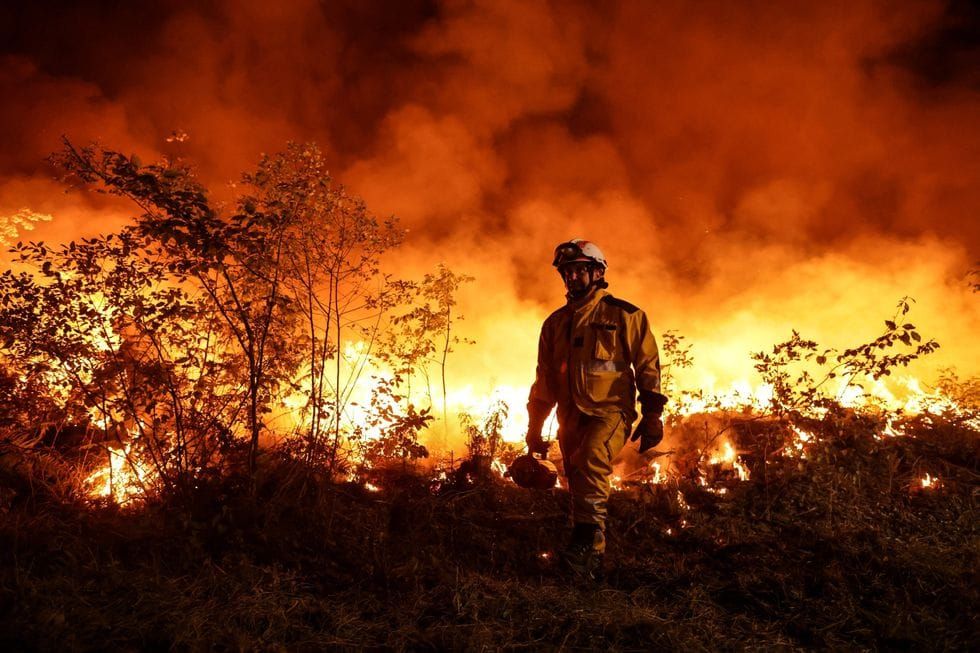
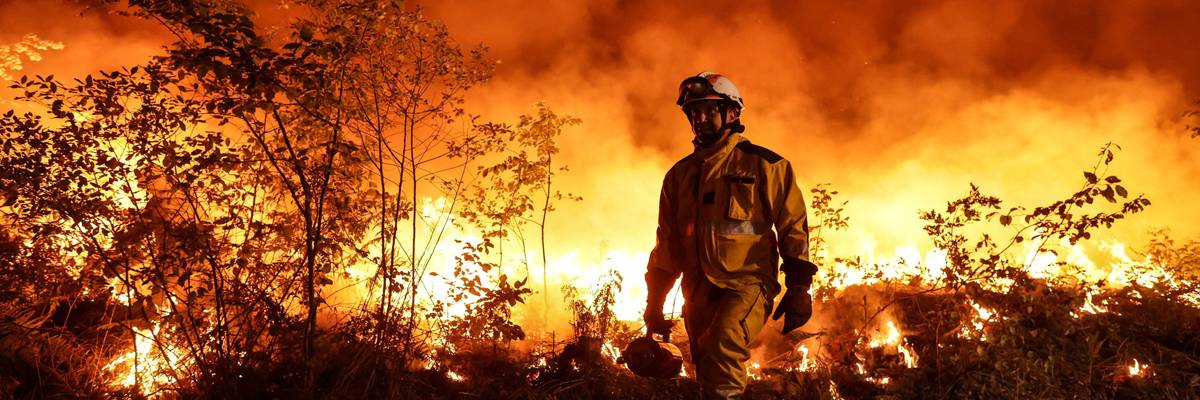
That distinction is not academic. Last year, global temperatures were already approximately 1.3°C to 1.4°C above the preindustrial average, according to reporting by The Washington Post. The effects are not projections. A glacial collapse in Nepal killed more than 1,000 people in a single flooding event. Wildfires consumed parts of Canada and South America. Extreme heat killed more than 1,000 people across Europe over one summer. These are the consequences of 1.3°C. The question the report forces is what 1.8°C looks like — and what 2.2°C looks like if the next decade proceeds as the last one did.
"Across the globe, extreme heatwaves are already proving that climate impacts will strike faster, hit harder, and last longer — costing more lives and causing deeper disruption," said UNEP Executive Director Inger Andersen in the report's release. The language is measured. The math behind it is not.
The accountability question the report does not ask — but that journalism must — is who is responsible for the decade of delay that foreclosed the 1.5°C scenario entirely. The Paris Agreement was signed in 2015. The science on what was required was not ambiguous. The emissions cuts needed were identified, modeled, and published. What followed was a decade in which the fossil fuel industry spent billions lobbying against those cuts. Governments signed pledges they did not fund. The gap between stated climate commitments and actual production trajectories widened rather than closed. As Tinsel News has documented in the context of corporate climate pledges, the distance between what powerful institutions say and what they do is not incidental — it is structural.
The UNEP report names the overshoot as inevitable. It does not name who made it so. That work falls to the outlets covering it. Every major fossil fuel company that lobbied against binding emissions targets between 2015 and 2025 is a named actor in this story. Every government that signed a net-zero pledge while approving new extraction licenses is a named actor in this story. The report gives us the physics. The politics — the interests, the money, the decisions — are the journalism.
The UNEP report is the first to formally chart a pathway in which global temperatures exceed 1.5°C, reach a peak — now estimated at 1.8°C in the best case — and then decline back toward the threshold before 2100. This requires near-total elimination of fossil fuel emissions by mid-century and aggressive carbon removal. Without immediate action, the peak rises and the return pathway disappears. The report does not treat the overshoot as permanent — but it makes clear that permanence becomes more likely with each year of delay.
There is a second accountability failure embedded in how this story is being told, and it concerns geography. The people bearing the sharpest edge of the current 1.3°C of warming are not, by and large, the people who produced the emissions that caused it. The flooding in Nepal that killed more than 1,000 people. The wildfires across South America. These are not background details in an American climate policy debate. They are the primary story. The communities living through them contributed a fraction of the cumulative emissions that produced the warming. The countries that produced the bulk of those emissions are the ones with the political and economic power to accelerate the cuts the UNEP report demands. That asymmetry — between who caused this and who is dying from it — is the moral center of the climate story, and it is consistently undertold in Western coverage focused on domestic policy battles.
The report's framing of "no good outcomes" if the world remains above 1.5°C long-term, as Andersen stated, is a careful formulation. It does not say catastrophe is already locked in. It says the difference between a temporary overshoot and a permanent one is a policy choice — one that has to be made now, not in 2030 or 2035. Rogelj's figure of a tenth of a degree per five years of delay is the operational translation of that choice. It means the 1.8°C best case becomes a 1.9°C case if action slips five years. It becomes a 2.0°C case if it slips ten. Each increment represents not an abstraction but a measurable increase in the frequency and severity of the events already killing people at 1.3°C.
This is where the "it's too late" frame becomes not just inaccurate but actively harmful. The science does not support fatalism. It supports urgency — a specific, quantified urgency with a price tag attached to every year of delay. The difference between acting now and acting in five years is not symbolic. It is, according to the lead author of the UN's own report, at least a tenth of a degree of additional peak warming, with compounding consequences that extend across decades. As Tinsel News has covered in the context of Antarctic ice loss now confirmed as irreversible, some thresholds, once crossed, do not reverse. The UNEP report is an argument that the next threshold has not yet been crossed — but the window is measured in years, not decades.
The political economy of that window is worth naming directly. Emissions cuts of 55 percent by 2035 require confronting the fossil fuel industry at a scale that no major government has yet attempted. They require ending subsidies, canceling new extraction projects, and retiring existing infrastructure ahead of its economic lifespan — actions that directly threaten the revenue streams of companies whose lobbying budgets dwarf the annual funding of most climate research institutions. The report does not say this. The report gives policymakers a target and a timeline. What it cannot do is name why the targets of the past decade were not met, or who benefited from the failure to meet them. That is not a scientific question. It is a political one, and it has a political answer.
The world has not passed a point of no return. It has passed the point where the cheapest, least disruptive version of climate stability was achievable. What remains is harder, more expensive, and more politically demanding than what was required in 2015. It is also, according to the dozens of scientists who authored this report, still possible. The gap between possible and actual has never been a scientific problem. It has always been a problem of power — of who holds it, who benefits from the status quo, and who bears the cost when the status quo burns. The laws and the evidence to hold fossil fuel executives accountable already exist. The political will to use them is what the next decade will determine — and, according to the UNEP's own math, each year that determination is deferred costs the planet another fraction of a degree it cannot get back.