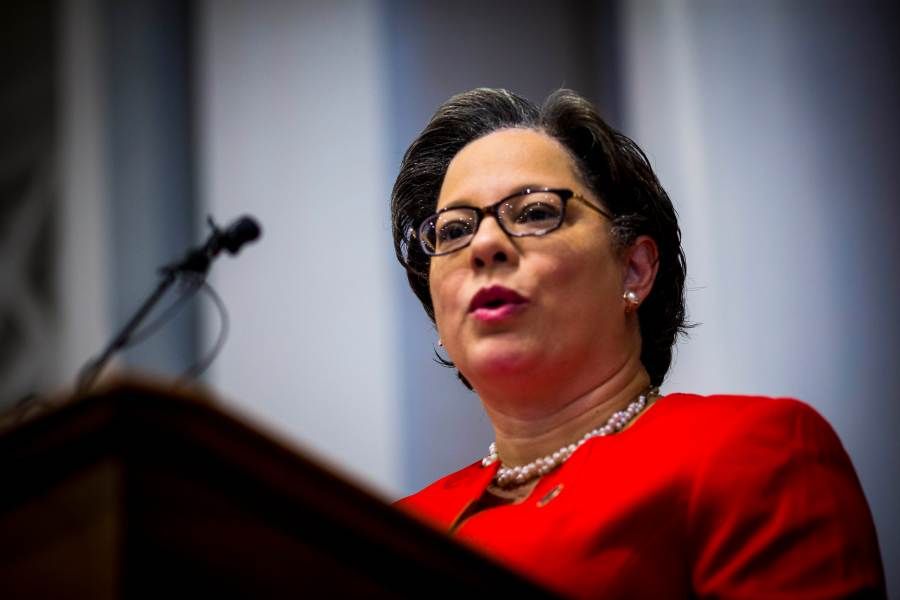
Four congressional seats were gone before a single vote was cast. The Virginia Supreme Court struck down a Democratic redistricting measure, and the political math of the 2026 midterms shifted overnight — not through an election, not through legislation, but through a judicial ruling in a state court that most national political reporters were not watching. Virginia Rep. Jennifer McClellan told The Hill that Democrats are now weighing every available option, from legal challenges to legislative responses. What she did not say — and what this moment demands someone say — is that the options are running out.
The ruling is not an isolated incident. It is the latest data point in a decade-long project to lock Republican legislative majorities into place through the courts, the redistricting process, and the architecture of state judicial appointments. Virginia is the newest entry in a pattern that has already played out in Florida, where Republicans erased four Democratic seats through a governor-drawn map, and in Wisconsin, Ohio, and North Carolina, where Republican-controlled courts have repeatedly intervened to preserve maps that federal and state courts alike have found to be racially or politically discriminatory. The Virginia ruling does not exist in a vacuum. It exists in a system.
The Virginia Supreme Court struck down a redistricting measure Democrats had put forward, immediately eliminating four House seats that were expected to flip to Democratic control in the 2026 midterms. The ruling returns the state to maps drawn under conditions more favorable to Republicans, and Democrats are now weighing legal and legislative responses with limited time before candidate filing deadlines.
The argument the court used matters less than the outcome it produced. Courts have become the final backstop in the Republican redistricting strategy — not because judges are uniformly partisan, but because the process of appointing state court judges is itself a political act, and Republicans have spent twenty years investing in it with more discipline than Democrats. The Federalist Society's influence over federal judicial appointments has been widely documented. Less covered is the parallel infrastructure at the state level, where judicial elections, retention votes, and gubernatorial appointments have methodically shifted state supreme courts in battleground states toward majorities that reliably rule against Democratic redistricting efforts and voting rights expansions. The mechanics of gerrymandering are well understood. The judicial enforcement layer is less examined.
What makes the Virginia ruling particularly consequential is its timing. The 2026 midterms are the first major electoral test since the Supreme Court's 2023 decision in Allen v. Milligan reaffirmed that the Voting Rights Act requires states to create majority-minority districts where minority populations are sufficiently large and geographically compact. Democrats in Virginia had designed their redistricting measure in part to comply with that standard. The state Supreme Court's decision to strike it down — before any federal court weighed in on the VRA question — forecloses the most direct path to congressional representation for communities whose voting power the VRA was specifically designed to protect. That is not a procedural footnote. That is the story.
McClellan's statement that "all options are on the table" is the language of a politician who knows the good options are gone. A federal lawsuit challenging the ruling on VRA grounds is possible, but the timeline is brutal — redistricting litigation that drags into 2025 or early 2026 risks leaving candidates without stable maps through the filing period, which suppresses the quality of the candidate field and hands incumbents a structural advantage. A legislative fix requires Republicans in the Virginia legislature to cooperate with a process they just won in court. They will not. An appeal to the U.S. Supreme Court on VRA grounds runs directly into a conservative majority that has spent fifteen years narrowing the statute's reach, culminating in Shelby County v. Holder in 2013 and the further restrictions of Brnovich v. Democratic National Committee in 2021.
The deeper argument being made — not by McClellan, not by the court, but by the structure of what is happening — is that the redistricting fight is over before it begins in states where Republicans control the judicial appointment process. This is not a bug in the system. The Shelby County decision eliminated the federal pre-clearance requirement that had forced states with histories of racial discrimination to get Justice Department approval before changing their voting maps. What replaced it was nothing — or rather, what replaced it was state courts, which Republicans had spent the intervening years preparing to control. The legal architecture that once protected minority voting rights was dismantled from above. The political architecture that could have replaced it was never built from below. Virginia is now paying that bill.
Democrats nationally are watching this and preparing responses that are, at best, one election cycle too late. There is active discussion in progressive legal circles about court expansion at the state level — targeting judicial retention elections, funding candidates for state supreme court seats, and building the same pipeline infrastructure that the Federalist Society built for federal courts over forty years. The results of Republican judicial investment are visible at every level of the federal judiciary. Whether Democrats have the appetite to match that investment at the state level — and whether they can do it fast enough to matter for 2026 — is genuinely uncertain. The Virginia ruling is evidence that the window is narrow.
There is also a more immediate political consequence that national coverage is underweighting. Four seats is not a symbolic number. Democrats need to net a relatively small number of House seats to take the majority in 2026. Losing four competitive Virginia seats before the campaign even begins does not just change the math in Virginia — it changes the national map. It forces Democrats to overperform in districts that are less favorable, spend money they would have deployed elsewhere, and defend a path to the majority that just got measurably harder. The party's ability to check executive power in the second half of this administration runs, in part, through whether it can take the House. A state Supreme Court just made that harder, and it did so through a mechanism that most voters do not understand and most national political media does not cover.
The accountability question here is not just who drew the maps. It is who appointed the judges who threw them out, and what interest those judges serve. Virginia's Supreme Court justices are elected by the General Assembly — a legislature that Republicans have controlled for significant stretches of the past decade. The judges who ruled against the Democratic redistricting measure were not selected from a neutral pool. They were selected by a process that is itself a product of electoral outcomes shaped by previous redistricting decisions. The circularity is not accidental. It is the design.
McClellan is right that all options are on the table. But the more honest framing is that the options that would actually work — a restored Voting Rights Act with pre-clearance, federal redistricting standards that override state court decisions, or a state judiciary that reflects the actual composition of Virginia's electorate — require either congressional action that cannot pass the current Senate or a long-term investment in state judicial politics that Democrats have chronically underfunded. The pattern of court decisions narrowing voting access is now operating at every level of the judicial system simultaneously, from the Supreme Court's shadow docket to state supreme courts in swing states. Virginia is not the beginning of this story. It may not be the end of it either.
Four seats disappeared from the Democratic column last weekend, and no one cast a ballot. That is the state of American electoral democracy in 2025: the maps are drawn by the party in power, defended by courts that party helped build, and insulated from federal review by a Supreme Court that dismantled the statute designed to prevent exactly this. Democrats can pursue every legal option available to them. What they cannot do is pretend the problem is the specific map that was struck down, rather than the system that struck it down.