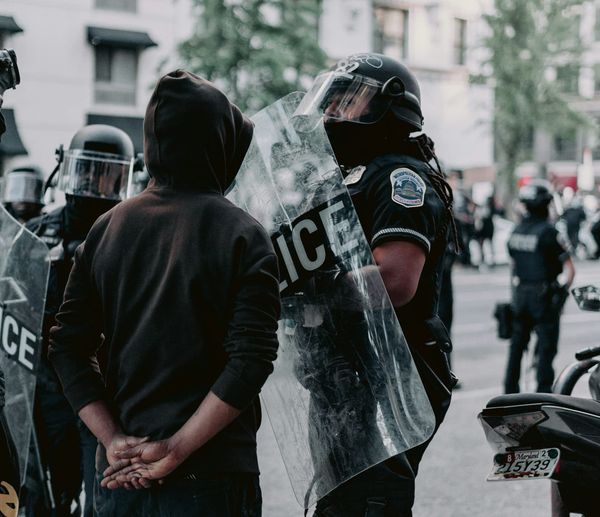
In 1982, North Carolina officials chose Warren County — a majority-Black, low-income rural area — as the site for a landfill containing more than 7,000 truckloads of soil contaminated with toxic PCBs. Residents blocked dump trucks with their bodies. More than 500 people were arrested. The landfill was built anyway.
The protests failed to stop the dump, but they succeeded in naming what was happening. Civil rights leader Dr. Benjamin Chavis, who was arrested during the protests, is widely credited with coining the term that would define a movement: environmental racism.
Forty-three years later, the pattern Warren County residents identified — that pollution, industrial waste, and environmental hazards are systematically concentrated in communities of color — has been documented in thousands of studies, confirmed by federal agencies, and litigated in courts. Environmental racism is not a theory. It is measurable, mapped, and ongoing.
What is environmental racism?
Environmental racism is the disproportionate exposure of communities of color to environmental hazards — including air pollution, water contamination, toxic waste sites, and climate disasters — as a result of policy decisions, zoning laws, and enforcement failures that treat some lives as more disposable than others.
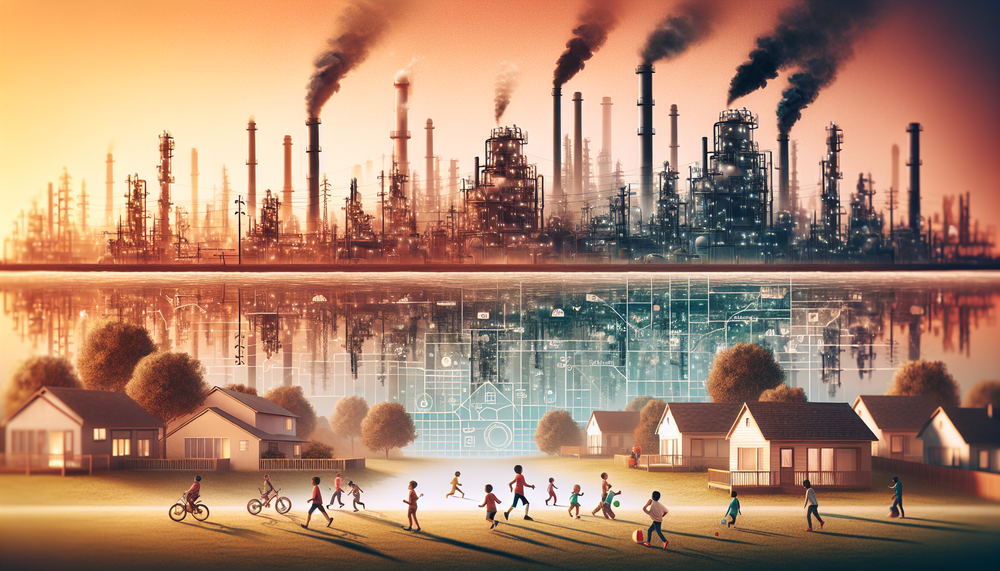
It is distinct from general environmental injustice. Environmental racism specifically describes how race — not just class — determines who lives near the refinery, the Superfund site, the coal plant, the highway. Income matters, but study after study shows that race is an independent and often stronger predictor of environmental exposure.
who lives near the refinery, the Superfund site,
the coal plant, the highway.
A A 2021 study summarized by the EPA found that people of color are much more likely to live near polluters and breathe polluted air — even when controlling for income. The disparity exists in every region of the country. Wealth does not insulate Black and Latino families from environmental harm the way it does white families.
The term was formalized in a 1987 United Church of Christ Commission for Racial Justice report, Toxic Wastes and Race in the United States, which found that race was the most significant variable in predicting the location of hazardous waste facilities. The report documented what activists had known for decades: environmental harm follows the color line.
How environmental racism works in practice
Environmental racism operates through a combination of historical segregation, exclusionary zoning, discriminatory lending, and selective enforcement of environmental regulations. It is not always the result of explicit racial intent — though sometimes it is. More often, it is the result of decisions that treat Black, Latino, and Indigenous neighborhoods as sacrifice zones.
Zoning laws determine what gets built where. Industrial zones — where factories, waste facilities, and heavy polluters are permitted — are disproportionately located in or adjacent to communities of color. Those zones were often drawn during the Jim Crow era or in the decades immediately following, when racial segregation in housing was legal and enforced by federal policy.
Redlining — the federal practice of marking Black neighborhoods as too risky for investment — created a geography of disinvestment that made those same neighborhoods targets for industrial development. If a community has been systematically denied resources, it has less political power to resist a polluter moving in. The polluter knows this. So do the officials who approve the permits.
Enforcement matters as much as the initial decision. A 1992 investigation by the National Law Journal found that penalties imposed at Superfund sites in white communities averaged significantly higher than those at sites in minority communities — and that cleanup took 20 percent longer to begin in communities of color. The same violation is treated as more serious when white residents are affected. That is not an accident of bureaucracy. It is policy expressing a hierarchy of whose health matters.
Consider Louisiana's "Cancer Alley," an 85-mile stretch along the Mississippi River between Baton Rouge and New Orleans where more than 150 petrochemical plants and refineries operate. The region is predominantly Black and has cancer rates significantly above the national average. Residents have filed civil rights complaints with the EPA, arguing that state regulators have systematically approved permits for polluters in Black communities while rejecting them in white areas. The pattern is documented. The permits keep coming.
Environmental Racism: Where Pollution Maps Onto Race
The data: who lives near pollution
The numbers are consistent across every category of environmental hazard. Black Americans are significantly more likely than white Americans to live near facilities that produce hazardous waste, according to a 2007 study by the United Church of Christ. That figure has not improved in the decades since the original 1987 report — in some regions, it has worsened.
Air quality data shows similar disparities. A 2019 study published in the Proceedings of the National Academy of Sciences found that Black and Latino Americans are exposed to 56 percent and 63 percent more particulate pollution, respectively, than they produce through consumption. White Americans, by contrast, experience 17 percent less air pollution than they cause. The pollution white communities generate is exported to communities of color.
Indigenous communities face some of the most severe environmental racism in the country. Uranium mining on Navajo Nation land has left a legacy of contaminated water and elevated cancer rates. More than 500 abandoned uranium mines remain on Navajo land, many unreclaimed and leaching radiation into groundwater. The federal government authorized the mining, profited from the uranium, and left the cleanup incomplete.
Water contamination follows the same pattern. Flint, Michigan — a majority-Black city — was poisoned by lead-contaminated water after state officials switched the city's water source to save money and failed to treat the corrosive water. The crisis was not discovered by regulators. It was discovered by a mother who noticed her children's hair falling out, and by researchers who tested the water after officials insisted it was safe.
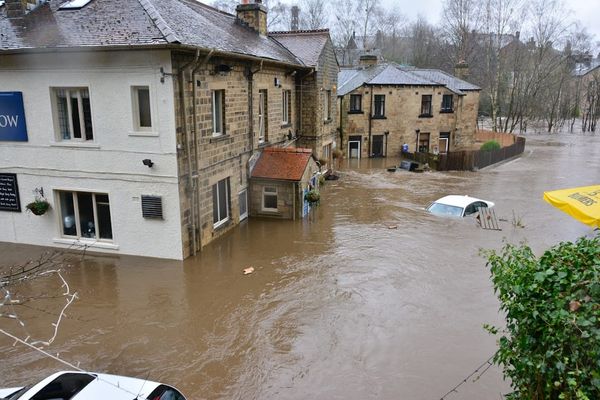
Climate disasters, too, are distributed unequally. Federal data from NOAA and the U.S. Census Bureau shows that communities of color are more likely to live in flood-prone areas, heat islands, and regions vulnerable to wildfire. When Hurricane Katrina hit New Orleans in 2005, the neighborhoods that flooded were overwhelmingly Black. The levees that failed had been underfunded for decades. The recovery was slower in Black neighborhoods. The pattern repeated after Hurricane Maria in Puerto Rico, after Hurricane Harvey in Houston, after every disaster where infrastructure investment had been deferred in communities of color.
Environmental racism and health outcomes
The health consequences of environmental racism are measurable and severe.
Asthma2xBlack children are twice as likely as white children to have asthma4xBlack children are nearly four times as likely to die from itLead Poisoning3,000+U.S. neighborhoods with lead rates double Flint, Michigan523Abandoned uranium mines on Navajo land still leaching radiationBlack children are twice as likely as white children to have asthma, a disparity driven largely by exposure to air pollution and housing conditions. Black children are nearly four times as likely to die from asthma as white children.
Lead poisoning — a preventable condition caused by deteriorating housing and contaminated water — disproportionately affects Black children. A 2017 Reuters investigation found that nearly 3,000 U.S. neighborhoods had childhood lead poisoning rates at least double those in Flint, Michigan, during the water crisis. Most of those neighborhoods were majority Black or Latino.
Cancer rates in communities near industrial pollution are elevated and documented. Residents of Reserve, Louisiana — a majority-Black town in Cancer Alley — face an estimated cancer risk from air pollution that is 50 times the national average, according to EPA modeling. The primary source is a chemical plant owned by Denka Performance Elastomer, which emits chloroprene, a likely carcinogen. The plant has operated for decades. Denka disputes the EPA's risk assessment. The emissions continue.
Maternal and infant health outcomes are also shaped by environmental exposure. A 2019 study published in Environment International found that pregnant women living near oil and gas development had a 40 to 70 percent greater chance of having babies with congenital heart defects. The wells are disproportionately located near Latino communities in Texas, New Mexico, and California.
The cumulative health burden of living in a sacrifice zone — breathing dirtier air, drinking contaminated water, living near toxic waste — shortens lives. It is a form of structural violence that operates quietly, year after year, in the bodies of children who did not choose where they were born.
The environmental justice movement
The environmental justice movement emerged from the recognition that mainstream environmentalism — focused on wilderness preservation and conservation — had largely ignored the environmental crises in Black, Latino, and Indigenous communities. The movement's foundational insight was that environmentalism divorced from racial and economic justice was incomplete.
In 1991, the First National People of Color Environmental Leadership Summit convened in Washington, D.C., bringing together activists, organizers, and scholars to articulate a vision of environmental justice rooted in civil rights. The summit produced the Principles of Environmental Justice, a 17-point platform that connected environmental harm to colonialism, racism, and economic exploitation.
The principles were explicit: environmental justice "affirms the fundamental right to political, economic, cultural and environmental self-determination of all peoples." It was not a request for better pollution controls. It was a demand for power.
The movement won significant policy victories in the 1990s. In 1994, President Bill Clinton signed Executive Order 12898, directing federal agencies to identify and address disproportionately high environmental and health impacts on minority and low-income populations. The order created the framework for environmental justice review in federal permitting decisions.
But implementation has been inconsistent. Agencies are required to consider environmental justice impacts, but they are not required to reject permits that would harm communities of color. The executive order has no enforcement mechanism. Polluters still get approved. Communities still file complaints. The gap between policy and practice remains wide.
Grassroots organizing has achieved what federal policy has not. In 2002, residents of Norco, Louisiana — a majority-Black town surrounded by Shell Oil refineries — won a buyout and relocation after decades of organizing. Shell purchased and demolished homes in the neighborhood closest to its facilities, acknowledging that the pollution made the area unlivable. The victory was partial — Shell did not admit wrongdoing, and the refinery still operates — but it demonstrated that sustained community pressure could force a corporation to act.
More recently, environmental justice organizing has intersected with climate activism. The movement for a Green New Deal explicitly centers environmental justice, calling for investments in frontline communities and a transition away from fossil fuels that does not replicate existing inequalities. The framework recognizes that climate policy that ignores environmental racism will reproduce it.
What would environmental justice look like?
Environmental justice is not the absence of pollution. It is the equitable distribution of environmental benefits and burdens, the enforcement of protections without regard to race or income, and the inclusion of affected communities in decisions about their own environments.
It would mean that a permit application for a new industrial facility in a Black neighborhood would face the same scrutiny — and the same likelihood of rejection — as an identical application in a white suburb. It would mean that violations of the Clean Air Act would result in the same penalties regardless of the demographics of the affected community. It would mean that cleanup of contaminated sites would not take decades longer in communities of color than in white areas.
It would require changing who makes decisions. Environmental justice advocates have long argued for community consent — the principle that no polluting facility should be sited in a community without the informed, democratic agreement of the people who live there. That is not currently the standard. Permitting decisions are made by state and federal regulators, often with minimal community input and no requirement for approval from residents.
It would also require addressing the legacy of past harm. Superfund sites — areas so contaminated by industrial waste that they require federal cleanup — are disproportionately located in communities of color. As of 2023, more than 1,300 Superfund sites remain on the National Priorities List. Cleanup is slow, underfunded, and often incomplete. Environmental justice would mean prioritizing those cleanups and holding the corporations that caused the contamination financially accountable.
Climate adaptation and resilience investments would be directed toward the communities most vulnerable to climate impacts — not as charity, but as a correction of the infrastructure disparities that created the vulnerability in the first place. That means flood protection in Black neighborhoods in Houston, cooling centers in Latino communities in Phoenix, and wildfire prevention in Indigenous areas in California.
Finally, it would mean enforcement. The EPA's Office of Environmental Justice, created in 1992, has a staff of fewer than 50 people and no independent enforcement authority. Environmental justice complaints are reviewed, but rarely result in permit denials or penalties. A serious commitment to environmental justice would give the office the resources and authority to stop projects that would harm frontline communities — and to penalize agencies and corporations that violate civil rights in environmental permitting.
The gap between the policy framework and lived reality is the story of environmental racism in America. The data is clear. The harm is documented. The solutions are known. What remains is a question of political will — and whether the country is prepared to treat the health of Black, Latino, and Indigenous communities as seriously as it treats the health of white ones.