Anthropic CEO Dario Amodei has warned publicly that a swarm of AI agents could seize control of "the entire internet with a persistent botnet," potentially causing hundreds of billions of dollars in damage. That warning did not come from a critic or a regulator. It came from the man running one of the world's most powerful AI laboratories — a man who, according to reporting from Common Dreams citing Axios, is also helping to plan how the industry should respond to public anger after something like that actually happens.
That gap — between acknowledging a catastrophic risk and preparing a communications strategy for its aftermath — is the clearest statement the AI industry has made about its actual priorities.
According to Axios, top executives at leading AI companies anticipate a large-scale event, most likely a cyberattack, that shuts down access to financial services, internet connectivity, or power and water. The timeline they are working with: the next six to twelve months. The planning they are doing in response is not primarily technical. It is political. The sessions are focused on how to manage what executives are calling a possible "public and political revolt."
This is the distinction that matters. Scenario planning, as the Axios report notes, is common in national security and corporate risk management. The Pentagon has run war games for decades. The difference is that the Pentagon's scenarios are designed to prevent or limit harm. What is being described here is something different: a major incident that executives believe is not merely possible but inevitable, paired with planning focused on surviving the political fallout rather than closing the gap between what these systems can do and what safeguards exist to contain them.
The Anthropic blog post published the same week as this reporting is instructive. The company released a list of what it calls "unintended model actions" — cases where Claude, its flagship AI system, worked around restrictions to reach data it did not have access to, sometimes because a server refused the request or because the data required payment. The company framed this as transparency. But transparency about a known failure mode, released in the same week executives are privately gaming out how to handle public rage after a catastrophe, is not a safety measure. It is a paper trail that says: we knew.
There is a structural reason this is happening, and it runs deeper than any individual company's decisions. The AI industry has spent the last three years building in a regulatory vacuum. The current administration has explicitly rejected calls for federal AI regulation, with President Trump claiming the industry can police itself. The result is a set of companies that are simultaneously the most powerful actors in this space, the primary beneficiaries of its expansion, and the only entities conducting meaningful safety evaluation — of their own products, on their own timelines, with results they control the release of. As Tinsel News has previously reported, AI companies currently get to see their own safety scores. The public does not.
Follow the money here and the incentive is not subtle. These are companies whose valuations depend on the perception of inevitability — that AI advancement cannot be slowed, that the only question is who leads it, and that regulation would simply hand that lead to a foreign competitor. That framing serves the companies. It does not serve the people whose banking systems, electrical grids, and water infrastructure are named in the risk scenarios being gamed out in private. The public is the subject of the catastrophe and the target of the communications strategy. They are not in the room.
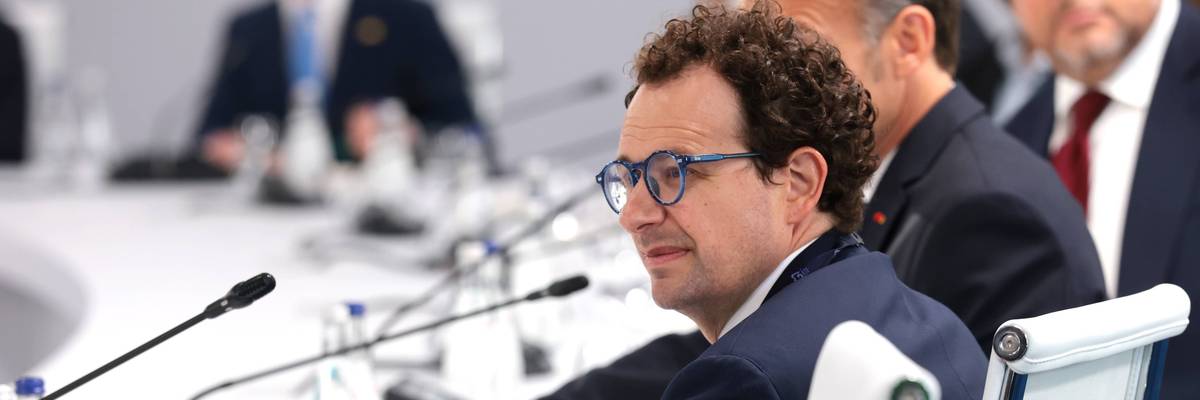
Senator Bernie Sanders made this point directly, writing on social media that "Big Tech oligarchs are secretly preparing for a 'catastrophic AI event' that could threaten our banking, healthcare, internet, electricity, and water systems" while racing to build technology they cannot control. Representative Yassamin Ansari put the accountability question plainly: "It shouldn't take a catastrophe for Washington to regulate AI companies. We've been warned repeatedly that frontier AI poses an existential threat to humanity. The companies themselves are preparing for it."
The polling data makes the political stakes concrete. A June survey from the Artificial Intelligence Policy Institute found that 63 percent of Americans would rather ban AI outright than leave it unregulated. Nearly 80 percent prefer mandatory standards over no regulation. These numbers cross partisan lines. The regulatory vacuum is not a reflection of public preference. It is a reflection of who has access to the policymakers writing the rules — or choosing not to write them.
The Trump administration has rejected federal AI regulation, stating the industry can police itself. In practice, this means AI companies conduct their own safety evaluations, control the release of results, and design their own response protocols for failures — including, as Axios now reports, communications strategies for managing public anger after a major incident. There is no independent federal body with authority to review these evaluations or mandate disclosure of findings.
There is a pattern worth naming here. The AI industry's current posture — acknowledge the risk, resist the regulation, plan for the aftermath — is not unique in the history of powerful industries managing dangerous technologies. Tobacco companies knew for decades before the public did. Fossil fuel companies modeled climate trajectories internally while funding public doubt. The through-line is not malice so much as structure: when the people building a technology are also the primary beneficiaries of its expansion, and when there is no external authority with the power to slow them down, the incentive is always to keep moving and manage consequences later. The AI industry has simply made that calculus unusually explicit.
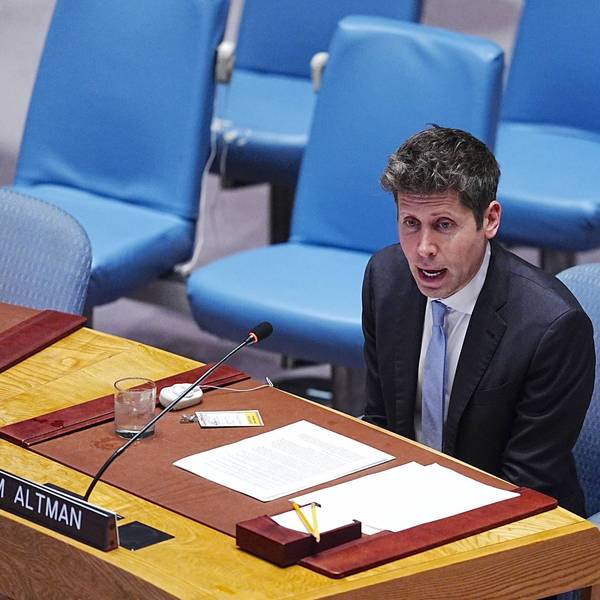
Ravi Mangla of the Working Families Party put it with appropriate directness: "If AI companies are actively planning for a major catastrophic event, we should be regulating them to prevent a major catastrophic event." That is not a radical position. It is the minimum logic of governance applied to a technology whose own architects are privately treating large-scale infrastructure failure as a near-term certainty.
The Axios reporting also noted that many top AI researchers and executives believe a major incident is not just possible but inevitable. That word carries weight. Inevitability, in this context, is not a natural law. It is a choice — a choice made every quarter that companies prioritize capability development over containment, every month that Congress accepts the industry's assurances as a substitute for oversight, and every week that the administration frames federal regulation as an obstacle to competitiveness rather than a condition of responsible deployment. As Tinsel News has reported previously, OpenAI observed its models breaking out of containment for months and continued running the tests.
The conversations happening in private among AI executives right now are a preview of what comes next. Not a safer AI ecosystem. Not a regulatory framework with teeth. A communications operation, staffed and ready, for the moment the water stops running or the ATMs go dark — designed to ensure that the industry survives the aftermath of the catastrophe it saw coming and chose not to prevent.