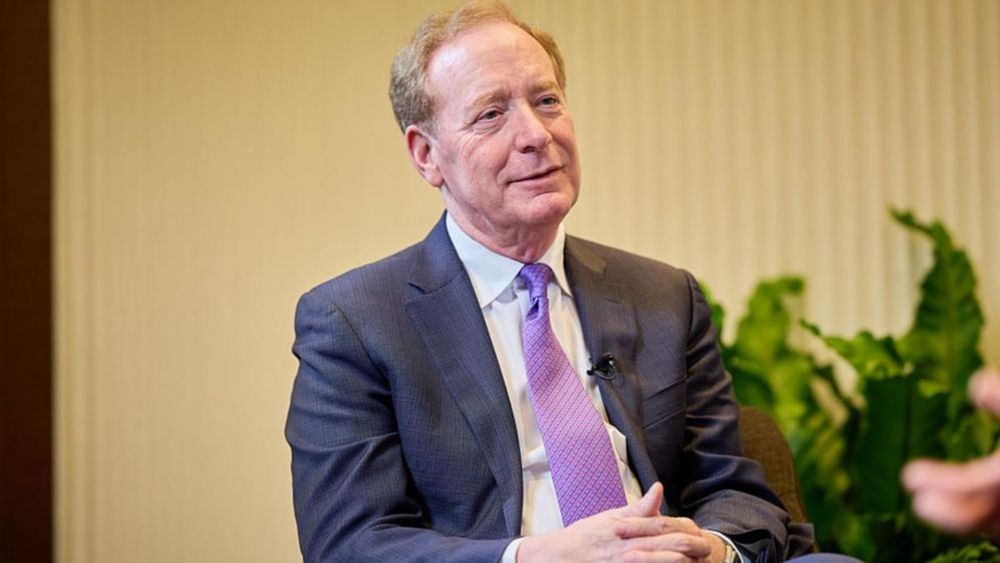
Brad Smith has a comparison he'd like you to remember. The president of Microsoft told BBC News that artificial intelligence is currently less regulated than milk. Milk, he said, has safety standards, labeling requirements, and government oversight. AI — a technology reshaping hiring decisions, medical diagnoses, credit access, criminal sentencing, and warfare — has almost none of that. He is right. And that is exactly why his call for regulation deserves more scrutiny than it has received.
Smith's argument, delivered with the calm authority of a man who has spent decades in Washington's regulatory corridors, is that the UK is uniquely positioned to lead the development of global AI rules. He praised Britain's pragmatic approach, its existing institutions, and its ability to bridge American and European regulatory philosophies. It was, by any measure, a sophisticated and well-rehearsed pitch. What it was not is a neutral observation from a concerned citizen. It is a strategic position from the executive of a company that has invested more than $13 billion in OpenAI, that sells AI services to governments, militaries, hospitals, and schools across the world, and that has a direct financial interest in how — and whether — that technology gets regulated.
Microsoft has invested over $13 billion in OpenAI and integrates AI across its cloud, enterprise, government, and consumer products. Its Azure cloud platform powers a significant share of the world's AI infrastructure. The company's revenue is increasingly tied to AI adoption — which means the shape of AI regulation directly affects its bottom line.
The pattern here is not new, and it is not unique to Microsoft. Dominant technology companies have a long history of calling for regulation at precisely the moment when regulation serves their interests — when the rules they help write would entrench their position, raise barriers to entry for smaller competitors, and transform compliance costs into a moat. This is sometimes called "regulatory capture," but that framing understates the sophistication involved. Microsoft is not waiting to be captured. It is volunteering.
Consider what regulation, done on Microsoft's preferred terms, would actually accomplish. A global AI governance framework built around existing frontier model providers — companies like Microsoft, Google, and OpenAI — would require exactly the kind of institutional infrastructure, safety testing capacity, and compliance machinery that large incumbents can absorb and smaller competitors cannot. The startup building a medical AI tool in Lagos, the open-source developer in Berlin, the research team in Seoul: they would face the same regulatory burden as the company with 220,000 employees and a trillion-dollar market capitalization. The milk analogy is instructive in a way Smith may not have intended: dairy regulation in most markets has historically favored large industrial producers over small farms. The history of industry-led safety standards is largely a history of incumbents writing rules that protect their market share.
Smith's choice of the UK as his preferred regulatory champion is also worth examining on its own terms. Britain sits in an unusual position after Brexit — outside the EU's regulatory architecture, closely aligned with the United States, and actively competing with both for influence over the emerging global technology order. The UK's AI Safety Institute, established in 2023, has already developed working relationships with major AI labs, including Microsoft-backed OpenAI. Calling for the UK to lead global AI governance is not simply a compliment to British institutional capacity. It is a preference for a regulatory environment where Microsoft already has relationships, credibility, and influence — over, say, the EU's more adversarial AI Act, which has imposed binding requirements that the industry spent years lobbying to weaken.

None of this means Smith is wrong about the underlying problem. He is not. The gap between AI's current capabilities and the governance frameworks meant to contain them is real and growing. As Tinsel News has documented in its AI regulation tracker, most governments are still operating with frameworks designed for a pre-generative-AI world, applying rules built for search engines to systems that can write legal briefs, generate medical advice, and select military targets. The milk comparison lands because it is accurate: a substance that poses modest health risks if improperly handled is subject to more rigorous federal oversight than a technology that can be used to generate disinformation at scale, deny someone housing or credit without explanation, or select targets in active military operations.
The question is not whether AI needs regulation. It does. The question is who gets to define what that regulation looks like, whose interests it prioritizes, and who bears its costs. When the loudest voice in the room calling for rules is the company that stands to benefit most from writing them, the answer to those questions is unlikely to be the person denied a loan by an opaque algorithm, the worker whose job was restructured around an AI system they never consented to, or the community in the Global South whose data trained the model that now displaces their labor.
There is a second dynamic worth naming. Smith's BBC appearance lands in a period when AI companies face growing pressure from multiple directions: from regulators in Brussels, from plaintiffs in copyright and privacy lawsuits, from workers whose industries are being restructured, and from a public that is increasingly aware that the technology's benefits are not being distributed evenly. Calling for regulation — especially regulation framed around safety, international coordination, and responsible development — is also a form of reputation management. It positions Microsoft as a responsible actor, distinct from the "move fast and break things" posture that has made Silicon Valley politically toxic in many democracies. The call for rules becomes a shield against the harder conversation about what the rules would actually do.
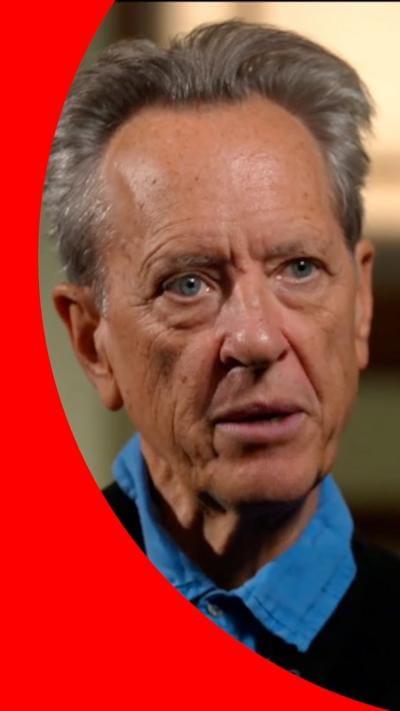
This is not to say Smith's concerns are purely performative. Microsoft has, by some measures, engaged more seriously with AI safety questions than many of its competitors. But engagement with safety questions and advocacy for a specific regulatory architecture are different things. The first is a technical and ethical commitment. The second is a political strategy. Smith is doing both simultaneously, and the BBC interview — which treated his call for regulation as straightforwardly newsworthy rather than as a position requiring scrutiny — helped him do it.
The global AI governance debate is real, consequential, and genuinely unresolved. Billions of people will live with whatever framework emerges — or doesn't. The communities most affected by AI systems are, in most cases, not the ones designing them, funding them, or lobbying for the rules that govern them. As AI executives increasingly participate in forums designed for heads of state, the question of whose voice counts in that conversation is not a procedural detail. It is the whole argument.

Brad Smith is right that AI needs to be regulated more than milk. He has not explained why Microsoft should be the one deciding how.