Washington, D.C. uses Claude at four times the rate you would expect for a city of its size. That single figure, buried in Anthropic's new Economic Index report, tells you almost everything about where artificial intelligence is actually going — and who it is leaving behind.
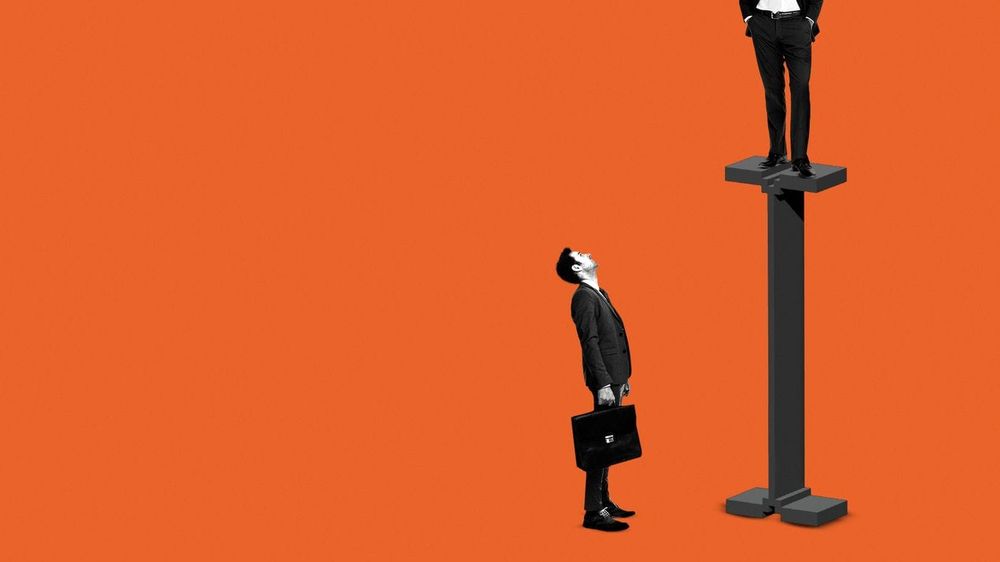
The report, which studied over one million conversations on Anthropic's Claude platform, was framed by most coverage as a story about adoption rates and productivity gains. That framing is too comfortable. What the data actually documents is the early architecture of a new economic sorting mechanism — one that rewards prior access, existing education, and the leisure time to experiment, and penalizes everyone who came to these tools late, without institutional support, or without the job security to risk looking incompetent while learning.
The headline finding is precise: users who have been on Claude for six months or more achieve a 10 percent higher success rate in their interactions with the model than newcomers do. Anthropic's head of economics, Peter McCrory, told Axios that this gap persists regardless of what tasks users are performing, what country they are in, or which model they are using. The variable is time-on-tool. The longer you have been using it, the more effective you become. The gap compounds.
This is not the robot-takes-your-job story. That story, however accurate in its own right, has a certain democratic horror to it — the machine displaces the human, and at least the displacement is legible. What Anthropic's data describes is subtler and in some ways more insidious: a world where the machine stays, but sorts its users into tiers. The person who has spent a year learning how to prompt, push back, and persist with an AI model does not just use the tool better. They use it in ways that are structurally invisible to the person who opened an account last month.
The implications for labor markets are not abstract. Anthropic CEO Dario Amodei has previously warned that AI could eliminate up to half of all entry-level white-collar work. The new index data adds a second pressure on top of that: within the jobs that survive automation, workers who arrived at AI fluency early will outperform those who did not — and the performance gap will be attributed to individual merit, not to differential access. This is how structural advantage gets laundered into personal achievement. The worker who had a company-sponsored AI training program in 2023, or who worked at a tech-adjacent firm where experimentation was encouraged, or who simply had enough job security to spend hours learning a tool without immediate deliverable pressure, will look, by 2026, like a more talented employee than someone who did not have those conditions. The talent will be real. The conditions that produced it will be invisible.
The geographic data makes the class dimension explicit. Anthropic found that adoption in the twenty highest-income countries with the most Claude usage has remained persistently unequal since its January report — meaning the gap documented months ago has not closed. It has held. The concentration of usage in Washington, D.C. — a city whose economy runs on policy, law, lobbying, and credentialed professional work — is not incidental. It is a preview of which labor markets will be transformed by AI fluency first, and which will absorb the disruption last, with the least preparation.
There is an accountability question here that the Anthropic report does not ask, and that most AI coverage declines to press. Anthropic is a company. It profits when more people use Claude. Its economic research division has an institutional interest in framing AI fluency as an individual skill problem — something you can solve by experimenting, getting comfortable, getting deft — rather than as a structural access problem that requires a structural response. McCrory's advice to workers, as relayed by Axios, is to develop skills. That is not wrong. It is also not sufficient, and it conveniently places the burden of adaptation entirely on the individual worker rather than on the employers deploying these tools, the governments regulating them, or the companies building them.
The report's authors acknowledge the possibility that the performance gap reflects early-adopter selection bias — that sophisticated users simply signed up first, and the gap measures pre-existing competence rather than AI-specific learning. That caveat deserves more weight than it received in coverage. But even if the gap is partly explained by selection effects, the structural problem does not disappear. If the workers who signed up earliest are disproportionately those with more education, more job security, more institutional resources, and more time — which the geographic concentration data strongly implies — then the selection effect is itself a class effect. The bias and the inequality are the same thing.
Meanwhile, the specific job categories facing the sharpest near-term disruption are telling. Automated sales and outreach, and automated trading, both doubled in prevalence between November and February, according to the Anthropic index. These are not abstract categories. They are the kinds of tasks that employ large numbers of workers in entry and mid-level positions — the roles that have historically served as rungs on a career ladder for people without advanced credentials. As those tasks automate, the workers displaced are not the ones who have had six months to develop Claude fluency. They are the ones whose jobs were consumed before they had the chance.
The policy vacuum around this is striking. As our AI Regulation Tracker documents, governments have moved slowly and unevenly on AI governance — focusing heavily on safety, liability, and intellectual property, while largely ignoring the labor market stratification that the technology is already producing. There is no federal program in the United States to close the AI fluency gap. There is no systematic effort to bring workers in automatable roles up to speed before their tasks disappear. There is no requirement that employers provide AI training as a condition of deploying these tools. The regulatory conversation is about the machines. The people being sorted by them are not in the room.
This connects to a pattern that runs through the history of transformative labor-market technologies. The people who designed the assembly line did not bear its costs. The people who built algorithmic trading systems did not lose their jobs to them. And the people currently building the most capable AI models — housed, as Anthropic is, in San Francisco, serving a user base four times over-represented in Washington, D.C. — are not the people whose entry-level white-collar work is at risk. They are the people who will benefit most from a world where AI fluency is a scarce, unequally distributed skill. As we've noted in previous coverage of Anthropic's product decisions, the company's public commitments to responsible AI development coexist comfortably with aggressive commercialization — and this report is no exception. Framing the fluency gap as an individual opportunity rather than a systemic risk is, itself, a product of that coexistence.
The Anthropic data is valuable precisely because it is granular and honest about what it found. A 10 percent success-rate gap, compounding over time, across all tasks and geographies, is not a rounding error. It is a structural force. The question is not whether AI fluency will become a class divide. According to Anthropic's own researchers, it already is. The question is whether any institution with the power to intervene will treat it as a policy problem before the gap becomes permanent — or whether, as with so many previous technological disruptions, we will spend the next decade explaining to the workers who fell behind that they should have signed up sooner.