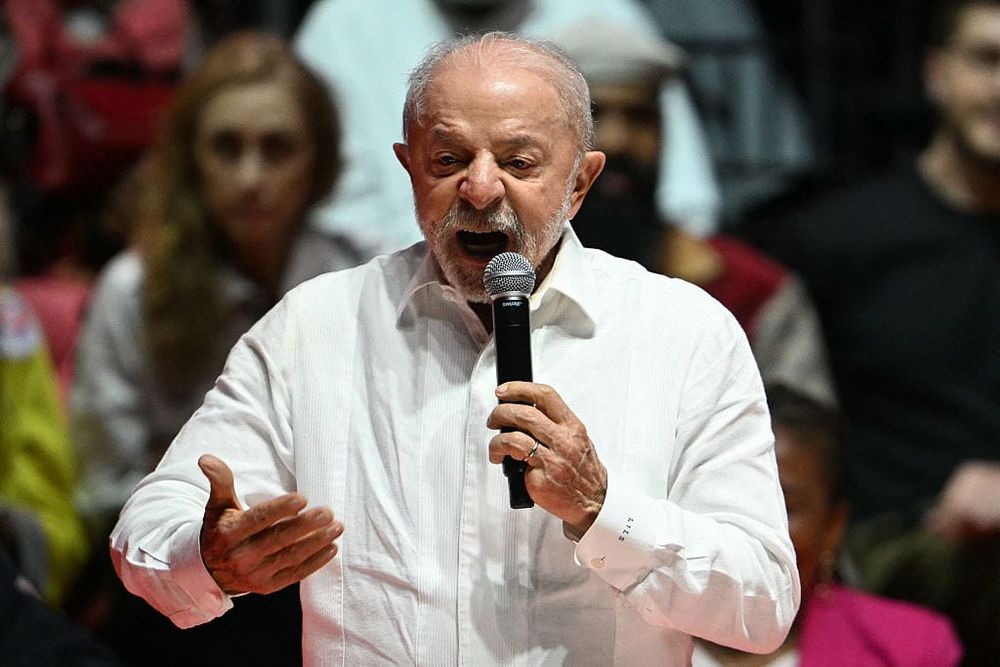
Twelve points. That is how far ahead Luiz Inácio Lula da Silva pulled in the polls after Donald Trump announced 50 percent tariffs on Brazilian imports and financial sanctions against the Supreme Court justice overseeing Jair Bolsonaro's coup trial. The Quaest poll, published in August 2025, did not just capture a political moment. It captured something rarer: a population that recognized interference for what it was, and rejected it.
The story that has consumed Brazilian politics for the past year is usually told as a drama of personalities — the aging leftist president versus the polished, forty-five-year-old son of a convicted coup plotter. That framing misses what is actually at stake. Brazil's upcoming election is not a contest between two candidates. It is a test of whether democratic institutions, once targeted by an authoritarian project backed by external power, can hold. And the result will shape not just Brazil, but every country in Latin America watching to see whether the authoritarian playbook can be stopped.
Former President Jair Bolsonaro is serving a 27-year sentence for plotting a coup after his 2022 electoral defeat. He is barred from candidacy and subject to an ankle monitor. His son Eduardo Bolsonaro, based in Texas and linked to Steve Bannon, lobbied the Trump administration for intervention on behalf of Brazilian "political prisoners." His other son, Flávio, is the current presidential candidate — and the subject of a separate, ongoing corruption investigation.
The reporting from Jacobin points toward something it does not fully draw out: Trump's intervention did not weaken Brazilian democracy. It inadvertently stress-tested it — and the institutions held. What Lula's campaign, the Brazilian judiciary, and Brazilian civil society did with that test matters as much as the election result itself. The tariff announcement was intended to destabilize Lula. Instead, it gave him the one thing an eighty-year-old incumbent struggling against inflation could not manufacture: a clear enemy, and a clear argument about sovereignty.
The mechanics of that moment are worth examining. Within twenty-four hours of Trump's tariff announcement, Lula's government had released an advertisement pointing out that Brazil spells its name with an "S" — not a "Z" — for sovereignty. Social media filled with images of American flags at Bolsonaro rallies. In a televised address, Lula declared, "Brazil has only one owner — the Brazilian people." The message worked because it was true. The Bolsonaro family had spent years wrapping itself in nationalist iconography while quietly courting Washington. Eduardo Bolsonaro's lobbying of the Trump administration — which, per Jacobin's reporting, included appeals on behalf of Brazil's alleged "political prisoners" — exposed that nationalism as conditional. You cannot claim to love Brazil while asking a foreign government to sanction its judges.
This is the part that gets lost in the personality coverage. Flávio Bolsonaro is not simply his father's son running on nostalgia. He is a candidate whose campaign has been operationally linked to foreign pressure campaigns, whose family member is a convicted criminal with documented ties to Steve Bannon, and who is now facing his own corruption investigation. In May 2026, it was reported that Flávio had solicited $24 million from Daniel Vorcaro, the disgraced owner of Banco Master, who was jailed on suspicion of multibillion-dollar fraud. The money, per Jacobin's account, was intended to fund Dark Horse, a propaganda film about Jair Bolsonaro's rise and survival of an assassination attempt, starring Jim Caviezel — the actor who played Jesus in Mel Gibson's The Passion of the Christ.
Flávio had publicly denied personal contact with the banker. The day before Vorcaro was arrested while preparing to board a private jet bound for Malta, Flávio sent him a WhatsApp message: "Brother, I am and always will be with you." The detail is not incidental. It is the whole pattern compressed into one sentence. The Bolsonaro project has always operated at the intersection of money, loyalty, and impunity — where political support is transactional, where the judiciary is an enemy to be neutralized, and where the rules apply to everyone else.
That pattern is also a hemispheric one. Brazil's election is not happening in isolation. Right-wing candidates have triumphed recently in Colombia, Peru, Honduras, Chile, and Panama. The Left lost its long hold on Bolivia. The regional tide, for now, runs against the kind of coalition Lula built — workers, unions, Afro-Brazilian communities, the Amazon's indigenous peoples — and toward a politics of grievance, nostalgia, and nationalist performance that borrows heavily from the Trumpist playbook. What happens in Brasília will be read across the continent as a verdict on whether that playbook can be stopped by democratic means, or only by the kind of institutional resilience that requires years of investment to build and minutes to destroy.
The Amazon is the stakes made visible. Jair Bolsonaro's presidency oversaw record deforestation — the lungs of the planet treated as a resource extraction opportunity. Lula's return to power came with pledges to restore environmental protections, and his government has made measurable progress. A Bolsonaro restoration, even in the son's softer packaging, would almost certainly reverse that. The Amazon does not vote. But the communities inside it — indigenous nations, riverine peoples, the smallholders who have watched their neighbors' land burned for soy and cattle — have a direct stake in the outcome that no poll captures adequately. As Tinsel News has documented in its coverage of the accelerating cost of climate delay, every year of rollback now carries a measurable price in degrees and lives.
Follow the money and the stakes grow clearer still. The Bolsonaro project has never been primarily ideological in the policy sense — it has been a vehicle for the interests of Brazilian agribusiness, the evangelical church hierarchy, the military old guard, and the extractive industries that benefit from weakened environmental enforcement. Flávio Bolsonaro's lacquered presentation — younger, less combative, more palatable to international investors — is a repackaging of those same interests. The $24 million allegedly sought from a jailed banker to fund a hagiographic film is not an aberration. It is a window into how the project sustains itself: through networks of loyalty, money, and mutual protection that operate parallel to formal institutions.
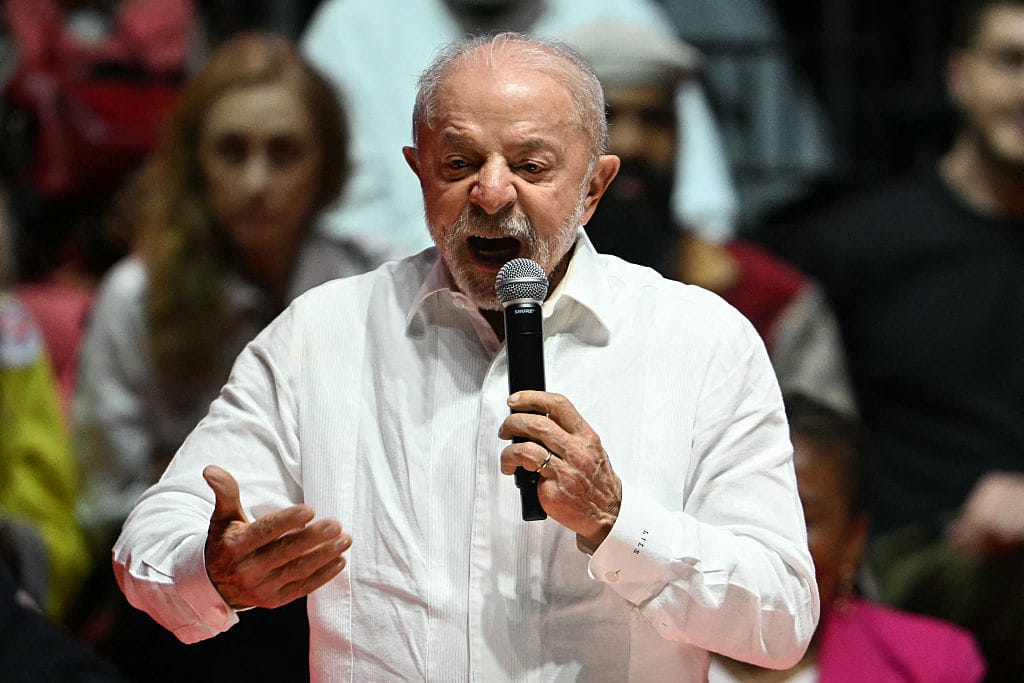
Lula is not without vulnerabilities. He is eighty years old. Inflation has eroded the goodwill that came with his return. His coalition is broad but not unified. The corruption scandals that defined his earlier administrations — for which he was wrongfully imprisoned, then exonerated — remain a live issue for voters who distrust all political parties equally. The race was tightening before Trump's intervention gave Lula a nationalist rallying point. It may tighten again.
But the structural argument for what a Bolsonaro victory would mean is not close. Brazil's Supreme Court, which has been the primary institutional check on the Bolsonaro family's legal exposure, would face sustained political pressure. The justice currently overseeing Jair Bolsonaro's trial — Alexandre de Moraes, whom Trump sanctioned — would govern under a cloud of delegitimization manufactured by the very family whose crimes he is adjudicating. The deforestation protections Lula restored would face dismantling. And the signal sent to every authoritarian movement in Latin America would be unmistakable: that a project built on a coup attempt, sustained by foreign lobbying, and implicated in financial fraud can still win an election if it gets its optics right.
The democratic left in the United States has spent years debating what lessons to draw from its own losses, as progressives reckon with how to rebuild coalitions that can actually hold power. Brazil is running the same experiment in real time, with higher institutional stakes and a more immediate environmental consequence. The outcome will not just determine who governs Latin America's largest democracy. It will determine whether the international authoritarian network — the one that runs from Mar-a-Lago to Bolsonaro family WhatsApp threads to Texas-based lobbyists with Bannon connections — can be beaten at the ballot box, or only contained after it has already done its damage.
Flávio Bolsonaro told a jailed banker he would always be with him. The Brazilian electorate is now deciding whether to be with Flávio. The answer will echo well beyond Brazil's borders — in every forest still standing, and in every court still trying to hold a coup plotter to account.