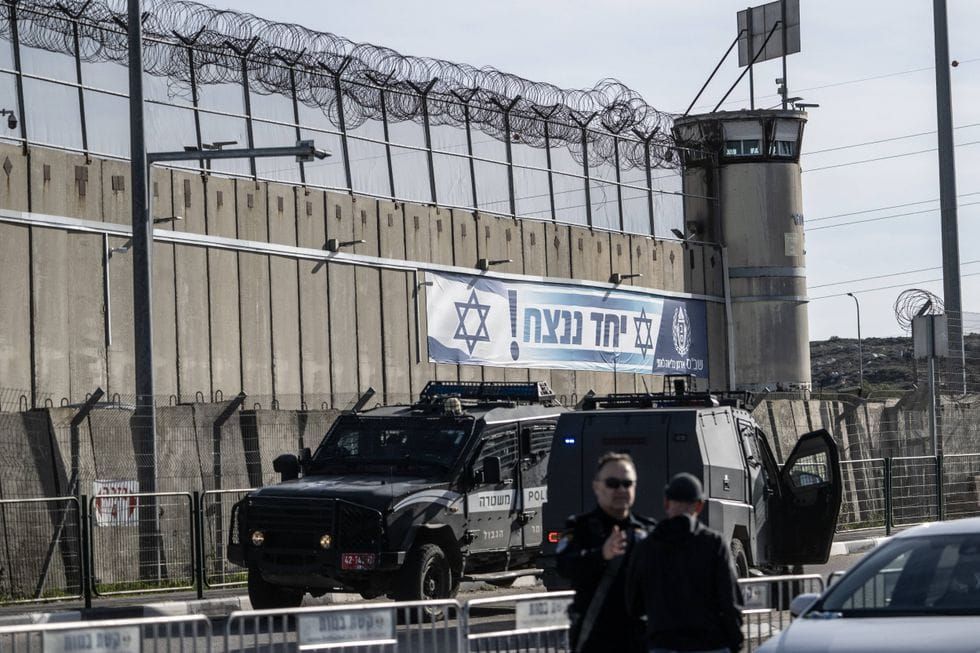
A guard at Ketziot Prison recounted a detainee's death to his colleagues. "He's dead," he wrote. "Listen, it's funny how it all happened in an instant: Boom, count. Boom, dead prisoner."
The message was sent over WhatsApp in November 2023. It was not intercepted by a whistleblower or leaked by a dissident. It was uncovered by Israeli prosecutors building a criminal case — and it is now part of an indictment filed against twelve guards at Ketziot Prison for their alleged roles in the deaths of nine Palestinian detainees. Common Dreams reported on the texts, which were first published by the Israeli newspaper Haaretz.
The messages are not an anomaly. They are a window into something much larger — a detention system that, according to Israeli human rights organization Breaking the Silence, has functioned as a network of torture camps since October 2023. The indictments name twelve individuals. The pattern they represent has claimed more than one hundred lives.
The texts themselves are worth sitting with. One guard, after describing a beating delivered to a detainee, wrote: "They're doing CPR in the clinic right now, baby! God willing, that son of a thousand whores will die." Another relayed news of a prisoner's death with the same register someone might use to describe a sports score. A third wrote simply: "We fucked them up so bad." These were not private thoughts. They were shared, celebrated, passed between colleagues in a group chat — the language of men who felt no reason to hide what they were doing or how they felt about it.
That confidence is the story. Not the texts themselves, but what their existence tells us about the environment that produced them.
Haaretz, which broke the story, noted that prosecuting guards for alleged abuses against Palestinian prisoners is normally difficult — guards are unwilling to testify against each other, evidence is sparse, and institutional loyalty runs deep. The WhatsApp messages are rare precisely because they are direct: guards documenting their own crimes, in their own words, in real time. The investigation files, Haaretz explained, "offer a rare glimpse into the guards' routine use of severe violence against Palestinian prisoners" and also "reveal evidence of senior officials suppressing accounts and turning a blind eye, if not taking part themselves." At least one witness alleged that Ketziot Prison commander Yosef Knipes was involved. He denied it.
That phrase — "routine use of severe violence" — carries weight that the indictments do not. Twelve guards charged with nine deaths is accountability of a kind. Routine violence across an entire prison system, with senior officials implicated in suppressing evidence, is something the criminal law is not designed to address through individual prosecutions. One is a reckoning. The other is a policy.
The Israeli human rights organization Breaking the Silence stated that the texts uncovered by investigators "represent only a small part of the total abuse carried out in Israeli prisons," adding: "Since October 2023, more than 100 Palestinians have entered Israeli custody alive and later left in body bags. Israeli detention centers have essentially become torture camps. Torture is Israel's policy."
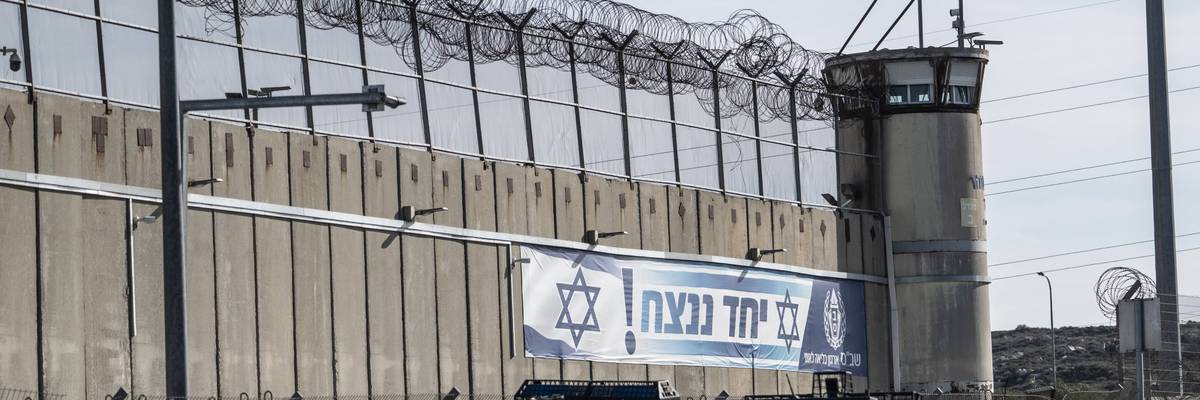
This is where the accountability lens runs up against its limits. The indictments presuppose that what happened at Ketziot was exceptional — a group of guards who went too far, who can be separated from the institution and prosecuted. Breaking the Silence's position is that this framing is itself a form of cover. If more than a hundred people have died in Israeli custody since October 2023, and if the investigation files document senior officials suppressing evidence rather than acting on it, then the twelve guards facing charges are not aberrations. They are the most visible evidence of a system operating as designed.
New York Times columnist Nicholas Kristof, who earlier this year published interviews with Palestinian prisoners detailing sexual abuse allegedly suffered at the hands of Israeli forces, wrote in a social media post that the unearthed texts offer a "horrifying account" of "how Israeli prison guards brutalized Palestinian prisoners, sometimes killing them, even as the US supplied endless weapons and diplomatic support." That last clause is not rhetorical. It is a factual description of the relationship between the institution where these deaths occurred and the government that funds it.
The United States has not conditioned its military aid to Israel on the treatment of Palestinian prisoners. It has not demanded independent access to detention facilities. It has not suspended weapons transfers pending investigation of custodial deaths. It has vetoed ceasefire resolutions at the UN Security Council — a pattern Tinsel News has documented in relation to broader evidence of systematic torture in Israeli custody — and it has continued to describe Israel's military conduct as consistent with international law. The WhatsApp messages from Ketziot Prison do not change that posture. Neither, so far, have the indictments.
What the indictments do accomplish is narrower and more legible: they establish, through Israel's own criminal justice system, that specific named individuals beat specific named prisoners to death and celebrated doing so. That is not nothing. But it is also not a reckoning with the system that produced those individuals, protected them while they operated, and suppressed evidence of what they had done. The indictments may result in convictions. The system will remain.
The parallel that demands attention here is institutional, not individual. Israel has a documented pattern of opening investigations into alleged abuses that do not result in meaningful accountability — investigations that serve to deflect international pressure without producing structural change. The Ketziot indictments are more substantive than most: twelve defendants, nine documented deaths, direct evidence in the form of the guards' own words. But the question of whether those prosecutions will reach the senior officials who allegedly suppressed accounts, or whether they will stop at the guards who sent the messages, remains open.

Breaking the Silence's framing — "Torture is Israel's policy" — is a political claim, not a legal finding. But the facts it rests on are not in dispute. More than a hundred Palestinians have died in Israeli custody since October 2023. Investigation files document senior officials turning a blind eye. Guards felt safe enough to document their own violence in group chats, in real time, with no apparent concern that anyone with authority would object.
That is not a description of twelve men who went too far. It is a description of an institution that told them, through its culture and its silence, that they could.
The indictments will proceed. The guards may be convicted. And unless the investigation reaches the officials who built and maintained the environment those guards operated in — and unless the United States attaches conditions to the military support that sustains Israel's detention infrastructure — the next set of WhatsApp messages will read exactly the same way.