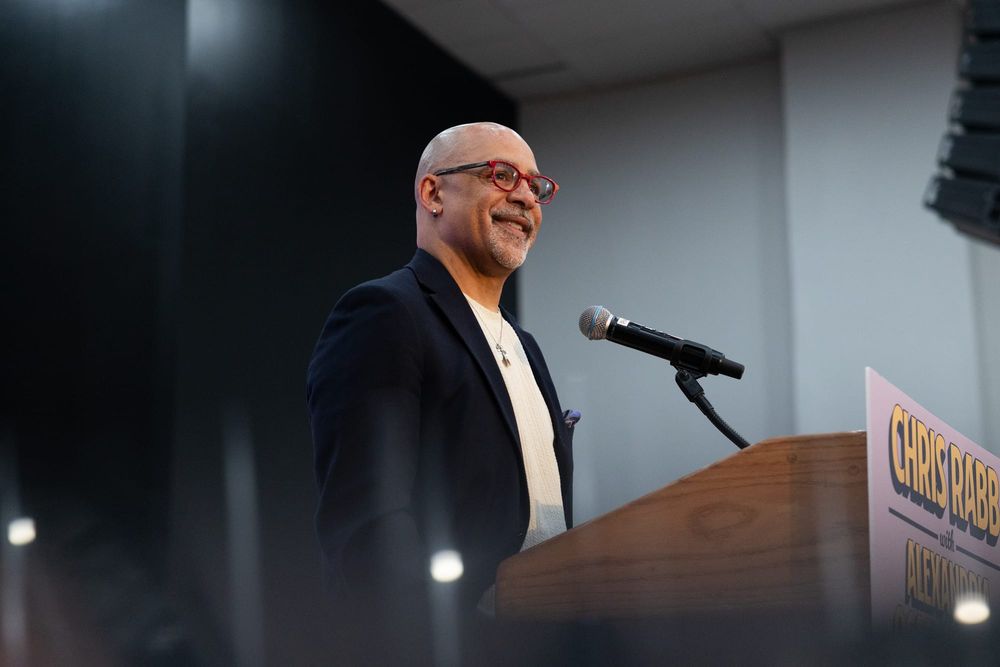
The most reliably Democratic House district in the country just chose its next representative — and he is promising to be a problem. Chris Rabb, a Pennsylvania state legislator and self-styled "troublemaker," won the Democratic primary for Pennsylvania's 2nd Congressional District, according to Politico, securing the backing of Squad members and running on an unapologetically progressive platform. In a district this blue, the primary is the election. Rabb is going to Congress.
The result matters beyond Philadelphia. It arrives in a cycle when the American Israel Public Affairs Committee has deployed an unprecedented volume of money to shape Democratic primaries — targeting candidates who have broken with party leadership on Gaza, military aid, and U.S. foreign policy. AIPAC and its affiliated super PACs have spent tens of millions of dollars in 2024 and 2026 primary races, a pattern Tinsel News has tracked in detail. The question this cycle was whether that spending could hold the line against a progressive insurgency that is no longer insurgent. In PA-02, it could not.
Rabb's win extends the Squad's institutional footprint at a moment when the caucus has been treated by mainstream Democratic strategists as an electoral liability. The conventional argument — repeated after every tough cycle — is that progressives cost Democrats swing districts. But PA-02 is not a swing district. It is the kind of safe seat where the Democratic Party has historically installed institutionalists, rewarded loyalty to leadership, and kept its left flank at arm's length. Rabb's victory is a direct rebuke of that management strategy, carried out by Democratic primary voters in one of the country's most Democratic ZIP codes.
PA-02 covers much of Philadelphia and is among the most Democratic House districts in the country. A Democratic primary victory here is functionally a general election win. The seat was previously held by Brendan Boyle, who ran for Senate.
The Squad endorsement carries a specific political meaning in 2026 that it did not carry in 2018, when Alexandria Ocasio-Cortez, Ilhan Omar, Rashida Tlaib, and Ayanna Pressley first arrived in Congress. Then, the group represented a break with a party establishment that still believed it could hold the center against a populist right by moderating its own positions. Eight years later, that strategy has produced two Trump terms, a Democratic Party that publicly denounces AIPAC while privately cashing its checks, and a base that is increasingly unwilling to accept the gap between rhetoric and action. Rabb's backers are not outsiders anymore. They are the party's most energized constituency.
The AIPAC dimension of this race cannot be separated from the broader Democratic realignment on Israel and Gaza. The organization has spent aggressively to defeat progressive candidates who have called for conditioning military aid to Israel or supported ceasefire resolutions — a position that was fringe in 2021 and is now held by 40 Senate Democrats who voted to block arms transfers to Israel earlier this cycle. AIPAC's spending is not simply pro-Israel advocacy. It is a structural intervention in Democratic primaries designed to determine which Democrats are viable — and which are not. In safe blue districts like PA-02, that intervention faces its stiffest test, because there is no general election threat to use as a moderating argument.
Rabb himself has been explicit about what kind of member he intends to be. The "troublemaker" framing is not accidental — it is a positioning statement directed as much at Democratic leadership as at Republicans. Progressive members who have used the same language in recent cycles have found themselves frozen out of committee assignments, denied leadership support, and targeted in subsequent primaries with party apparatus backing their opponents. The question for Rabb is not whether he will cause trouble. It is whether the institutional Democratic Party has the appetite to retaliate against a member who just won a safe seat with a clear mandate — or whether the calculus has finally shifted.
The systemic pattern here is worth naming precisely. For two decades, the Democratic Party's management of its left wing has followed a consistent logic: tolerate progressive rhetoric in safe seats, deploy institutional resources to defeat progressives in competitive ones, and use the threat of general election losses to discipline members who step out of line on foreign policy, military spending, or corporate accountability. That logic is under pressure from multiple directions simultaneously. The party's base is in open revolt over AIPAC's influence. The Squad's endorsement network has proven it can move primaries. And the progressive wing has learned, slowly and at real cost, how to build durable power inside Democratic institutions rather than simply against them.
Rabb arrives in Washington carrying that accumulated pressure with him. Safe seats produce the members who are freest to vote their conscience — and who face the least electoral consequence for doing so. If the progressive wing is serious about converting its primary victories into real legislative power, PA-02 is exactly the kind of seat it needs to hold, and hold loudly. The Democratic Party's next leadership fight will be shaped in part by how many members like Rabb show up to it.