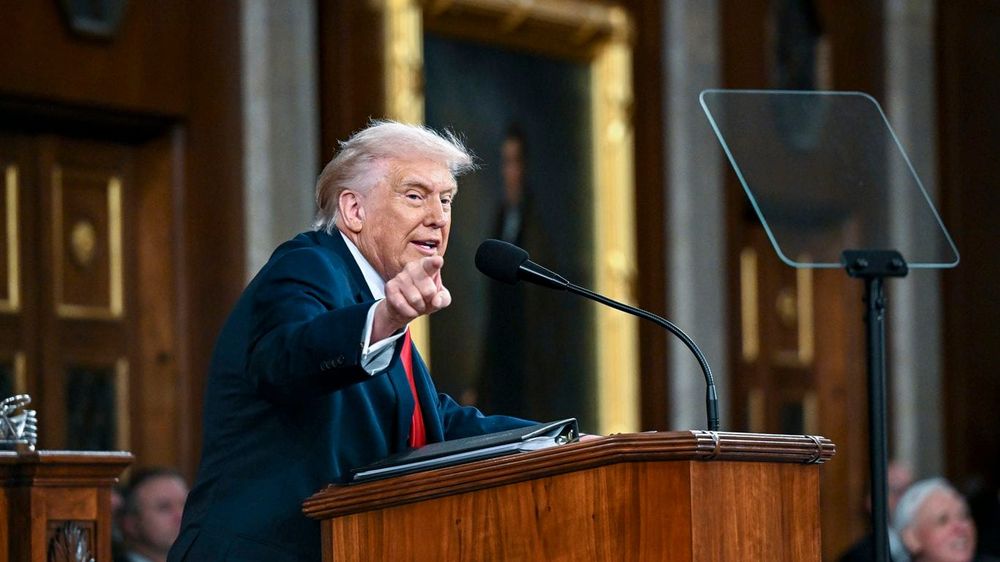
Gabriel Perez read the president's words before the president spoke them. That access — routine for a White House teleprompter operator — allegedly became a financial instrument. According to Axios, federal regulators are investigating whether Perez placed trades on the prediction market Kalshi using advance knowledge of Trump's prepared remarks, including the State of the Union address delivered in February. Two sources familiar with the matter told Axios that Perez won more than $100,000 on those trades before Kalshi froze his account.
The Commodity Futures Trading Commission is now examining those bets. ABC News, which first reported the investigation, said federal prosecutors in Manhattan declined to open a criminal case — meaning Perez faces regulatory rather than criminal jeopardy, at least for now. The CFTC has reportedly discussed a settlement that could require him to return his profits. Perez has been cooperating, one source said.
What the case does not resolve — and what the industry's response deliberately avoids addressing — is the structural question: prediction markets built around the specific content of presidential speeches create a financial incentive to obtain that content early. Kalshi's "mention markets" let users bet on whether a president will say a particular word or discuss a particular topic. The moment that product exists, anyone with advance access to speech drafts possesses material nonpublic information in the most literal sense. Perez did not invent a loophole. He walked through one that was left open by design.
Kalshi's response is worth reading closely. "Our surveillance team promptly flagged and referred these trades to the CFTC after an exchange investigation," Robert DeNault, Kalshi's head of enforcement, told Axios. The company says it froze Perez's account after flagging the bets, preventing him from capturing most of the profits. This framing positions Kalshi as the system working — the surveillance caught the bad actor, the regulator was notified, the account was frozen. The company is presenting its own enforcement record as proof that its enforcement works.
But the surveillance did not prevent the trades. It detected them afterward. Perez placed the bets, won more than $100,000, and only then had his account frozen. The question of how much he ultimately captured depends on how quickly the freeze came — and the sources who spoke to Axios offered no precise timeline. What is clear is that the mechanism for profiting from inside knowledge functioned exactly as designed. The surveillance mechanism caught up later. That sequencing matters enormously if you are evaluating whether prediction markets are structurally capable of preventing this category of abuse, or merely capable of detecting it after the fact.
This is not a peripheral concern. As Tinsel News has previously reported, Congress has no disclosure requirements for lawmakers trading on prediction markets, and the question of whether members of Congress or their staffers have used inside information to profit on these platforms remains open and largely uninvestigated. The Perez case is the first known instance of a White House staffer being investigated for this specific conduct — but the vulnerability it exposes is not unique to one teleprompter operator. It is endemic to any prediction market product that prices the future content of government decisions, and to any system where the people with earliest access to that content are not prohibited from trading on it.
The White House offered a statement that told the public almost nothing. "The White House has strict ethics guidelines that we expect all staffers and officials to follow," spokesperson Davis Ingle told ABC News. "The staffer in question is fully cooperating with the CFTC." The statement does not describe what those ethics guidelines actually prohibit regarding prediction market trading, does not say whether the guidelines have been updated in response to this case, and does not address whether other White House staff with access to speech drafts have been audited. It is a statement designed to close the story, not to answer it.
The broader pattern is worth naming directly. Prediction markets have expanded rapidly into territory that regulators were not built to police. Kalshi and its competitors have argued, successfully, that their products constitute legitimate financial instruments subject to CFTC oversight rather than gambling subject to state prohibition. That regulatory classification came with a promise: that sophisticated market surveillance would catch manipulation and insider trading before it distorted outcomes. The Perez investigation is the first significant test of that promise at the level of the executive branch — and the answer it offers is that the surveillance is reactive, the profits were real, and the product design itself created the incentive.
For anyone watching where this category of case goes next, the relevant pressure point is not Gabriel Perez. He is a mid-level staffer who saw an opportunity and, according to investigators, took it. The relevant question is whether Kalshi's mention markets — and equivalent products at competing platforms — can exist without creating a standing financial incentive for anyone with advance knowledge of government action to monetize that knowledge. The CFTC's settlement terms with Perez, when they emerge, will tell us something about how seriously regulators intend to treat that question. If the answer is profit disgorgement and a fine, the next person with access to a speech draft will do the math and decide whether the expected value still works in their favor. As Tinsel News has documented, campaign staffers have already been caught betting on their own candidates — a pattern that predates and parallels this case. The architecture of the problem is the same. The people closest to the information are the people with the most to gain from trading on it, and the rules have not caught up to the markets.